Good to Know Information:Q&A from Dr. Young regarding: Cancer
1) What is Cancer? Cancer is an acidic liquid from metabolism that spoils and ferments the human cell.
2) Is cancer a mutant cell? NO. Human cells do not mutate they transform and adapt to their environment. Some of the stages ofthis transformation gives rise to the birth of bacteria, then yeastand finally mold.
3) Is cancer caused by a virus, bacteria, yeast or mold? No. Avirus, bacteria, yeast or mold are biological transformations ofwhat use to be an organized healthy cell. Germs are not the causeof disease but the evidence of an over-acidic environment.
4) What is the number two cause of death in women? This would becancerous breast tissue. When the blood is charged with metabolicacids that have not been properly eliminated they are thrown outinto the fatty tissues.
When acids are thrown out into the fatty breast tissue this causesspoiling of the breasts. To prevent the spoiling of the breaststhe body buffers these acids with calcium causing breast stones ormicro-calcifications.
If the spoiling continues the body will encapsulate the rottingbreast tissue forming a tumor to protect the healthy tissue. Calcifications and tumor formation is the body's way of protectingitself and the healthy tissue from toxic metabolic acids or fromsystemic spoiling.
5) What is the cause of prostate cancer? Prostate cancer is acondition of systemic acidosis that has localized in the prostategland. Prostate cancer is the spoiling or rotting of the prostategland form over acidity. There is no other cause.
6) Is cancer a noun or an adjective? There is no such thing as acancer cell -- there are only acidic or cancerous cells. The wordcancer does not explain the true nature of the cell and what ishappening. Cancer is an adjective not a noun. Cancer is somethingwe do not something we get! Cancerous tissue is an expression ofpoor acidic lifestyle and dietary choice. For example, if yousmoke, the acids from the smoke will spoil your lungs giving riseto cancerous lung tissue. If you eat the acid sugar it will spoilyour breasts or prostate.If you eat meat, the acids (nitric, uric, suphuric and phosphuric) from meat will spoil and rot your bowels giving rise to cancerousbowels.
7) Are tumors good or bad? Tumors are good and are helping toprotect healthy cells and tissues from cancerous or spoiled rottingcells and tissues. Just like one rotten apple will spoil a bushelof apples so one rotten acidic cell will spoil a bushel of healthycells. To stop the spoiling of cells from metabolic acids the bodyforms a tumor and encapsulates the spoiled cells as a protectionfor the healthy cells. All tumors are made from fibrin the samematerial that clots are blood so we don't bleed to death. Youcould say, tumors are saving life from acidic lifestyle and dietarychoices.
8) What role does the lymphatic system play in cancer? Thelymphatic system is responsible for removing excess acids in thetissues out through the pores of the skin through perspiration orback into blood circulation to be eliminated through urination. Ifyou want to be healthy you have to pee or sweat your way there!
***Japanese researchers found that workers on rotating shifts werefour times more likely to develop prostate cancer than thoseworking regular hours, whether on day or night shifts.Shift work has also been linked to an in creased risk of breast andbowel cancers.The study, which examined more than 14,000 workers over eightyears, also found that night shift workers were at a slightlyincreased risk of prostate cancer. Eighty percent of the workersstudied worked daytime hours, 7 percent worked nights, and about 13percent rotated their work schedules from night to day.The reason for the effects for in creased risk for breast, prostateand bowel cancer may be linked to the over acidic foods and drinksingested by night shift workers which will also affect theendocrine system which regulates the body's energy needs.
American Journal of Epidemiology September 15, 2006; 164(6): 549-555
from Dr Young
Monday, October 30, 2006


Wednesday, October 25, 2006
Artificial Lung Valve Could Aid Emphysema Paitients
(HealthDay News) -- An experimental umbrella-like valve appears to help improve breathing in emphysema patients, according to a study that suggests the device may eventually offer a noninvasive alternative to lung volume reduction surgery (LVRS).
The one-way IBV valve limits ventilation in diseased areas of the lungs and redirects air to the remaining healthier areas of the lung. At the same time, it allows for normal clearance of lung secretions.
"The IBV valve is similar in concept to LVRS in that it aims to make the lungs work more efficiently, thereby decreasing shortness of breath," study author Dr. Daniel H. Sterman, of the University of Pennsylvania Medical Center in Philadelphia, said in a prepared statement.
"Unlike lung-reduction surgery, valve treatment has fewer complications and a shorter hospital stay. For example, most valve-treated patients have a one-night observational hospital stay while surgical patients average a week or more in the hospital," Sterman said.
In this study, he and his colleagues assessed 75 patients with severe upper-lobe emphysema who received a total of 520 IBV valves (an average of six to seven valves per patient). The researchers concluded that the device was safe and effective.
The findings were to be presented at this week's American College of Chest Physicians annual meeting, in Salt Lake City.
The IBV valve has not been approved by the U.S. Food and Drug Administration and is only available in a research trial sponsored by Spiration Inc., which developed the valve.
More information
The American Lung Association has more about emphysema.
The one-way IBV valve limits ventilation in diseased areas of the lungs and redirects air to the remaining healthier areas of the lung. At the same time, it allows for normal clearance of lung secretions.
"The IBV valve is similar in concept to LVRS in that it aims to make the lungs work more efficiently, thereby decreasing shortness of breath," study author Dr. Daniel H. Sterman, of the University of Pennsylvania Medical Center in Philadelphia, said in a prepared statement.
"Unlike lung-reduction surgery, valve treatment has fewer complications and a shorter hospital stay. For example, most valve-treated patients have a one-night observational hospital stay while surgical patients average a week or more in the hospital," Sterman said.
In this study, he and his colleagues assessed 75 patients with severe upper-lobe emphysema who received a total of 520 IBV valves (an average of six to seven valves per patient). The researchers concluded that the device was safe and effective.
The findings were to be presented at this week's American College of Chest Physicians annual meeting, in Salt Lake City.
The IBV valve has not been approved by the U.S. Food and Drug Administration and is only available in a research trial sponsored by Spiration Inc., which developed the valve.
More information
The American Lung Association has more about emphysema.
Vegetables May Boost Brain Power in Older Adults
(HealthDay News) -- Want to preserve your mental edge as you age? Vegetables -- particularly green, leafy ones -- will do the trick if you eat three servings a day, new research shows.
But the research also suggests that the same effect is not found in those who eat lots of fruit.
"It's a modest effect," said Martha Clare Morris, associate professor at Rush University Medical Center in Chicago, and lead author of the study. "People who consumed two or more vegetables a day had a 35 to 40 percent decrease in the decline in thinking ability over six years. That's the equivalent of being five years younger in age."
The study results are published in the Oct. 24 issue of the journal Neurology.
Morris' team studied 3,718 research participants 65 or older who live in the south side of Chicago. Sixty-two percent were black, 38 percent were non-Hispanic white, and 62 percent were female.
"We used a complete food questionnaire of 139 different food items," Morris said. "We asked about their usual intake and assessed the frequency of intake." During the six-year study, the participants received at least two cognitive tests that measured their memory and thinking speed.
"By far, the association with a slower rate of decline was found in the group that ate high amounts of green, leafy vegetables," Morris said. Such foods included lettuce and tossed salad, spinach, kale and collards.
The study also found that the slowdown in cognitive decline was greatest in the oldest people who ate at least two more vegetable servings a day.
Because the cognitive tests measured overall thinking ability, the benefits of eating vegetables may translate into an easier time with such everyday tasks as remembering phone numbers and names and balancing checkbooks, Morris said.
Morris suspects that vegetables may help protect memory and thinking speed because they contain high amounts of vitamin E, an antioxidant that can help reduce the damage caused by free radicals, unstable oxygen molecules generated by normal metabolism that can damage neurons in the brain and contribute to dementia.
"We had found in previous studies that vitamin E in food protected against cognitive decline and the development of Alzheimer's disease," she said.
Her previous research also had shown that consumption of healthy fats, such as the polyunsaturated and monounsaturated fats found in foods such as olive oil, were similarly protective.
"When we eat vegetables, we tend to put the good fats on them, such as an oil-based salad dressing on salads, healthy-fat mayonnaise on cole slaw, and healthy-fat margarine on vegetables," Morris said. "Such fats help us to absorb the vitamin E, and perhaps are also beneficial to the brain. So that's one plausible explanation of why vegetables are good for you."
Morris' study also found that high consumption of fruit had no effect on thinking ability. A similar large-scale study, the Nurses' Health Study, also found that high vegetable consumption, but not high fruit consumption, was associated with a slower rate of cognitive decline.
One of the most common antioxidants found in fruit, vitamin C, has not been consistently shown to protect the brain, Morris said. Most of her study participants consumed fruit such as oranges, grapefruits, apples and bananas, which are high in vitamin C.
It's possible that some fruit may contain compounds that counteract antioxidants. Further studies are needed to determine whether fruit is brain-protective, she said.
As for eating vegetables, Morris said it's too soon to say for sure that they actually preserve the brain from age-related decline. "But it's encouraging to see that it appears to slow the rate of decline," she said. "We know that eating vegetables is important for chronic diseases. So this might be one more reason why you should eat your vegetables."
In her next study of the same group of Chicago residents, Morris hopes to examine whether high vegetable consumption helps protect against Alzheimer's disease. Results are expected in the next year, she said.
Dallas Anderson is program director for epidemiologic studies of Alzheimer's disease at the National Institute on Aging. "It may be premature to discount the role of fruit consumption in maintaining cognitive health," he said, citing recent research showing that weekly consumption of three or more servings of fruit and vegetable juices was associated with a reduced risk of Alzheimer's.
"Further research will be needed to take account of how the fruit is prepared, as peeling may greatly reduce the amounts of antioxidants available," Anderson said.
"I anticipate that further research will refine what we know about the relationship between fruit and vegetable consumption and cognitive function, helping to determine more definitively the types and amounts of foods that may preserve cognition," he added.
More information
To learn more about the health benefits offered by vegetables, visit the U.S. Department of Agriculture.
But the research also suggests that the same effect is not found in those who eat lots of fruit.
"It's a modest effect," said Martha Clare Morris, associate professor at Rush University Medical Center in Chicago, and lead author of the study. "People who consumed two or more vegetables a day had a 35 to 40 percent decrease in the decline in thinking ability over six years. That's the equivalent of being five years younger in age."
The study results are published in the Oct. 24 issue of the journal Neurology.
Morris' team studied 3,718 research participants 65 or older who live in the south side of Chicago. Sixty-two percent were black, 38 percent were non-Hispanic white, and 62 percent were female.
"We used a complete food questionnaire of 139 different food items," Morris said. "We asked about their usual intake and assessed the frequency of intake." During the six-year study, the participants received at least two cognitive tests that measured their memory and thinking speed.
"By far, the association with a slower rate of decline was found in the group that ate high amounts of green, leafy vegetables," Morris said. Such foods included lettuce and tossed salad, spinach, kale and collards.
The study also found that the slowdown in cognitive decline was greatest in the oldest people who ate at least two more vegetable servings a day.
Because the cognitive tests measured overall thinking ability, the benefits of eating vegetables may translate into an easier time with such everyday tasks as remembering phone numbers and names and balancing checkbooks, Morris said.
Morris suspects that vegetables may help protect memory and thinking speed because they contain high amounts of vitamin E, an antioxidant that can help reduce the damage caused by free radicals, unstable oxygen molecules generated by normal metabolism that can damage neurons in the brain and contribute to dementia.
"We had found in previous studies that vitamin E in food protected against cognitive decline and the development of Alzheimer's disease," she said.
Her previous research also had shown that consumption of healthy fats, such as the polyunsaturated and monounsaturated fats found in foods such as olive oil, were similarly protective.
"When we eat vegetables, we tend to put the good fats on them, such as an oil-based salad dressing on salads, healthy-fat mayonnaise on cole slaw, and healthy-fat margarine on vegetables," Morris said. "Such fats help us to absorb the vitamin E, and perhaps are also beneficial to the brain. So that's one plausible explanation of why vegetables are good for you."
Morris' study also found that high consumption of fruit had no effect on thinking ability. A similar large-scale study, the Nurses' Health Study, also found that high vegetable consumption, but not high fruit consumption, was associated with a slower rate of cognitive decline.
One of the most common antioxidants found in fruit, vitamin C, has not been consistently shown to protect the brain, Morris said. Most of her study participants consumed fruit such as oranges, grapefruits, apples and bananas, which are high in vitamin C.
It's possible that some fruit may contain compounds that counteract antioxidants. Further studies are needed to determine whether fruit is brain-protective, she said.
As for eating vegetables, Morris said it's too soon to say for sure that they actually preserve the brain from age-related decline. "But it's encouraging to see that it appears to slow the rate of decline," she said. "We know that eating vegetables is important for chronic diseases. So this might be one more reason why you should eat your vegetables."
In her next study of the same group of Chicago residents, Morris hopes to examine whether high vegetable consumption helps protect against Alzheimer's disease. Results are expected in the next year, she said.
Dallas Anderson is program director for epidemiologic studies of Alzheimer's disease at the National Institute on Aging. "It may be premature to discount the role of fruit consumption in maintaining cognitive health," he said, citing recent research showing that weekly consumption of three or more servings of fruit and vegetable juices was associated with a reduced risk of Alzheimer's.
"Further research will be needed to take account of how the fruit is prepared, as peeling may greatly reduce the amounts of antioxidants available," Anderson said.
"I anticipate that further research will refine what we know about the relationship between fruit and vegetable consumption and cognitive function, helping to determine more definitively the types and amounts of foods that may preserve cognition," he added.
More information
To learn more about the health benefits offered by vegetables, visit the U.S. Department of Agriculture.
Marijuana-Like Compound May Ease Stomach Cramping
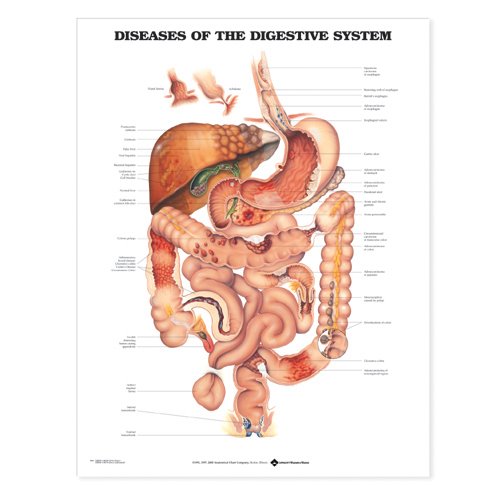 (HealthDay News) -- A synthetic form of a chemical component found in marijuana may help relax the colon and reduce stomach cramping after eating, says a Mayo Clinic study.
Researchers compared the effects of dronabinol and a placebo on colonic motility and sensation in 52 health adults. Dronabinol is a synthetic version of THC, or tetrahydrocannabinol, the active ingredient in marijuana.
The study found that dronabinol relaxes the colon and reduces post-eating contractions and cramping. The effect was most apparent in women.
"The potential for cannabinoids to modulate colonic motor function in disease deserves a further look," study leader Dr. Tuba Esfandyari said in a prepared statement.
Currently in the United States, dronabinol is used to prevent nausea and vomiting for cancer patients after chemotherapy. But it's used only when other kinds of medicine for nausea and vomiting don't work. It's is also used to increase appetite in AIDS patients.
More information
The U.S. National Library of Medicine has more about dronabinol.
Health Tip: Choosing a Supplement?
(HealthDay News) -- Because supplements are not regulated by the U.S. Food and Drug Administration as are prescription and over-the-counter medications, you should be careful when deciding what to buy.
Here are some guidelines on how to safely choose a supplement, courtesy of the Arthritis Foundation:
Here are some guidelines on how to safely choose a supplement, courtesy of the Arthritis Foundation:
- Continue taking any medications that have been prescribed by your doctor. Supplements are not designed to replace those prescription medications.
- Always talk to your doctor before taking any supplement. There could be potentially harmful interactions between your prescriptions and a supplement.
- Stick to supplements that are manufactured by established, recognized companies.
- Check labels for the list of ingredients, and ask your doctor or pharmacist for help if any of the ingredients don't sound familiar.
Friday, October 20, 2006
CHAPTER 1.: The Blood and the Third Anatomical Element by Antoine Bechamp
OF THE NATURE OF FIBRIN ISOLATED FROM THE CLOT OR OBTAINED BY WHIPPING THE BLOOD. THE BLOOD FIBRIN. FIBRINOUS MICRO-ZYMAS. FIBRIN AND OXYGENATED WATER. THE FERMENT OF FIBRIN.
Gay-Lussac and Thenard analyzed fibrin as they had analyzed albumen, caseine and gelatine. Thenard said that fibrin was an isolated animal matter; Chevreul said that it was an animal proximate principle and was greatly surprised, after he had discovered oxygenated water, to find that fibrin decomposed it and disengaged the oxygen, as did organic tissues; as, for example, the liver, etc. He even thought that fibrin was the only proximate principle of its kind endowed with this property.1
This fact in the history of fibrin is important; first, because it is the pivot on which turns the demonstration that this substance, reputed a proximate principle, is of the same order as the substance of the bodies which Chevreul called organic bodies; secondly, because, although neglected by physiologists and chemists, it enabled me to place beyond doubt the existence of a third anatomical element of the blood.
I did not set out with the idea of proving that fibrin is a substance of the same order as the organic tissues. Like everybody else, I regarded it as a proximate principle; I had even maintained its specificity against the chemists who contended that it was only coagulated albumen.2
Preliminary steps to the discovery of the real nature of fibrin and of the third anatomical element of the blood. The ancients regarded it as a positive fact that all animal or vegetable matter was spontaneously alterable while putrefying or
1. Thenard, "Traite elementaire de chimie," Vol. I., p. 528. 6th Ed. 1834.2. See Memoir, Essay sur les substances albuminoid. Theses de la Facuhe de Medecir.e de Strasbourg. 1856.
fermenting. In the last century (i.e., the 18th) the chemist, Macquer, established the conditions for these changes; the presence of water, the contact of air and a certain amount of heat. Long after, when in 1837 Cagniard de la Tour regarded beer-yeast as being organized and living, and fermentation as an effect of vegetation, Schwann, generalizing the new conception, endeavoured to show that no organic matter was spontaneously alterable; that the alteration had for cause the presence of organized living things, microscopic cryptogams, vibrioniens; that is to say, ferments, the origin of which, reviving the old hypothesis of Spallanzanil, he ascribed to the germs of the air.
But, notwithstanding many important verifications, the opinion of Schwann did not prevail; the presence of living products in matter undergoing change was conceded, but while some maintained that the alteration preceded the appearance of the organized products, whatever might be their origin, others, admitting the theory of Cagniard, insisted that the living things, the ferments, were the fruit of spontaneous generation.
Schwann's point of view and the hypothesis of germs of the air were so completely abandoned that in 1854 it was admitted as a fact that even cane sugar in watery solution altered spontaneously at the ordinary temperature of the air, becoming what was called invert sugar, grape sugar. Was that true? The inversion of cane sugar, the result of a chemical reaction of reduction by hydration which was produced, as Biot had observed, under the influence of strong acids could it be effected by water only, at ordinary temperature with the aid of lime alone? I wanted to know what to believe, and I instituted experiments which commenced in 1854 and were continued until 1857. Several consequences of the greatest importance resulted and, among others, the first experimental verification of the hypothesis of germs of the air which Schwann, following Spallanzanil had invoked against spontaneous generation. In short I demonstrated:
1st. That a watery solution of cane sugar remains unaltered indefinitely, at ordinary temperature, under the two following conditions: (A) Absolutely protected from access of air and (B) in contact with a limited volume of air, to which have been added certain salts or a suitable (small) quantity of creosote; as, for instance, one to two drops per 100 c.c.
2nd. That the same solution, pure, or with the addition of certain other salts in contact with the same volume of air, permitted the appearance of cryptogamic products, moulds, etc., at the same time that the inversion of the sugar was effected.
3rd. That the moulds are actually the agents, the ferments of the inversion, by secreting the necessary zymas or soluble ferment.
4th. That creosote, which hinders the birth of the moulds, etc., does not prevent developed moulds from effecting the inversion.
And as it is evident that the water and sugar of the solution cannot of themselves give birth to those cryptogamic productions which invert the cane sugar, nor to anything whatever organized and living, the conclusion is inevitable that these experiments verified the hypothesis of the existence of germs in the air.1
1. Annales de Chimie at de physique, 3d S. op. Vol. L1V. p. 28. (1858.)
Cane sugar being a proximate principle, the experiment constituted also the first demonstration that organic matters exist which are unalterable under the conditions specified by Macquer.
To be applicable generally, it was necessary to prove that what was true for cane sugar was also true for any proximate principle, even for albumin, supposed to be so readily alterable that Colin believed it could spontaneously become an alcoholic ferment.1 But there are solutions of proximate principles, even of their mixtures, which contain some albuminoid substance like the solutions of cane sugar; these solutions, with a very small quantity of creosote added, are preserved, although in contact with a limited quantity of air, so that nothing organized makes its appearance, no fermentation, no putrefaction takes place. But if among the materials of the mixture there are some which are directly oxydizable by the oxygen of the air, creosote will not hinder the oxydation.
1. In 1858, M. Pasteur believed so little in the existence of germs of ferments in the air, that he asserted that the lactic ferment and beer-yeast were born spontaneously of the albuminoid matter of the fermentable media.
Let us bear in mind this capital fact which has been experimentally verified in every imaginable case: the solutions of isolated proximate principles, or mixtures of them, even albuminoid ones, first creosoted with a suitable (small) dose, exposed to the contact of a limited quantity of ordinary air, allow nothing living to appear, and remain unaltered except in cases where the mixture contains some directly oxydizable principle. In these kinds of experiments the creosote acts either by rendering the medium sterile for the germs or directly upon them, so as to prevent their development.
Organic matters reduced to proximate principles are unalterable under the conditions specified by Macquer, when the influence of the germs of the air is prevented by creosote; then they are so naturally. But Macquer did not take into account proximate principles, of which he had no idea. He really referred only to natural vegetable and animal matters, that which Thenard calls organic tissues and Chevreul organic bodies.
But among the animal matters on which Macquer experimented was milk, which he regarded as an animal emulsion, and held to be alterable of itself. Much later, Donne (an expert micrographist) and most chemists regarded milk as a solution of milk sugar, caseine and of mineral salts, holding an emulsion of butter in solution. Everybody then thought that milk was a pure mixture of proximate principles.a Such a mixture properly creosoted and in contact with a limited volume of air ought to remain unaltered indefinitely. But it was found to be otherwise. Cow's milk sufficiently creosoted at the time of milking, preserved from contact with air or in contact with only a limited amount of air, neither sours nor clots in the ordinary way. The creosote only delays the souring and the consecutive formation of the clot. But it was found that at the moment the milk became clotted, even when the phenomenon takes place in full contact with air, and with or without the addition of creosote, none of the cryptogamic productions could be found which Schwann's experiments led one to look for in it.
[aEvan Landois in his Physiology (Eng.; trans, by Stirling, 1889), makes this mistake. He makes no reference to its ferment.— Trans.]
But the souring and the clot, I do not speak of the coagulation of the milk, is only the first phase in the phenomenon of alteration. The second phase, in spite of the addition of creosote, was characterized by the constant appearance of vibrios or of bacteria. Milk then does not act as would a simple mixture of proximate principles.
These experiments and observations, which date from before 1858, were not published until 1873.1 They had greatly surprised me. Milk then was not what it had been supposed to be. There exist in it organic matters alterable, without the aid of germs of the air, and Macquer was justified in declaring them to be spontaneously alterable. And since, notwithstanding the creosote the milk already altered, soured and
1. C. R., Vol. LXXVI, p. 654.
clotted, permitted the appearance of vibrios in its substance, if these vibrios were not the products of spontaneous generation, to what did they owe their birth? It was experiments contemporary with those upon the calcareous rocks which will be studied in the last chapter of this work, as well as those which led to the discovery of the new category of living organized productions to which I have given the name of microzymas, because of their functions as ferments and of their extreme minuteness.1 It is then the microzymas of the milk itself which are the agents of its alteration and which subsequently becomes vibrios by evolution.
1. C. R., Vol. LXIII, p. 451 (1866).
The method which led to these results, as important as unexpected, the close relation between the geological ferments and the anatomical and physiological ferments of present living animals, and which at the same time answered in the negative the question of the spontaneous generation of organized ferments, is the same which has permitted the demonstration of the inherent unalterability of proximate principles, and to verify the old hypothesis of germs of the air which had been neglected. Thanks to it, it has been possible to explain anatomically and physiologically the phenomena of coagulation and the other spontaneous changes of the blood.
This method had its origin in experiments on the inversion of cane sugar, supposed to be spontaneous, and in those relating to the changes which occurred in milk, which made conspicuous the principle obtained by experiment, that creosote absolutely prevents the alteration of immediate principles by preventing the development of all living organized products, even in contact with a limited quantity of ordinary air, while the same doses under the same conditions did not prevent change in natural animal matters, tissues and humors, even permitting them to give birth to vibrios or to bacteria.
It is important to bear in mind that the new method (of experiment) enabled us to distinguish organic matters composed only of proximate principles, from natural vegetable and animal matters, that is to say, from organic bodies properly so-called; in short, to distinguish organic matter in the chemical meaning from that which, like milk,is organic matter in the anatomical and physiological meaning; the ferments which change the former, the organic matters in a chemical sense, that is to say, proximate principles, have for origin the germs of the air, while the ferments which change the second, that is to say, the natural organic matters, are the microzymas of their own substance, which are inherent in them as anatomical elements.
In fact, the phenomenon of the birth of the vibrios in the spontaneously altered milk, if indeed they were the result of the evolution of the microzymas of the milk, ought not to be an isolated fact, but a particular case of a general phenomenon, proper to all organic bodies, so that the fact of the birth of vibrioniens in an organic body, humor or tissue should be considered as evidence of the existence of microzymas in this tissue or this humor, even though the microscope has failed to reveal them.
Experiment has confirmed in every sense these consequences of the application of the new method of investigation to the study of the phenomenon of the spontaneous change of milk. The matter of all the tissues and humors, of all organic bodies, from the highest to the lowest—as, for instance, beer-yeast and the mother of vinegar—may give birth to vibrioniens in like conditions to those in which they are produced in the milk, or in which such conditions can be realized, if it be necessary to encourage otherwise the evolution of their microzymas. And when the phenomenon of spontaneous alteration of such matter is recorded, the matter being protected from germs of the air, without the appearance of vibrioniens, it may be confidently affirmed that microzymas were present and were the agents of the change.
The following is the application of the method to fibrin, regarded as an organic body:
Demonstration that fibrin is not a proximate principle, but a false membrane of microzymas. Birth of bacteria in the fibrin.
The fibrin is produced mechanically from the blood by whipping the latter; being regarded as an organic body, it ought like milk to contain microzymas capable of undergoing vibrionian evolution.
To demonstrate this, M. Estor and I employed a modification of the method which had been used to demonstrate the microzymas of the chalk and of muscle flesh. The modification consisted in preparing a starch of the fecula of potatoes, to boil it for a long time, to creosote it while boiling and to introduce into it the solid substance to be studied at the moment it was extracted from the creosoted water, into which it had been immersed to protect it from the influence of germs of the air. The experiment was as follows: Fibrin was obtained by whipping under the following conditions; at the moment of the venesection creosote was added to the blood, and at the same time it was whipped with a bundle of metallic wires which had just been washed in boiling creosoted water; then the fibrin was washed in creosoted water. Into 100 grammes of creosoted starch 15 grammes of freshly prepared humid fibrin were introduced and the flask sealed and placed in the oven heated to from 30° to 40° C. (= 86° —104° F.). The starch, exactly as happened with muscle tissue, became liquefied by degrees, and after a time the presence of bacteria in the mixture was evident; but it was observed that the liquifaction of the starch generally preceded the appearance of the bacteria.
The foregoing is a general view of the phenomena, but differences were observed in its manifestations, according to the species and age of the animal as well as the source of the blood. Generally the fibrin of young animals disintegrates in fluid starch, while the bacteria develop. The duration of the liquifaction of the starch is also variable.
It is known that boiled milk clots, which means that the microzymas are not killed at the temperature of boiling; on the other hand, to prevent the chalk from liquifying starch,a I was obliged to heat it (moist) to more than 200° C. (=392° F.). The microzymas of the fibrin resist up to 100° C. (= 212° F.). The fibrin was boiled for several minutes in distilled water before it was placed in the starch. In this case the liquifaction is still further delayed and even ceases to be produced if the boiling of the fibrin is too prolonged; but the bacteria appear none the less; and these bacteria present always the same morphological characters.
[aFor explanation of the action of the microzymas of the calcareous rocks see "Role de la craie dans les fermentations," Bull. Soc. Ch., Vol. VI, p. 484 (1866); also "Les Microzymas," third conference; also post-chapter VIII of this work.—Trans.)
To complete the demonstration it should be added, and M. Estor was witness of the fact, that fibrin, exactly as was the case with the mother of vinegar (a sort of vegetable membrane of visible microzymas), and under like conditions can produce lactic and butyric fermentation, a fact which will be further considered hereafter.
Such was the experiment and its complement, whence it was concluded that fibrin, like milk, like flesh, like the tissue of liver, etc., contains microzymas, since, like them, it gives birth to bacteria without the aid of germs of the air.
Under the conditions of the experiment these microzymas could only have come from the blood. Efforts were then made to find them in the blood itself at the moment of the venesection. This was a delicate investigation and will be reverted to hereafter, as it is allied to the whole subject of this work.
Fibrin, whether obtained by whipping or by washing the clot (we will see presently wherein these two preparations differ), is not a proximate principle, but constitutes a membrane or fibre composed of microzymas. In short, it is not organic matter in the chemical meaning, but an organic body in the anatomical and physiological meaning. Nevertheless this demonstration that fibrin contains microzymas is indirect; and one might still contend that the bacteria has been born spontaneously, in the mixture of fibrin with starch. In any case it left unsettled the nature of the substance which, in the false membrane, is like an intermicrozymian gangue, as also the quantitative relation between the microzymas and this substance. It was therefore very desirable to obtain these microzymas isolated, as Estor and I had isolated those of the liver.
The fibrinous microzymas and their properties compared with those of the fibrin.
The question of the solubility of fibrin in dilute hydrochloric acid had been long discussed and it occurred to me that I might there find a means whereby the microzymas might be isolated, as they ought to be insoluble in it, as were those of the chalk. On going over the history of experiments on the fibrin, I found many experiments and observations relating to fibrin deserving attention which had been neglected.
Thenard had already described the action of dilute hydrochloric acid upon the fibrin of the blood and the formation of hydrochlorates of this substance, one of which, the gelatinous, was soluble in tepid water.1 Long afterwards, Bouchardat called attention to the fact that Chevreul had
1. Thenard, Traiee elementaire de chimie, Vol. III, p. 430 (1815).
demonstrated that fibrin always contained fat and he asked himself if even deprived of fatty bodies it would be a pure proximate principle? To demonstrate that that which had been generally admitted was not well founded, he made the following experiment:
He heated fresh, moist fibrin with ten times its weight of very dilute hydrochloric acid (1 to 2000) and observed that it swelled up, and by a prolonged maceration was at last dissolved, but that there always remained manifest a portion of a product which was not attacked by an excess of this very dilute acid employed as a solvent. Bouchardat called the undissolved part epidermose, and albuminose that which was dissolved.1 It was from this experiment that Bouchardat justly concluded that the fibrin is decidedly not a proximate principle.
1. C.R., Vol. XIV, p. 962 (1842).
The part of the fibrin that Bouchardat regarded under the name of epidermose, as one of the two proximate principles constituting fibrin, was precisely the microzymas which I proposed to isolate. In consequence of the viscosity of the hydrochloric solution, essentially capable of change as Bouchardat had said, and of the slowness of filtration, he had not determined the quantity of the epidermose. By employing a less diluted hydrochloric acid (1 to 3 c.c. of fuming acid per 1000 c.c.) the viscosity was diminished, and on adding to it 2-3 drops of phenol per 100 c.c. the suspected alteration was absolutely prevented, and the deposition of the insoluble part could be awaited. Even then it requires from ten to twelve days to filter a litre of the liquid. For quantitative experiments it must be left at rest and the deposit must not be turned out upon the filter until the filtration of the supernatant liquid is completed.
The grayish brown mass retained on the filter was resolved under the microscope into exceedingly fine molecular granulations, which are the microzymas, and some shapeless fragments proceeding doubtless from the blood globules destroyed during the preparation of the fibrin. To procure these molecular granulations as free as possible from foreign fragments the mass when removed from the filter is steeped in hydrochloric acid (1 in 1000), and the liquor, creosoted or carbolized, is passed through a fine linen mesh and left to deposit. The deposit is collected on a filter of very fine mesh, is successively washed with water to remove every trace of acid, and finally with ether, slightly alcoholized, to remove the fat. The matter when removed from the filter is then dried in a dry vacuum, is agglomerated, and brownish in color.
The moist fibrinous microzymas, completely drained, are composed (in hundredths) as follows:
Organic matter chiefly albuminoid........... 13.553 Mineral matter........................................ 0.384 Water (by difference).............................. 86.063 100.000
Like all organized beings, they contain mineral matter and much fixed water. Their organic matter is chiefly albuminoid; in fact, dry, it dissolves in fuming hydrochloric acid, developing when hot a violet color; and if to the hydrochloric acid water is added a white precipitate of albuminoid matter is obtained.
The minuteness of these humid microzymas, swollen with water, is extreme. Under the microscope they appear to be spherical in form, animated with the brownian movements, the diameter whereof hardly attains 0.0005 (half a thousandth of a millimeter).
Their quantity is very small. From some determinations, unavoidably somewhat uncertain, I estimated that the humid, drained fibrin of the general blood of an ox yields about one thousandth of its weight of microzymas dried at 100°. Taking this figure of 1/1000 as the best approximation, and considering that 1,000 grammes of drained fibrin contain 193 grammes of fibrin dried at 100°, it is evident that the weight of the dried microzymas is 1/193 of the dry fibrin; in short 100 parts of fibrin dried at 100° contain 0.518 parts of microzymas dried at the same temperature. This quantity appears to be very small, and one might think that in the blood it might be neglected, and that consequently the microzymas take no part in the phenomena studied. It is not so, for we shall see that they are anatomical elements and physiological agents of rare energy; and that if it was interesting to weigh them, it is still more so to count them.
Let us first show that in the fibrin they are at the same time that which liquifies starch and from which bacteria are derived, that which decomposes oxygenated water, and that which determines its apparent solution in dilute hydrochloric acid.
1. The fibrinous microzymas liquify starch and then become bacteria.
The microzymas of 60 grammes of fibrin obtained from the blood of an ox or of a dog, fresh, still humid, well washed so as to remove every trace of acid, are sufficient to liquify 50 grammes of potato starch at 45° to 50° C. (= 113°-122° F.). The liquifaction is completed in 16 hours; if the reaction is prolonged, Fehling's reagent is reduced. Other things equal, the liquifaction is more rapid with the microzymas of the fibrin of a dog. Finally bacteria appear, while another fermentation begins and the liquid becomes acid.
To estimate the influence of the concentration of the acid in the extraction of the microzymas the fibrin in another operation was treated with hydrochloric acid, 3 to 1,000. The microzymas did not lose any of their activity.
II. The microzymas of fibrin decompose oxygenated water.
The humid microzymas, crude, or with the fat removed by ether, as well as such as have been dried in a dry vacuum, decompose oxygenated water, setting the oxygen free, but with much greater energy than the fibrin from which they had been obtained; showing therein an energy hardly less than bioxide of manganese. I ascertained that the microzymas of the fibrin of the blood of all the animals examined by me acted in like manner.
Later the theory of these facts will be explained, but to anticipate the objection regarding the germs of the air I call attention to the four facts following:
1. Fibrinous microzymas which have liquified starch are still able to decompose oxygenated water;
2. Fibrinous microzymas which have exhausted their decomposing action upon oxygenated water can no longer liquify starch and do not develop into bacteria.
3. Fibrinous microzymas which have been subjected to boiling at 100° C. (= 212° F.) do not liquify starch and do not decompose oxygenated water;
4. Fibrinous microzymas lose the property of decomposing oxygenated water with lapse of time.
But fibrinous microzymas washed in ether, so as to remove their fat, dried in vacuo and protected from contact with the air in a closed tube, preserve for a long time the property of decomposing oxygenated water, but lose by degrees their energy; after ten years they had lost it altogether, without having appreciably lost weight.
Here was another essential property of the microzymas which I formulated!
III. Fibrin owes to its living microzymas the faculty of being dissolved in very dilute hydrochloric acid.
Bouchardat, following Thenard, observed that before dissolving in dilute acid fibrin swelled up in a translucent, colorless gelatinous mass1 and that solution was effected only after prolonged maceration. The progress of solution is so slow that Liebig, for a long time, held that fibrin was insoluble in dilute hydrochloric acid; and we shall see that it was upon this remark that he founded the distinction between muscular fibrin (masculine or syntonine) and blood fibrin. Dumas, on the other hand, verified the fact of solubility and showed that at the temperature of 40° C. (= 104° F.) solution was more rapid. According to Dumas the phenomenon is a function of time and temperature. I shall prove that it is at the same time especially a function of the activity of the microzymas.
1. It was this gelatinous mass thai Thenard correctly regarded as a hydrochlorate of organic matter.
First let us remember that creosote or phenic acid delays the souring and coagulation of milk as well as the vibrionian evolution of its microzymas. Phenol similarly retards the supposed solution of fibrin in very dilute hydrochloric acid. The following will demonstrate the fact:
A mass of 600 grammes of fresh and humid fibrin of ox's blood is divided into four equal parts—A, B, C, D, each of 150 grammes, which are treated in flasks of like capacity in the following manner:} A, 2,000 c.c. of hydrochloric acid, 2 to 1,000; B, the same volume of acid and 40 drops of phenol; C, the same volume of acid and 60 drops of phenol; D, 2,000 c.c. of boiling distilled water. The ebulition is maintained at 100° C. for two minutes. Left to cool and 4 c.c. of fuming hydrochloric acid are added, so that it was also diluted to 2 to 1,000.
The four flasks were covered and placed in the same enclosure; temperature kept at 24° to 28° C. (= 75.2° to 82.4° F.).
In A, B, C the fibrin swelled into a gelatinous mass. In d the fibrin remained a dull white, without becoming gelatinous. In A, the gelatinous mass was dissolved in three days. In B, the solution was effected in four days. In C, the solution was effected in six days. In D, the unswollen fibre remained a dull white; there was no change at the end of a fortnight, though with free access of air.
The phenomenon at the same temperature is then a function of time; it must also be so of the microzymas, since phenic acid retards it the more, the greater the dose, even as it delayed the coagulation of milk, and finally boiling for a sufficient time prevented it entirely, as it had prevented the fibrin and the fibrinous microzymas from liquifying starch and from decomposing oxygenated water. The function ascribed to the microzymas will be made still more clear when it is shown that that which is called the dissolving of fibrin is really the result of a reaction of a profound transformation undergone by that part of the fibrin which is in solution. The theory of the phenomenon will also be explained presently; at present we will confine ourselves to saying that in the order of the ideas of these experiments the supposed solution in very dilute hydrochloric acid is, at bottom, only a mode of spontaneous alteration of the fibrin under special conditions. We have now to consider the normal method of its spontaneous alteration.
IV. Fibrin changes spontaneously without undergoing fetid putrefaction.
Gay-Lussac had observed that fresh fibrin, in an open flask, in contact with water which was renewed from time to time, putrefied and disappeared almost wholly, leaving only an insignificant insoluble residue. At the time this observation was made, it was believed that albuminoid proximate principles, as well as others, were spontaneously alterable. This was before the experiments of Schwann regarding the influence of the germs of the air. On the study of this change being again taken up to determine its products, among those which are dissolved, there was observed an albuminoid matter coagulable by heat, which was taken for albumin, also leucine, valeric acid, butyric acid, hydro-sulphate of ammonia, etc. In reality, in the experiment of Gay-Lussac, the alteration was a complex phenomenon, in which the ferments born of the germs of the air take part, and which are the agents of the fetid putrefaction. If the influence of these germs be annulled, the result is different. A mass of fresh fibrin, prepared with the usual care, was immediately immersed in distilled water (first carbolized by 3-4 drops per 100 c.c.), so that it was covered with a bed of liquid. Under these conditions, after five to six weeks, at a temperature ranging from 15° to 25° C. (= 59°-77° F.) the fibrin had disappeared; in its place were a clear transparent liquid and a considerable precipitate. No odor except that of the carbolic acid; no vibrios either in the liquor or in the precipitate. The alteration then had taken place without any fetid putrefaction. What was its nature? Later in chapter 11 the nature of these dissolved bodies will be compared with those of the change of fibrin in dilute hydrochloric acid. Let us see of what the precipitate consisted.
The molecular granulations of the change without fetid putrefaction of the fibrin:
In the precipitate, which is greater than the precipitate of microzymas after the disappearance of the fibrin in dilute dydrochloric acid, the microscope shows us a very great number of very small spherical molecular granulations, much more bulky than the fibrinous microzymas, and some shapeless remains, probably of fibrin or of the envelopes of blood globules. To procure these molecular granulations pure the precipitate, which is thick, is steeped in water slightly carbolized, then passed through a close-meshed silk cloth, purified again by levigation, collected on a filter, to be there again washed with water and finally with ether slightly charged with alcohol to remove the fat, and then again with water.
In this condition the molecular granulations preserve their form; they decompose oxygenated water, liquify starch and again decompose oxygenated water after having effected this liquifaction; in short, they possess the properties of fibrin and of its microzymas, but they are neither fibrin nor its microzymas.
In fact, these molecular granulations, the insoluble remains of the disappeared fibrin, treated with hydrochloric acid (2 in 1,000), dissolve much more rapidly than the fibrin, leaving undissolved microzymas identical with, as slender as, and endowed with the same properties as, those of fresh fibrin.
This last observation is important. It is a consequence of the fact that fibrin, under the conditions of the experiment, alters spontaneously without fetid putrefaction, without vibrios, leaving a residuum of molecular granulations which contain microzymas identical with those obtained from fibrin treated with dilute hydrochloric acid. It is explicable only in one way. As milk, treated with a sufficient dose of phenic acid, becomes changed otherwise than milk not so treated or only slightly so, without the microzymas becoming vibrios, so the microzymas of the fibrin have transformed, in a certain way, the intermicrozymian substance which is in it, as gangue, without undergoing vibrionian evolution, but remaining enveloped as in an atmosphere of albuminoid matter insoluble in water, but easily soluble in very dilute hydrochloric acid, the microzymas being set free.
The great importance of taking these molecular granulations into consideration will be seen when studying in the third chapter the state of the fibrin in the blood. Meanwhile, the fact that the fibrin changes spontaneously in carbolized water, that is to say, without the aid of germs of the air, is a fresh proof that fibrin is not a proximate principle.
In the next chapter we shall see what is the nature of the albuminoid matters of the spontaneous alteration of fibrin in carbolized water, and compare it with that of the change which takes place under the influence of hydrochloric acid.
Meanwhile, such are the proofs, all agreeing, founded on the new method of investigation, to the effect that fibrin, like milk, the liver, etc., is neither a proximate principle nor a compound of such principles, but that like them it is an organic body, containing special microzymas; and further that these living microzymas are what, in the fibrin, liquify starch and can become vibrionien by evolution, decomposes oxygenated water; determines the change of this fibrin either in very dilute hydrochloric acid or in carbolized water.
To complete the history of the microzymas of the fibrin, we must try to discover by what mechanism they decompose oxygenated water and liquify starch, cither isolated or in fibrin; and how it is that they are the agents which determine the spontaneous alteration of fibrin, both in very dilute hydrochloric acid and in carbolized water.
Theory of the decomposition of oxygenated water by fibrin and by the fibrinous microzymas.
I stated at the commencement of this chapter that Thenard, having discovered that organic tissues (for example, the liver) decompose oxygenated water, thought that fibrin decomposed it through being a proximate principle and was the only substance of this order that did so. But what is really the nature of the phenomenon of this decomposition? Thenard said that fibrin and organic tissues "decompose oxygenated water in the same manner as metals (platinum, for instance) without giving up any of their principles, without absorbing the smallest quantity of oxygen, without undergoing the least visible change." In short, that oxygenated water is decomposed by fibrin owing to what has since been called "action through presence," "catalytic action of contact," such as metals or the bioxide of manganese. Such was the state of science a few years ago and is so, perhaps, today. It was necessary for a more exact knowledge of the blood and of organization in general to fix exactly the meaning of this, both as to fact and as to principle; the more so that they were advanced by Thenard himself as a possible explanation of the phenomenon of fermentation, and were the point of departure of the hypothesis called actions of presence, of catalytic contact, which have been the cause that the true theory of fermentation has been so much misunderstood.
In reality, the decomposition of oxygenated water by fibrin, with disengagement of oxygen, is the result not of an action by presence merely, as with the bioxide of manganese, but of a chemical reaction, as is evident from the following experiments:
30 grammes of fibrin of fresh ox-blood, containing 3 gr. 79 of matter dried at 100° C., have successively decomposed three times 60 c.c. of oxygenated water at 10.5 volumes of oxygen. At the second and third addition, the disengagement became gradually slower, so that at the third, after twenty-four hours, no more gas was given off, although the oxygenated water was not all decomposed. Altogether 1,600 c.c. of oxygen were set free from 1,890 c.c., which the 180 c.c. of oxygenated water employed, contained. It is evident that if the fibrin had given up nothing, if there had not been some reaction, the successive liquors resulting from the action of the oxygenated water ought not to contain any organic matter. But these liquors on being evaporated left a combustible residue, whose weight,—deducting the ashes,— were 0.16 grammes dried at 100°---i.e., 0.533 for 100 of humid fibrin or 2.76 per cent, of fibrin dried at 100° C.
The fibrinous microzymas also yield up somewhat of their substance in decomposing oxygenated water. Six grammes of these microzymas, fresh, humid, containing 0.84 gr. of matter dried at 100°, having exhausted their decomposing action, the evaporated liquors have left as residue, dried at 100°, 0 gr. 06 of organic combustible matter, deducting the ashes; that is to say, 1 for 100 of humid matter-that is, 7.5 per cent, of the weight of the dried microzymas.
Fibrin and its microzymas then do not decompose oxygenated water in the same manner as do platinum or the bioxide of manganese, since they both give up part of their substance which is found transformed in solution in the oxygenated water. If Thenard thought that fibrin gave up nothing it was because, on the one hand, he took into account only the disengaged oxygen, which seemed to him the whole of that which the oxygenated water could furnish; that which had been absorbed being very minute, and, on the other hand, that the fibrin seemed to him not to have undergone any change. But the change really has been great, since that which remains has no longer any action on oxygenated water, does not liquify starch and does not yield bacteria.
These remarks apply to the microzymas which are recovered, similar morphologically, to what they had been before being treated, but do not now liquify starch nor become bacteria by evolution.
It is then a fact, decomposition with oxygen set free from oxygenated water by fibrin or by its isolated microzymas, is correlative with a chemical reaction, with a change in the property of the substance which has exhausted its decomposing activity. And on comparing, in hundredths, the quantities (of the products of the reaction) which are dissolved, of the fibrin and of the isolated microzymas, it is found that the latter furnish much more than the former. They furnish much more, even if we consider only the quantity of microzymas contained in the fibrin used, viz., o gr. 0335 for 60 grammes of humid fibrin or 5 gr' .79 of that dried at 100° C. In fact, if the dried fibrin yields or contains 2.76, calculating that which its microzymas would give by comparison with what is given by the isolated microzymas, it is found to be 4 per cent, instead of 7 per cent., which is that given by these latter. I do not lay much stress on this difference because it may be due partly to the difficulties and uncertainties attendant upon the weighing. But none the less by means of these comparisons it is clear that the microzymas, whether isolated or not, give up more than does the fibrin, which tends to show that the intermicrozymian gangue of the fibrin does not exert any decomposing action upon oxygenated water, as will be presently directly demonstrated. Anyway it is evident that some substance belonging to the organization of the microzyma—probably a proximate principle—is yielded and transformed, and that it is not the entire microzyma which is the agent of the decomposition, since the greatest part of its mass remains, preserving its form. But what is this substance? Without being able to define it exactly we shall see that it is essentially albuminoid. Whatever it may be, it is important to know that it only effects the decomposition on certain conditions. For instance, oxygenated water, which contains a free acid, is not decomposed either by fibrin or by the fibrinous microzymas, and, reciprocally, the fibrin dissolved by hydrochloric acid under the same conditions as the experiment of Bouchardat, in which the acid is very dilute, and containing the microzymas, decomposes it only when it is neutral. But albuminoid matters combine with several acids; it is without doubt a hydro-chlorate, a sulphate, etc., of this substance, whatever it may be, which is not changed by oxygenated water, and oxygenated water which is not decomposed by it. In illustration of this the following very interesting case of the influence of a special acid is given.
Liebig observed that fibrin steeped in a very dilute solution of hydrocyanic acid did not decompose oxygenated water. The observation was true but incomplete, as the influence of this acid is only temporary. In fact, if the quantity of oxygenated water is sufficient, the liberation of oxygen recommences at the end of a time, the longer the greater the quantity of hydrocyanic acid. The decomposition recommences because the oxygenated water destroys the hydrocyanic acid by a phenomenon of oxydation without liberation of oxygen.1
1. C. R.. Vol. XCV, p. 926 (1887). I have since further studied this subject. Hydrocyanic acid and oxygenated water react upon each other; at first without the liberation of gas; an oxamide is formed which crystallizes; at the same time there is a liberation of heat, which increasing, the oxydation is accomplished with production of urea and liberation of oxygen. It is then solely because hydrocyanic acid and oxygenated water react first of all, that the microzymas of fibrin are protected, and not as has been supposed, because hydrocyanic acid acts as a poison upon these microzymas. The fact that after the destruction of the hydrocyanic acid, the fibrin again decomposes oxygenated water, proves that what happens is not a phenomenon of poisoning. This will be further treated hereafter.
Theory of the liquifaction of fecula starch by fibrin and by the fibrinous microzymas.
Fibrin and its microzymas are insoluble in water; on the other hand, Payen demonstrated that fecula exists in a special condition of hydration and of swelling, in which it is similarly insoluble.
How then can these insoluble bodies act upon one another, the one, fecula, dissolving, while the other, the fibrin or the microzyrnas, remain insoluble? The explanation is the same as before given of the inversion of cane sugar by moulds, born of the germs of the air in its aqueous solution, but which are insoluble, as are the microzymas.
I have proved directly that these moulds, born of other organized ferments, and other microzymas, produce in themselves and secrete soluble products of an albuminoid nature, which are of the same order as those called soluble ferments and which were confused in the same category with organized insoluble ferments. Having thus established the anatomical origin of soluble ferments, to mark the union of dependence between the product and the producer, I gave the name of zymas to what had been termed soluble ferment.
This established, as the microzymasa of sprouted barley produce diastase or hordeozymas, as the pancreas or its microzymas produce pancreazymas, which liquify and saccharify starch, so the fibrinous microzymas produce the zymas which effect its liquifaction.
[aFor the purpose of continuing "the conspiracy of silence" beneath which the marvellous discoveries of Bechamp have been obscured for so many years, this word and its congeners are never used in the writings of the chief conspirators, nor in those of the numerous leaders of the profession who have been duped by them.—Trans.]
And since every zymas is of the albuminoid order, as the fibrinous microzymas which have exhausted their decomposing action upon oxygenated water do not liquify starch, we can say that the substance which in the fibrinous microzymas is given up and transformed by oxygenated water, is precisely this zymas, an albuminoid substance which liquifies the starch of fecula.
Theory of the spontaneous alteration of fibrin, whether in very dilute hydrochloric acid or in carbolized water.
The two constitutive parts of fibrin are equally insoluble in water and in very dilute dydrochloric acid. As for the liquifaction of starch by them, the same question arises: how can these two insoluble bodies act upon one another, the one remaining insoluble, the microzymas; the other, the albuminoid matter, entering into solution? The answer is the same. In the same manner that fecula is made soluble and transformed by the zymas which the microzymas secrete, so the albuminoid matter is dissolved by this zymas while being transformed.
The explanation of the phenomenon is thus very simple. Only in the case in which very dilute hydrochloric acid intervenes does the transforming chemical action of the zymas secreted by the microzymas act upon the insoluble combination, which the albuminoid matter makes, at first with the hydrochloric acid; while in the carbolized water it acts directly on the insoluble albuminoid matter as on the amylaceous matter of the starch. But the action of the zymas being exercised on the one hand on the hydrochloric combination of the albuminoid matter and on the other on this matter itself, it is not to be wondered at that the soluble products of the reaction differ in some respects, as will be explained in the second chapter.
It is now easy to understand why the previous coction of the fibrin hinders alike its solution in dilute hydrochloric acid and in carbolized water. It is because heat at 100° kills the microzymas as it destroys the activity of all zymases, and doubtless because the inter-microzymian albuminoid matter has undergone the special coagulation which hinders it from effecting the gelatinous combination with hydrochloric acid before spoken of.
To sum up: Fibrin is not a proximate principle. It decomposes oxygenated water correlatively to a change in the zymas produced by its microzymas, which zymas is the agent of the liquifaction of starch and of the changes undergone by its albuminoid matter, whether in dilute hydrochloric acid or in carbolized water, conditions in which its microzymas do not undergo vibrionian evolution. In short, these microzymas, whether in the fibrin or isolated, are not the agents of the decomposition of the oxygenated water after the manner of ferments—that is to say, physiologically by a phenomenon of fermentation, but only as producers of the proximate principle which the oxygenated water changes as it changes hydrocyanic acid.
To complete a knowledge of fibrin and of its micro-zymas, I recall the facts that Estor and I, in our note, described an experiment from which we concluded that "in the presence of pure calcic carbonate and so long as the microzymas of the fibrin continued to evolve they behaved, as regards fibrin, at the same time as alcoholic ferment, and as acetic, lactic and butyric ferments.1 Among these experiments I will describe two, because they were conducted on a sufficiently large scale the better to establish results. The proportions of the materials employed were as follows:
Fecula of potatoes, 5 parts, transformed into starch in 85 per cent, of water; pure calcic carbonate, 1 part; fibrin fresh, moist, newly prepared, 0.13 parts; temperature of the oven 35° to 40° C. (= 95°-104° F.).
1. C. R., Vol. LIX.715-716.
The two experiments were started on the 22nd of May. The next day disengagement of gas commenced, a mixture of carbonic acid and of hydrogen. From the 8th day the gas was analyzed repeatedly, and was found to be composed as follows, in hundredths:
gaseous mixture is thus seen to have varied with the complication of the reaction.
One of the experiments was stopped on the 10th September for the purpose of making the analysis. There was still a large amount of fecula not transformed; the products of the fermentation were as follows:
Absolute alcohol............................................................ 21 cent, cubes. Proprionic acid ................................................................... 12 grammes. Butyric acid .............................................................................. 150 " Chrystallized acetate of soda ................................................. 650 " Chrystallized lactate of chalk.................................................. 709 "
The second operation, upon a greater scale, was continued until the lactate formed had been transformed; the analysis of the products was made on the 10th of May of the following year. The experiment then had lasted nearly a year. There was still some fecula not transformed. There were found:
Alcohol mixed with higher alcohols........................................ 78 c.c. Proprionic acid.........................................................................80 gr. Butyric acid ............................................................................680 gr. Acids higher than the butyric up to caprylic ......................... 245 gr. Crystallized acetate of soda....................................................725 gr.
Thus, as in the classical lactic fermentations, the ferment which produced the lactic acid is that also which destroys this acid in the lactate of lime. It is only necessary to observe that the products formed by the microzymas of the fibrin differ greatly, both in proportion and in quality, from those of ordinary lactic fermentations, and especially from those by mother of vinegar. I shall, by and by, insist further on the fact that the bacteria of the microzymas which evolve in the first phase have gradually but completely disappeared in the second, so that at the end there only remained a few forms closely allied to the microzymas.
But I insist here on the fact that for the two experiments 200 grammes of fresh fibrin were employed containing at the start at most 0 gr. 2 of microzymas to effect the prodigious transformations of the fecula. The fibrinous microzymas are then figured ferments of rare energy.
Such were the preliminaries to the discovery of the third anatomical element of the blood. For a complete understanding of the fibrin and the products of its changes it is necessary to know in what light to regard the albuminose of Bouchardat, which this savant believed existed in the supposed solution of fibrin in dilute hydrochloric acid, and to do this we must have a better knowledge of the albuminoids.
Gay-Lussac and Thenard analyzed fibrin as they had analyzed albumen, caseine and gelatine. Thenard said that fibrin was an isolated animal matter; Chevreul said that it was an animal proximate principle and was greatly surprised, after he had discovered oxygenated water, to find that fibrin decomposed it and disengaged the oxygen, as did organic tissues; as, for example, the liver, etc. He even thought that fibrin was the only proximate principle of its kind endowed with this property.1
This fact in the history of fibrin is important; first, because it is the pivot on which turns the demonstration that this substance, reputed a proximate principle, is of the same order as the substance of the bodies which Chevreul called organic bodies; secondly, because, although neglected by physiologists and chemists, it enabled me to place beyond doubt the existence of a third anatomical element of the blood.
I did not set out with the idea of proving that fibrin is a substance of the same order as the organic tissues. Like everybody else, I regarded it as a proximate principle; I had even maintained its specificity against the chemists who contended that it was only coagulated albumen.2
Preliminary steps to the discovery of the real nature of fibrin and of the third anatomical element of the blood. The ancients regarded it as a positive fact that all animal or vegetable matter was spontaneously alterable while putrefying or
1. Thenard, "Traite elementaire de chimie," Vol. I., p. 528. 6th Ed. 1834.2. See Memoir, Essay sur les substances albuminoid. Theses de la Facuhe de Medecir.e de Strasbourg. 1856.
fermenting. In the last century (i.e., the 18th) the chemist, Macquer, established the conditions for these changes; the presence of water, the contact of air and a certain amount of heat. Long after, when in 1837 Cagniard de la Tour regarded beer-yeast as being organized and living, and fermentation as an effect of vegetation, Schwann, generalizing the new conception, endeavoured to show that no organic matter was spontaneously alterable; that the alteration had for cause the presence of organized living things, microscopic cryptogams, vibrioniens; that is to say, ferments, the origin of which, reviving the old hypothesis of Spallanzanil, he ascribed to the germs of the air.
But, notwithstanding many important verifications, the opinion of Schwann did not prevail; the presence of living products in matter undergoing change was conceded, but while some maintained that the alteration preceded the appearance of the organized products, whatever might be their origin, others, admitting the theory of Cagniard, insisted that the living things, the ferments, were the fruit of spontaneous generation.
Schwann's point of view and the hypothesis of germs of the air were so completely abandoned that in 1854 it was admitted as a fact that even cane sugar in watery solution altered spontaneously at the ordinary temperature of the air, becoming what was called invert sugar, grape sugar. Was that true? The inversion of cane sugar, the result of a chemical reaction of reduction by hydration which was produced, as Biot had observed, under the influence of strong acids could it be effected by water only, at ordinary temperature with the aid of lime alone? I wanted to know what to believe, and I instituted experiments which commenced in 1854 and were continued until 1857. Several consequences of the greatest importance resulted and, among others, the first experimental verification of the hypothesis of germs of the air which Schwann, following Spallanzanil had invoked against spontaneous generation. In short I demonstrated:
1st. That a watery solution of cane sugar remains unaltered indefinitely, at ordinary temperature, under the two following conditions: (A) Absolutely protected from access of air and (B) in contact with a limited volume of air, to which have been added certain salts or a suitable (small) quantity of creosote; as, for instance, one to two drops per 100 c.c.
2nd. That the same solution, pure, or with the addition of certain other salts in contact with the same volume of air, permitted the appearance of cryptogamic products, moulds, etc., at the same time that the inversion of the sugar was effected.
3rd. That the moulds are actually the agents, the ferments of the inversion, by secreting the necessary zymas or soluble ferment.
4th. That creosote, which hinders the birth of the moulds, etc., does not prevent developed moulds from effecting the inversion.
And as it is evident that the water and sugar of the solution cannot of themselves give birth to those cryptogamic productions which invert the cane sugar, nor to anything whatever organized and living, the conclusion is inevitable that these experiments verified the hypothesis of the existence of germs in the air.1
1. Annales de Chimie at de physique, 3d S. op. Vol. L1V. p. 28. (1858.)
Cane sugar being a proximate principle, the experiment constituted also the first demonstration that organic matters exist which are unalterable under the conditions specified by Macquer.
To be applicable generally, it was necessary to prove that what was true for cane sugar was also true for any proximate principle, even for albumin, supposed to be so readily alterable that Colin believed it could spontaneously become an alcoholic ferment.1 But there are solutions of proximate principles, even of their mixtures, which contain some albuminoid substance like the solutions of cane sugar; these solutions, with a very small quantity of creosote added, are preserved, although in contact with a limited quantity of air, so that nothing organized makes its appearance, no fermentation, no putrefaction takes place. But if among the materials of the mixture there are some which are directly oxydizable by the oxygen of the air, creosote will not hinder the oxydation.
1. In 1858, M. Pasteur believed so little in the existence of germs of ferments in the air, that he asserted that the lactic ferment and beer-yeast were born spontaneously of the albuminoid matter of the fermentable media.
Let us bear in mind this capital fact which has been experimentally verified in every imaginable case: the solutions of isolated proximate principles, or mixtures of them, even albuminoid ones, first creosoted with a suitable (small) dose, exposed to the contact of a limited quantity of ordinary air, allow nothing living to appear, and remain unaltered except in cases where the mixture contains some directly oxydizable principle. In these kinds of experiments the creosote acts either by rendering the medium sterile for the germs or directly upon them, so as to prevent their development.
Organic matters reduced to proximate principles are unalterable under the conditions specified by Macquer, when the influence of the germs of the air is prevented by creosote; then they are so naturally. But Macquer did not take into account proximate principles, of which he had no idea. He really referred only to natural vegetable and animal matters, that which Thenard calls organic tissues and Chevreul organic bodies.
But among the animal matters on which Macquer experimented was milk, which he regarded as an animal emulsion, and held to be alterable of itself. Much later, Donne (an expert micrographist) and most chemists regarded milk as a solution of milk sugar, caseine and of mineral salts, holding an emulsion of butter in solution. Everybody then thought that milk was a pure mixture of proximate principles.a Such a mixture properly creosoted and in contact with a limited volume of air ought to remain unaltered indefinitely. But it was found to be otherwise. Cow's milk sufficiently creosoted at the time of milking, preserved from contact with air or in contact with only a limited amount of air, neither sours nor clots in the ordinary way. The creosote only delays the souring and the consecutive formation of the clot. But it was found that at the moment the milk became clotted, even when the phenomenon takes place in full contact with air, and with or without the addition of creosote, none of the cryptogamic productions could be found which Schwann's experiments led one to look for in it.
[aEvan Landois in his Physiology (Eng.; trans, by Stirling, 1889), makes this mistake. He makes no reference to its ferment.— Trans.]
But the souring and the clot, I do not speak of the coagulation of the milk, is only the first phase in the phenomenon of alteration. The second phase, in spite of the addition of creosote, was characterized by the constant appearance of vibrios or of bacteria. Milk then does not act as would a simple mixture of proximate principles.
These experiments and observations, which date from before 1858, were not published until 1873.1 They had greatly surprised me. Milk then was not what it had been supposed to be. There exist in it organic matters alterable, without the aid of germs of the air, and Macquer was justified in declaring them to be spontaneously alterable. And since, notwithstanding the creosote the milk already altered, soured and
1. C. R., Vol. LXXVI, p. 654.
clotted, permitted the appearance of vibrios in its substance, if these vibrios were not the products of spontaneous generation, to what did they owe their birth? It was experiments contemporary with those upon the calcareous rocks which will be studied in the last chapter of this work, as well as those which led to the discovery of the new category of living organized productions to which I have given the name of microzymas, because of their functions as ferments and of their extreme minuteness.1 It is then the microzymas of the milk itself which are the agents of its alteration and which subsequently becomes vibrios by evolution.
1. C. R., Vol. LXIII, p. 451 (1866).
The method which led to these results, as important as unexpected, the close relation between the geological ferments and the anatomical and physiological ferments of present living animals, and which at the same time answered in the negative the question of the spontaneous generation of organized ferments, is the same which has permitted the demonstration of the inherent unalterability of proximate principles, and to verify the old hypothesis of germs of the air which had been neglected. Thanks to it, it has been possible to explain anatomically and physiologically the phenomena of coagulation and the other spontaneous changes of the blood.
This method had its origin in experiments on the inversion of cane sugar, supposed to be spontaneous, and in those relating to the changes which occurred in milk, which made conspicuous the principle obtained by experiment, that creosote absolutely prevents the alteration of immediate principles by preventing the development of all living organized products, even in contact with a limited quantity of ordinary air, while the same doses under the same conditions did not prevent change in natural animal matters, tissues and humors, even permitting them to give birth to vibrios or to bacteria.
It is important to bear in mind that the new method (of experiment) enabled us to distinguish organic matters composed only of proximate principles, from natural vegetable and animal matters, that is to say, from organic bodies properly so-called; in short, to distinguish organic matter in the chemical meaning from that which, like milk,is organic matter in the anatomical and physiological meaning; the ferments which change the former, the organic matters in a chemical sense, that is to say, proximate principles, have for origin the germs of the air, while the ferments which change the second, that is to say, the natural organic matters, are the microzymas of their own substance, which are inherent in them as anatomical elements.
In fact, the phenomenon of the birth of the vibrios in the spontaneously altered milk, if indeed they were the result of the evolution of the microzymas of the milk, ought not to be an isolated fact, but a particular case of a general phenomenon, proper to all organic bodies, so that the fact of the birth of vibrioniens in an organic body, humor or tissue should be considered as evidence of the existence of microzymas in this tissue or this humor, even though the microscope has failed to reveal them.
Experiment has confirmed in every sense these consequences of the application of the new method of investigation to the study of the phenomenon of the spontaneous change of milk. The matter of all the tissues and humors, of all organic bodies, from the highest to the lowest—as, for instance, beer-yeast and the mother of vinegar—may give birth to vibrioniens in like conditions to those in which they are produced in the milk, or in which such conditions can be realized, if it be necessary to encourage otherwise the evolution of their microzymas. And when the phenomenon of spontaneous alteration of such matter is recorded, the matter being protected from germs of the air, without the appearance of vibrioniens, it may be confidently affirmed that microzymas were present and were the agents of the change.
The following is the application of the method to fibrin, regarded as an organic body:
Demonstration that fibrin is not a proximate principle, but a false membrane of microzymas. Birth of bacteria in the fibrin.
The fibrin is produced mechanically from the blood by whipping the latter; being regarded as an organic body, it ought like milk to contain microzymas capable of undergoing vibrionian evolution.
To demonstrate this, M. Estor and I employed a modification of the method which had been used to demonstrate the microzymas of the chalk and of muscle flesh. The modification consisted in preparing a starch of the fecula of potatoes, to boil it for a long time, to creosote it while boiling and to introduce into it the solid substance to be studied at the moment it was extracted from the creosoted water, into which it had been immersed to protect it from the influence of germs of the air. The experiment was as follows: Fibrin was obtained by whipping under the following conditions; at the moment of the venesection creosote was added to the blood, and at the same time it was whipped with a bundle of metallic wires which had just been washed in boiling creosoted water; then the fibrin was washed in creosoted water. Into 100 grammes of creosoted starch 15 grammes of freshly prepared humid fibrin were introduced and the flask sealed and placed in the oven heated to from 30° to 40° C. (= 86° —104° F.). The starch, exactly as happened with muscle tissue, became liquefied by degrees, and after a time the presence of bacteria in the mixture was evident; but it was observed that the liquifaction of the starch generally preceded the appearance of the bacteria.
The foregoing is a general view of the phenomena, but differences were observed in its manifestations, according to the species and age of the animal as well as the source of the blood. Generally the fibrin of young animals disintegrates in fluid starch, while the bacteria develop. The duration of the liquifaction of the starch is also variable.
It is known that boiled milk clots, which means that the microzymas are not killed at the temperature of boiling; on the other hand, to prevent the chalk from liquifying starch,a I was obliged to heat it (moist) to more than 200° C. (=392° F.). The microzymas of the fibrin resist up to 100° C. (= 212° F.). The fibrin was boiled for several minutes in distilled water before it was placed in the starch. In this case the liquifaction is still further delayed and even ceases to be produced if the boiling of the fibrin is too prolonged; but the bacteria appear none the less; and these bacteria present always the same morphological characters.
[aFor explanation of the action of the microzymas of the calcareous rocks see "Role de la craie dans les fermentations," Bull. Soc. Ch., Vol. VI, p. 484 (1866); also "Les Microzymas," third conference; also post-chapter VIII of this work.—Trans.)
To complete the demonstration it should be added, and M. Estor was witness of the fact, that fibrin, exactly as was the case with the mother of vinegar (a sort of vegetable membrane of visible microzymas), and under like conditions can produce lactic and butyric fermentation, a fact which will be further considered hereafter.
Such was the experiment and its complement, whence it was concluded that fibrin, like milk, like flesh, like the tissue of liver, etc., contains microzymas, since, like them, it gives birth to bacteria without the aid of germs of the air.
Under the conditions of the experiment these microzymas could only have come from the blood. Efforts were then made to find them in the blood itself at the moment of the venesection. This was a delicate investigation and will be reverted to hereafter, as it is allied to the whole subject of this work.
Fibrin, whether obtained by whipping or by washing the clot (we will see presently wherein these two preparations differ), is not a proximate principle, but constitutes a membrane or fibre composed of microzymas. In short, it is not organic matter in the chemical meaning, but an organic body in the anatomical and physiological meaning. Nevertheless this demonstration that fibrin contains microzymas is indirect; and one might still contend that the bacteria has been born spontaneously, in the mixture of fibrin with starch. In any case it left unsettled the nature of the substance which, in the false membrane, is like an intermicrozymian gangue, as also the quantitative relation between the microzymas and this substance. It was therefore very desirable to obtain these microzymas isolated, as Estor and I had isolated those of the liver.
The fibrinous microzymas and their properties compared with those of the fibrin.
The question of the solubility of fibrin in dilute hydrochloric acid had been long discussed and it occurred to me that I might there find a means whereby the microzymas might be isolated, as they ought to be insoluble in it, as were those of the chalk. On going over the history of experiments on the fibrin, I found many experiments and observations relating to fibrin deserving attention which had been neglected.
Thenard had already described the action of dilute hydrochloric acid upon the fibrin of the blood and the formation of hydrochlorates of this substance, one of which, the gelatinous, was soluble in tepid water.1 Long afterwards, Bouchardat called attention to the fact that Chevreul had
1. Thenard, Traiee elementaire de chimie, Vol. III, p. 430 (1815).
demonstrated that fibrin always contained fat and he asked himself if even deprived of fatty bodies it would be a pure proximate principle? To demonstrate that that which had been generally admitted was not well founded, he made the following experiment:
He heated fresh, moist fibrin with ten times its weight of very dilute hydrochloric acid (1 to 2000) and observed that it swelled up, and by a prolonged maceration was at last dissolved, but that there always remained manifest a portion of a product which was not attacked by an excess of this very dilute acid employed as a solvent. Bouchardat called the undissolved part epidermose, and albuminose that which was dissolved.1 It was from this experiment that Bouchardat justly concluded that the fibrin is decidedly not a proximate principle.
1. C.R., Vol. XIV, p. 962 (1842).
The part of the fibrin that Bouchardat regarded under the name of epidermose, as one of the two proximate principles constituting fibrin, was precisely the microzymas which I proposed to isolate. In consequence of the viscosity of the hydrochloric solution, essentially capable of change as Bouchardat had said, and of the slowness of filtration, he had not determined the quantity of the epidermose. By employing a less diluted hydrochloric acid (1 to 3 c.c. of fuming acid per 1000 c.c.) the viscosity was diminished, and on adding to it 2-3 drops of phenol per 100 c.c. the suspected alteration was absolutely prevented, and the deposition of the insoluble part could be awaited. Even then it requires from ten to twelve days to filter a litre of the liquid. For quantitative experiments it must be left at rest and the deposit must not be turned out upon the filter until the filtration of the supernatant liquid is completed.
The grayish brown mass retained on the filter was resolved under the microscope into exceedingly fine molecular granulations, which are the microzymas, and some shapeless fragments proceeding doubtless from the blood globules destroyed during the preparation of the fibrin. To procure these molecular granulations as free as possible from foreign fragments the mass when removed from the filter is steeped in hydrochloric acid (1 in 1000), and the liquor, creosoted or carbolized, is passed through a fine linen mesh and left to deposit. The deposit is collected on a filter of very fine mesh, is successively washed with water to remove every trace of acid, and finally with ether, slightly alcoholized, to remove the fat. The matter when removed from the filter is then dried in a dry vacuum, is agglomerated, and brownish in color.
The moist fibrinous microzymas, completely drained, are composed (in hundredths) as follows:
Organic matter chiefly albuminoid........... 13.553 Mineral matter........................................ 0.384 Water (by difference).............................. 86.063 100.000
Like all organized beings, they contain mineral matter and much fixed water. Their organic matter is chiefly albuminoid; in fact, dry, it dissolves in fuming hydrochloric acid, developing when hot a violet color; and if to the hydrochloric acid water is added a white precipitate of albuminoid matter is obtained.
The minuteness of these humid microzymas, swollen with water, is extreme. Under the microscope they appear to be spherical in form, animated with the brownian movements, the diameter whereof hardly attains 0.0005 (half a thousandth of a millimeter).
Their quantity is very small. From some determinations, unavoidably somewhat uncertain, I estimated that the humid, drained fibrin of the general blood of an ox yields about one thousandth of its weight of microzymas dried at 100°. Taking this figure of 1/1000 as the best approximation, and considering that 1,000 grammes of drained fibrin contain 193 grammes of fibrin dried at 100°, it is evident that the weight of the dried microzymas is 1/193 of the dry fibrin; in short 100 parts of fibrin dried at 100° contain 0.518 parts of microzymas dried at the same temperature. This quantity appears to be very small, and one might think that in the blood it might be neglected, and that consequently the microzymas take no part in the phenomena studied. It is not so, for we shall see that they are anatomical elements and physiological agents of rare energy; and that if it was interesting to weigh them, it is still more so to count them.
Let us first show that in the fibrin they are at the same time that which liquifies starch and from which bacteria are derived, that which decomposes oxygenated water, and that which determines its apparent solution in dilute hydrochloric acid.
1. The fibrinous microzymas liquify starch and then become bacteria.
The microzymas of 60 grammes of fibrin obtained from the blood of an ox or of a dog, fresh, still humid, well washed so as to remove every trace of acid, are sufficient to liquify 50 grammes of potato starch at 45° to 50° C. (= 113°-122° F.). The liquifaction is completed in 16 hours; if the reaction is prolonged, Fehling's reagent is reduced. Other things equal, the liquifaction is more rapid with the microzymas of the fibrin of a dog. Finally bacteria appear, while another fermentation begins and the liquid becomes acid.
To estimate the influence of the concentration of the acid in the extraction of the microzymas the fibrin in another operation was treated with hydrochloric acid, 3 to 1,000. The microzymas did not lose any of their activity.
II. The microzymas of fibrin decompose oxygenated water.
The humid microzymas, crude, or with the fat removed by ether, as well as such as have been dried in a dry vacuum, decompose oxygenated water, setting the oxygen free, but with much greater energy than the fibrin from which they had been obtained; showing therein an energy hardly less than bioxide of manganese. I ascertained that the microzymas of the fibrin of the blood of all the animals examined by me acted in like manner.
Later the theory of these facts will be explained, but to anticipate the objection regarding the germs of the air I call attention to the four facts following:
1. Fibrinous microzymas which have liquified starch are still able to decompose oxygenated water;
2. Fibrinous microzymas which have exhausted their decomposing action upon oxygenated water can no longer liquify starch and do not develop into bacteria.
3. Fibrinous microzymas which have been subjected to boiling at 100° C. (= 212° F.) do not liquify starch and do not decompose oxygenated water;
4. Fibrinous microzymas lose the property of decomposing oxygenated water with lapse of time.
But fibrinous microzymas washed in ether, so as to remove their fat, dried in vacuo and protected from contact with the air in a closed tube, preserve for a long time the property of decomposing oxygenated water, but lose by degrees their energy; after ten years they had lost it altogether, without having appreciably lost weight.
Here was another essential property of the microzymas which I formulated!
III. Fibrin owes to its living microzymas the faculty of being dissolved in very dilute hydrochloric acid.
Bouchardat, following Thenard, observed that before dissolving in dilute acid fibrin swelled up in a translucent, colorless gelatinous mass1 and that solution was effected only after prolonged maceration. The progress of solution is so slow that Liebig, for a long time, held that fibrin was insoluble in dilute hydrochloric acid; and we shall see that it was upon this remark that he founded the distinction between muscular fibrin (masculine or syntonine) and blood fibrin. Dumas, on the other hand, verified the fact of solubility and showed that at the temperature of 40° C. (= 104° F.) solution was more rapid. According to Dumas the phenomenon is a function of time and temperature. I shall prove that it is at the same time especially a function of the activity of the microzymas.
1. It was this gelatinous mass thai Thenard correctly regarded as a hydrochlorate of organic matter.
First let us remember that creosote or phenic acid delays the souring and coagulation of milk as well as the vibrionian evolution of its microzymas. Phenol similarly retards the supposed solution of fibrin in very dilute hydrochloric acid. The following will demonstrate the fact:
A mass of 600 grammes of fresh and humid fibrin of ox's blood is divided into four equal parts—A, B, C, D, each of 150 grammes, which are treated in flasks of like capacity in the following manner:} A, 2,000 c.c. of hydrochloric acid, 2 to 1,000; B, the same volume of acid and 40 drops of phenol; C, the same volume of acid and 60 drops of phenol; D, 2,000 c.c. of boiling distilled water. The ebulition is maintained at 100° C. for two minutes. Left to cool and 4 c.c. of fuming hydrochloric acid are added, so that it was also diluted to 2 to 1,000.
The four flasks were covered and placed in the same enclosure; temperature kept at 24° to 28° C. (= 75.2° to 82.4° F.).
In A, B, C the fibrin swelled into a gelatinous mass. In d the fibrin remained a dull white, without becoming gelatinous. In A, the gelatinous mass was dissolved in three days. In B, the solution was effected in four days. In C, the solution was effected in six days. In D, the unswollen fibre remained a dull white; there was no change at the end of a fortnight, though with free access of air.
The phenomenon at the same temperature is then a function of time; it must also be so of the microzymas, since phenic acid retards it the more, the greater the dose, even as it delayed the coagulation of milk, and finally boiling for a sufficient time prevented it entirely, as it had prevented the fibrin and the fibrinous microzymas from liquifying starch and from decomposing oxygenated water. The function ascribed to the microzymas will be made still more clear when it is shown that that which is called the dissolving of fibrin is really the result of a reaction of a profound transformation undergone by that part of the fibrin which is in solution. The theory of the phenomenon will also be explained presently; at present we will confine ourselves to saying that in the order of the ideas of these experiments the supposed solution in very dilute hydrochloric acid is, at bottom, only a mode of spontaneous alteration of the fibrin under special conditions. We have now to consider the normal method of its spontaneous alteration.
IV. Fibrin changes spontaneously without undergoing fetid putrefaction.
Gay-Lussac had observed that fresh fibrin, in an open flask, in contact with water which was renewed from time to time, putrefied and disappeared almost wholly, leaving only an insignificant insoluble residue. At the time this observation was made, it was believed that albuminoid proximate principles, as well as others, were spontaneously alterable. This was before the experiments of Schwann regarding the influence of the germs of the air. On the study of this change being again taken up to determine its products, among those which are dissolved, there was observed an albuminoid matter coagulable by heat, which was taken for albumin, also leucine, valeric acid, butyric acid, hydro-sulphate of ammonia, etc. In reality, in the experiment of Gay-Lussac, the alteration was a complex phenomenon, in which the ferments born of the germs of the air take part, and which are the agents of the fetid putrefaction. If the influence of these germs be annulled, the result is different. A mass of fresh fibrin, prepared with the usual care, was immediately immersed in distilled water (first carbolized by 3-4 drops per 100 c.c.), so that it was covered with a bed of liquid. Under these conditions, after five to six weeks, at a temperature ranging from 15° to 25° C. (= 59°-77° F.) the fibrin had disappeared; in its place were a clear transparent liquid and a considerable precipitate. No odor except that of the carbolic acid; no vibrios either in the liquor or in the precipitate. The alteration then had taken place without any fetid putrefaction. What was its nature? Later in chapter 11 the nature of these dissolved bodies will be compared with those of the change of fibrin in dilute hydrochloric acid. Let us see of what the precipitate consisted.
The molecular granulations of the change without fetid putrefaction of the fibrin:
In the precipitate, which is greater than the precipitate of microzymas after the disappearance of the fibrin in dilute dydrochloric acid, the microscope shows us a very great number of very small spherical molecular granulations, much more bulky than the fibrinous microzymas, and some shapeless remains, probably of fibrin or of the envelopes of blood globules. To procure these molecular granulations pure the precipitate, which is thick, is steeped in water slightly carbolized, then passed through a close-meshed silk cloth, purified again by levigation, collected on a filter, to be there again washed with water and finally with ether slightly charged with alcohol to remove the fat, and then again with water.
In this condition the molecular granulations preserve their form; they decompose oxygenated water, liquify starch and again decompose oxygenated water after having effected this liquifaction; in short, they possess the properties of fibrin and of its microzymas, but they are neither fibrin nor its microzymas.
In fact, these molecular granulations, the insoluble remains of the disappeared fibrin, treated with hydrochloric acid (2 in 1,000), dissolve much more rapidly than the fibrin, leaving undissolved microzymas identical with, as slender as, and endowed with the same properties as, those of fresh fibrin.
This last observation is important. It is a consequence of the fact that fibrin, under the conditions of the experiment, alters spontaneously without fetid putrefaction, without vibrios, leaving a residuum of molecular granulations which contain microzymas identical with those obtained from fibrin treated with dilute hydrochloric acid. It is explicable only in one way. As milk, treated with a sufficient dose of phenic acid, becomes changed otherwise than milk not so treated or only slightly so, without the microzymas becoming vibrios, so the microzymas of the fibrin have transformed, in a certain way, the intermicrozymian substance which is in it, as gangue, without undergoing vibrionian evolution, but remaining enveloped as in an atmosphere of albuminoid matter insoluble in water, but easily soluble in very dilute hydrochloric acid, the microzymas being set free.
The great importance of taking these molecular granulations into consideration will be seen when studying in the third chapter the state of the fibrin in the blood. Meanwhile, the fact that the fibrin changes spontaneously in carbolized water, that is to say, without the aid of germs of the air, is a fresh proof that fibrin is not a proximate principle.
In the next chapter we shall see what is the nature of the albuminoid matters of the spontaneous alteration of fibrin in carbolized water, and compare it with that of the change which takes place under the influence of hydrochloric acid.
Meanwhile, such are the proofs, all agreeing, founded on the new method of investigation, to the effect that fibrin, like milk, the liver, etc., is neither a proximate principle nor a compound of such principles, but that like them it is an organic body, containing special microzymas; and further that these living microzymas are what, in the fibrin, liquify starch and can become vibrionien by evolution, decomposes oxygenated water; determines the change of this fibrin either in very dilute hydrochloric acid or in carbolized water.
To complete the history of the microzymas of the fibrin, we must try to discover by what mechanism they decompose oxygenated water and liquify starch, cither isolated or in fibrin; and how it is that they are the agents which determine the spontaneous alteration of fibrin, both in very dilute hydrochloric acid and in carbolized water.
Theory of the decomposition of oxygenated water by fibrin and by the fibrinous microzymas.
I stated at the commencement of this chapter that Thenard, having discovered that organic tissues (for example, the liver) decompose oxygenated water, thought that fibrin decomposed it through being a proximate principle and was the only substance of this order that did so. But what is really the nature of the phenomenon of this decomposition? Thenard said that fibrin and organic tissues "decompose oxygenated water in the same manner as metals (platinum, for instance) without giving up any of their principles, without absorbing the smallest quantity of oxygen, without undergoing the least visible change." In short, that oxygenated water is decomposed by fibrin owing to what has since been called "action through presence," "catalytic action of contact," such as metals or the bioxide of manganese. Such was the state of science a few years ago and is so, perhaps, today. It was necessary for a more exact knowledge of the blood and of organization in general to fix exactly the meaning of this, both as to fact and as to principle; the more so that they were advanced by Thenard himself as a possible explanation of the phenomenon of fermentation, and were the point of departure of the hypothesis called actions of presence, of catalytic contact, which have been the cause that the true theory of fermentation has been so much misunderstood.
In reality, the decomposition of oxygenated water by fibrin, with disengagement of oxygen, is the result not of an action by presence merely, as with the bioxide of manganese, but of a chemical reaction, as is evident from the following experiments:
30 grammes of fibrin of fresh ox-blood, containing 3 gr. 79 of matter dried at 100° C., have successively decomposed three times 60 c.c. of oxygenated water at 10.5 volumes of oxygen. At the second and third addition, the disengagement became gradually slower, so that at the third, after twenty-four hours, no more gas was given off, although the oxygenated water was not all decomposed. Altogether 1,600 c.c. of oxygen were set free from 1,890 c.c., which the 180 c.c. of oxygenated water employed, contained. It is evident that if the fibrin had given up nothing, if there had not been some reaction, the successive liquors resulting from the action of the oxygenated water ought not to contain any organic matter. But these liquors on being evaporated left a combustible residue, whose weight,—deducting the ashes,— were 0.16 grammes dried at 100°---i.e., 0.533 for 100 of humid fibrin or 2.76 per cent, of fibrin dried at 100° C.
The fibrinous microzymas also yield up somewhat of their substance in decomposing oxygenated water. Six grammes of these microzymas, fresh, humid, containing 0.84 gr. of matter dried at 100°, having exhausted their decomposing action, the evaporated liquors have left as residue, dried at 100°, 0 gr. 06 of organic combustible matter, deducting the ashes; that is to say, 1 for 100 of humid matter-that is, 7.5 per cent, of the weight of the dried microzymas.
Fibrin and its microzymas then do not decompose oxygenated water in the same manner as do platinum or the bioxide of manganese, since they both give up part of their substance which is found transformed in solution in the oxygenated water. If Thenard thought that fibrin gave up nothing it was because, on the one hand, he took into account only the disengaged oxygen, which seemed to him the whole of that which the oxygenated water could furnish; that which had been absorbed being very minute, and, on the other hand, that the fibrin seemed to him not to have undergone any change. But the change really has been great, since that which remains has no longer any action on oxygenated water, does not liquify starch and does not yield bacteria.
These remarks apply to the microzymas which are recovered, similar morphologically, to what they had been before being treated, but do not now liquify starch nor become bacteria by evolution.
It is then a fact, decomposition with oxygen set free from oxygenated water by fibrin or by its isolated microzymas, is correlative with a chemical reaction, with a change in the property of the substance which has exhausted its decomposing activity. And on comparing, in hundredths, the quantities (of the products of the reaction) which are dissolved, of the fibrin and of the isolated microzymas, it is found that the latter furnish much more than the former. They furnish much more, even if we consider only the quantity of microzymas contained in the fibrin used, viz., o gr. 0335 for 60 grammes of humid fibrin or 5 gr' .79 of that dried at 100° C. In fact, if the dried fibrin yields or contains 2.76, calculating that which its microzymas would give by comparison with what is given by the isolated microzymas, it is found to be 4 per cent, instead of 7 per cent., which is that given by these latter. I do not lay much stress on this difference because it may be due partly to the difficulties and uncertainties attendant upon the weighing. But none the less by means of these comparisons it is clear that the microzymas, whether isolated or not, give up more than does the fibrin, which tends to show that the intermicrozymian gangue of the fibrin does not exert any decomposing action upon oxygenated water, as will be presently directly demonstrated. Anyway it is evident that some substance belonging to the organization of the microzyma—probably a proximate principle—is yielded and transformed, and that it is not the entire microzyma which is the agent of the decomposition, since the greatest part of its mass remains, preserving its form. But what is this substance? Without being able to define it exactly we shall see that it is essentially albuminoid. Whatever it may be, it is important to know that it only effects the decomposition on certain conditions. For instance, oxygenated water, which contains a free acid, is not decomposed either by fibrin or by the fibrinous microzymas, and, reciprocally, the fibrin dissolved by hydrochloric acid under the same conditions as the experiment of Bouchardat, in which the acid is very dilute, and containing the microzymas, decomposes it only when it is neutral. But albuminoid matters combine with several acids; it is without doubt a hydro-chlorate, a sulphate, etc., of this substance, whatever it may be, which is not changed by oxygenated water, and oxygenated water which is not decomposed by it. In illustration of this the following very interesting case of the influence of a special acid is given.
Liebig observed that fibrin steeped in a very dilute solution of hydrocyanic acid did not decompose oxygenated water. The observation was true but incomplete, as the influence of this acid is only temporary. In fact, if the quantity of oxygenated water is sufficient, the liberation of oxygen recommences at the end of a time, the longer the greater the quantity of hydrocyanic acid. The decomposition recommences because the oxygenated water destroys the hydrocyanic acid by a phenomenon of oxydation without liberation of oxygen.1
1. C. R.. Vol. XCV, p. 926 (1887). I have since further studied this subject. Hydrocyanic acid and oxygenated water react upon each other; at first without the liberation of gas; an oxamide is formed which crystallizes; at the same time there is a liberation of heat, which increasing, the oxydation is accomplished with production of urea and liberation of oxygen. It is then solely because hydrocyanic acid and oxygenated water react first of all, that the microzymas of fibrin are protected, and not as has been supposed, because hydrocyanic acid acts as a poison upon these microzymas. The fact that after the destruction of the hydrocyanic acid, the fibrin again decomposes oxygenated water, proves that what happens is not a phenomenon of poisoning. This will be further treated hereafter.
Theory of the liquifaction of fecula starch by fibrin and by the fibrinous microzymas.
Fibrin and its microzymas are insoluble in water; on the other hand, Payen demonstrated that fecula exists in a special condition of hydration and of swelling, in which it is similarly insoluble.
How then can these insoluble bodies act upon one another, the one, fecula, dissolving, while the other, the fibrin or the microzyrnas, remain insoluble? The explanation is the same as before given of the inversion of cane sugar by moulds, born of the germs of the air in its aqueous solution, but which are insoluble, as are the microzymas.
I have proved directly that these moulds, born of other organized ferments, and other microzymas, produce in themselves and secrete soluble products of an albuminoid nature, which are of the same order as those called soluble ferments and which were confused in the same category with organized insoluble ferments. Having thus established the anatomical origin of soluble ferments, to mark the union of dependence between the product and the producer, I gave the name of zymas to what had been termed soluble ferment.
This established, as the microzymasa of sprouted barley produce diastase or hordeozymas, as the pancreas or its microzymas produce pancreazymas, which liquify and saccharify starch, so the fibrinous microzymas produce the zymas which effect its liquifaction.
[aFor the purpose of continuing "the conspiracy of silence" beneath which the marvellous discoveries of Bechamp have been obscured for so many years, this word and its congeners are never used in the writings of the chief conspirators, nor in those of the numerous leaders of the profession who have been duped by them.—Trans.]
And since every zymas is of the albuminoid order, as the fibrinous microzymas which have exhausted their decomposing action upon oxygenated water do not liquify starch, we can say that the substance which in the fibrinous microzymas is given up and transformed by oxygenated water, is precisely this zymas, an albuminoid substance which liquifies the starch of fecula.
Theory of the spontaneous alteration of fibrin, whether in very dilute hydrochloric acid or in carbolized water.
The two constitutive parts of fibrin are equally insoluble in water and in very dilute dydrochloric acid. As for the liquifaction of starch by them, the same question arises: how can these two insoluble bodies act upon one another, the one remaining insoluble, the microzymas; the other, the albuminoid matter, entering into solution? The answer is the same. In the same manner that fecula is made soluble and transformed by the zymas which the microzymas secrete, so the albuminoid matter is dissolved by this zymas while being transformed.
The explanation of the phenomenon is thus very simple. Only in the case in which very dilute hydrochloric acid intervenes does the transforming chemical action of the zymas secreted by the microzymas act upon the insoluble combination, which the albuminoid matter makes, at first with the hydrochloric acid; while in the carbolized water it acts directly on the insoluble albuminoid matter as on the amylaceous matter of the starch. But the action of the zymas being exercised on the one hand on the hydrochloric combination of the albuminoid matter and on the other on this matter itself, it is not to be wondered at that the soluble products of the reaction differ in some respects, as will be explained in the second chapter.
It is now easy to understand why the previous coction of the fibrin hinders alike its solution in dilute hydrochloric acid and in carbolized water. It is because heat at 100° kills the microzymas as it destroys the activity of all zymases, and doubtless because the inter-microzymian albuminoid matter has undergone the special coagulation which hinders it from effecting the gelatinous combination with hydrochloric acid before spoken of.
To sum up: Fibrin is not a proximate principle. It decomposes oxygenated water correlatively to a change in the zymas produced by its microzymas, which zymas is the agent of the liquifaction of starch and of the changes undergone by its albuminoid matter, whether in dilute hydrochloric acid or in carbolized water, conditions in which its microzymas do not undergo vibrionian evolution. In short, these microzymas, whether in the fibrin or isolated, are not the agents of the decomposition of the oxygenated water after the manner of ferments—that is to say, physiologically by a phenomenon of fermentation, but only as producers of the proximate principle which the oxygenated water changes as it changes hydrocyanic acid.
To complete a knowledge of fibrin and of its micro-zymas, I recall the facts that Estor and I, in our note, described an experiment from which we concluded that "in the presence of pure calcic carbonate and so long as the microzymas of the fibrin continued to evolve they behaved, as regards fibrin, at the same time as alcoholic ferment, and as acetic, lactic and butyric ferments.1 Among these experiments I will describe two, because they were conducted on a sufficiently large scale the better to establish results. The proportions of the materials employed were as follows:
Fecula of potatoes, 5 parts, transformed into starch in 85 per cent, of water; pure calcic carbonate, 1 part; fibrin fresh, moist, newly prepared, 0.13 parts; temperature of the oven 35° to 40° C. (= 95°-104° F.).
1. C. R., Vol. LIX.715-716.
The two experiments were started on the 22nd of May. The next day disengagement of gas commenced, a mixture of carbonic acid and of hydrogen. From the 8th day the gas was analyzed repeatedly, and was found to be composed as follows, in hundredths:
gaseous mixture is thus seen to have varied with the complication of the reaction.
One of the experiments was stopped on the 10th September for the purpose of making the analysis. There was still a large amount of fecula not transformed; the products of the fermentation were as follows:
Absolute alcohol............................................................ 21 cent, cubes. Proprionic acid ................................................................... 12 grammes. Butyric acid .............................................................................. 150 " Chrystallized acetate of soda ................................................. 650 " Chrystallized lactate of chalk.................................................. 709 "
The second operation, upon a greater scale, was continued until the lactate formed had been transformed; the analysis of the products was made on the 10th of May of the following year. The experiment then had lasted nearly a year. There was still some fecula not transformed. There were found:
Alcohol mixed with higher alcohols........................................ 78 c.c. Proprionic acid.........................................................................80 gr. Butyric acid ............................................................................680 gr. Acids higher than the butyric up to caprylic ......................... 245 gr. Crystallized acetate of soda....................................................725 gr.
Thus, as in the classical lactic fermentations, the ferment which produced the lactic acid is that also which destroys this acid in the lactate of lime. It is only necessary to observe that the products formed by the microzymas of the fibrin differ greatly, both in proportion and in quality, from those of ordinary lactic fermentations, and especially from those by mother of vinegar. I shall, by and by, insist further on the fact that the bacteria of the microzymas which evolve in the first phase have gradually but completely disappeared in the second, so that at the end there only remained a few forms closely allied to the microzymas.
But I insist here on the fact that for the two experiments 200 grammes of fresh fibrin were employed containing at the start at most 0 gr. 2 of microzymas to effect the prodigious transformations of the fecula. The fibrinous microzymas are then figured ferments of rare energy.
Such were the preliminaries to the discovery of the third anatomical element of the blood. For a complete understanding of the fibrin and the products of its changes it is necessary to know in what light to regard the albuminose of Bouchardat, which this savant believed existed in the supposed solution of fibrin in dilute hydrochloric acid, and to do this we must have a better knowledge of the albuminoids.
CHAPTER II.:The Blood and the Third Anatomical Element by Antoine Bechamp
ON THE ACTUAL SPECIFIC INDIVIDUALITY OF THE ALBUMINOID PROXIMATE PRINCIPLES. THE ALBUMINOIDS. THE PHENOMENON OF COAGULATION. THE ALBUMINOIDS OF THE FIBRIN. THE ALBUMINOIDS OF THE SERUM. HAEMOGLOBIN. HAEMOGLOBIN AND OXYGENATED WATER
To solve the problem of the spontaneous coagulation of the blood, it is necessary to know not only the three anatomical elements of this humor, but also the composition of the medium in the midst whereof they live, because there are to be found united the conditions of their existence.
Let us admit—what will be proven—that, in accordance with the hypothesis of Hewson, of Milne Edwards and of Dumas, fibrin does not exist dissolved in the blood, and further that it is connected with what we have called fibrinous microzymas. We then recognize that the really liquid part of the blood contains all its components, including therein the albuminoids, in a state of perfect solution, as in the serum separated from the clot.
In 1815 it was supposed that the serum of the blood contained albumin as the only albuminoid matter, and this was not only identified with the white of an egg, but with the albumen of the serous fluid of the pericardium and of the ventricles of the brain, with chyle, and even with pathological serous fluids: such as that of dropsy, of blisters, etc.1 And these identifications were based solely upon a single character, coagulation.
1. Thenard, Traite de chimie, Vol. III, p. 432 (1815).
Even to-day it is contended that two solutions contain the same albumin when they are coagulable at about the same temperature. But the phenomenon of coagulation has been so abused that it has become necessary to define it accurately.
The phenomenon of coagulation. At first the term coagulation was applied to the passage of the blood from a liquid to a solid state, in the same sense that one said of a liquid which solidified, of a vapor which condensed into a liquid,—that it coagulated. Fourcroy said of the white of egg, of the blood serum, etc., that they are concresciblea by the application of heat because they contain albumin. But in process of time, to the notion of coagulability, chemists added that of insolubility; to coagulate became for the albuminoids the correlative to becoming insoluble. For instance, when the white of egg forms into a solid mass in a hard boiled egg, it is said to have coagulated, to have become at once solidified and insoluble throughout; but as will be seen presently it is not so with the blood when that is said to be spontaneously coagulated.
a. [Obsolete; from the Latin concrescere, to grow together, hence to solidify.—Trans.]
When coagulation was thus strictly defined in a chemical sense, the insolubility of the coagulated substance was only considered relatively to water as the solvent; solubility before coagulation was also relative to water. But we shall see that the idea should be completed by extending it to other solvents.
In the present state of science, for instance, the name fibrin is given not only to that which I have just studied, that of the blood, the general phlebotomy of adults, but also to that of the arterial or venous blood, without regard to the region of the vascular system from which it is taken, without distinction as to age; that of the chyle, that of the lymph or even of pathological serosities. And this fibrin was regarded as coagulated albumin without regard to the special action of fibrin upon oxygenated water, nor, as we shall see, of its own coagulability.
A rapid review of the history of albuminoid matters will enable us to understand how, in 1875, it came to be supposed that fibrin was only a stage in the transformation or alterations of albumin.
Under the influence of Gay-Lussac and of Thenard, of Mulder and of Dumas, chemists had admitted a certain number of nitrogenous matters of animal or vegetable origin as specific, not only when they were a little different, but even apparently identical in their centesimal elementary composition. These matters Dumas called "neutral nitrogenized matters of the organization," recalling thereby an old classification of Thenard. At last they were called albuminoids, comparing them to albumen, or white of egg, taken for a type, because of certain common properties and of some resemblances in composition. The notion of specificity prevailed up to 1840; after that, in spite of Berzelius, the singular idea of the substantial unity of these substances seemed to prevail. This is how it came about.
It will be remembered that Bouchardat gave the name of albuminose to the fibrinous matter dissolved by very dilute hydrochloric acid. The reason for the invention of this new word is a curious one. Biot had observed that the watery solution of the white of egg deviated the plane of polarization of polarized light to the left; Bouchardat, having found that the hydrochloric solution of fibrin also deviated the same plane of polarization to the left, concluded that "as the soluble principle of fibrin is identical with the dominant matter of the albumen of the egg, I propose for this pure substance the name of albuminose." Then dissolving in very dilute hydrochloric acid various other analogous substances and observing the same results in solutions thus obtained, he generalized as follows: "The fundamental principle found in the fibrin, in the albumen of egg, in the serum of blood, in the gluten of cereals, in casein, is always the same; it is albuminose, mixed or combined sometimes with earthy matters, phosphates of lime and of magnesia, sometimes with alkaline salts, sometimes with fatty matters, which mask their essential properties. If this ephemeral combination be destroyed by a really inappreciable proportion of acid, the albuminose solution is then found with identical properties, exactly similar chemical reactions, similar action on polarized light, always deviating to the left, the energy whereof, other things equal, is always proportioned to the weight of the substance dissolved.1
The above amounts to saying that the albumen of the white of egg, that of serum, the essential matter of gluten, of casein and of fibrin, are the same substance, possessing the same rotatory power.
We shall see how, even as to fibrin, to what extent the observation of Bouchardat was superficial and how he deceived himself in generalizing it. He deceived himself so strangely that he did not think for a moment that he had to do with hydrochloric combinations, believing that the quantity of hydrochloric acid of his solvent was inappreciable, etc. The chemists were equally careless. Ch. Gerhardt adopted Bouchardat's point of view and extended it.2 In Germany, especially, a legion of chemists maintained the substantial identity of these matters; P. Schutzenberger (a native of Holland, domiciled in France) adopted it. It was because they knew very little about the chemical constitution of albumen; so little that Ch. Gerhardt consigned albuminoid matters to a place below asphaltes and bitumens, and that in the general confusion M. Naquet thought that albuminoid substances did not belong to the domain of chemistry, but to that of physiology, as remains of organs.
But in 1856, while I was busied with the researches which resulted in the discovery of the microzymas, in a work on the source of urea in the organism,3 by arguments drawn
1. C. R.. Vol. XIV, pp. 966-967 (1842).2. Ch. Gerhardt, "Traite de chimie organique." Vol. IV, p. 436 (1856).3. "Essai sur les substances albuminoides et sur leur transformation en l'uree." These de la Faculte de medecine de Strasbourg. (2d S.). No. 376 (1856).
as much from chemistry as from physiology, I had maintained the specific plurality of the albuminoids and demonstrated that these substances, animal and vegetable alike, produce urea by decomposition following a phenomenon of oxydation. In this work I succeeded in expressing the chemical constitution of albumin and of the albuminoids in general, regarded as proximate principles. I showed that their molecules were very complex, the most complex known, inasmuch as formed of numerous non-complex molecules of the fatty and aromatic series, among which were amide derivatives, amides and sulphides, in the number whereof urea was never wanting, so that if the ureides of M. Grimaux had been known I should have said that albumin is a very complex ureide. In this work I laid the foundation for the future researches which led me to the discovery that the albuminoid matters, even those regarded as proximate principles, are either mixtures, like the albumin of white of egg, or organized things, like fibrin and vitellin. The researches whereby I demonstrated analytically that there are a great number of natural albumins and albuminoids, reducible to rigorously defined proximate principles, were made the subject of examination by a commission of the Academy of Sciences and of a report by J. B. Dumas.1 It was in the memoir which is the subject of this report that is to be found the demonstration of the specific plurality of albuminoid matters, and that the doctrine of their substantial unity is an error.2
1. C. R., Vol. XCIV. The members of the Commission were Milne-Edwards, Peligot, Fremy, Cahours, Dumas reporter.2. "Memoir sur les matirees albuminoides." Recueil des memoires des savants etangers. Vol. XXVIII, No. 3, 516 pages. Imp. Nat.
Among other things, I demonstrated that the classical albumin, the white of egg of the fowl, the type to which had been referred all those matters which were identified under the name of albumin, was a mixture of three proximate principles, irreducible to one another; all three albuminoids, all three soluble and deviating the plane of polarization of light to the left, whereof two are coagulable by heat, the third not coagulable, a veritable zymas. And J. Bechamp, having analyzed, by the same method, the whites of eggs of a number of oviparous animals, birds and reptiles, discovered among them other albumens, other zymases, different from those of the egg of the fowl; so different and differing among themselves that he was able to specify the species of a bird by the albumens of its egg.1
But prejudice and partisanship are so tenacious that nothing was of any avail. Notwithstanding the report of Dumas, long afterwards, a learned physiologist held that fibrin was a proximate principle. He did so in reliance on the opinion of M. Duclaux proclaiming "the extreme mutability of albuminoid matters and the folly of the chemical specifications established in this category of organic substances,2 and again maintained that fibrin was a proximate principle.
1. J. Bechamp, "Nouvelles recherches surlesalbumines normales et pathologiqites." I. B. Bailliere el fils Paris (1887).2. Dastre, C. R-, Vol. XCVIII, p. 959. See on this subject A. Bechamp's Remarks on the note of M. Dastre under the title of "Existe-t-il une digestion sans ferments digestifs des matieres albuminoides?" C. R.. Vol. XCVIII, p. 1157 (1894). M. Dastre saw fibrin disappear, dissolved, in a solution of fluoride of sodium and concluded that it was a digestion.
It is upon such opinions that rests the assurance that fibrin is a stage in the mutations of albumin and that the albumen of milk is a consequence of another change in caseine, as asserted by M. Duclaux. All this is inaccurate and one may even say absolutely untrue, for pure albuminoid matters are fixed and are as rigorously definable and specific as any other proximate principle.
Independently of the ignorance which prevailed touching the chemical constitution of the albuminoids, that which most constributed to perpetuate these prejudices was that so little was known concerning the faculty of the albuminoids to form combinations with bases or acids, that even Dumas had held them to be neutral nitrogenous matters. It is true that Bouchardat said that they form combinations with the alkalies and alkaline earths, but said that such combinations were only ephemeral. Thenard admitted the formation of combinations with hydrochloric and sulphuric acids, but no one paid any further attention thereto. Lieberkuhn regarded the albumen of the white of egg as an albuminate of soda, but said also that casein was an albuminate of potash, etc. These kinds of combinations, under the hypothesis of substantial unity, served to explain the differences presented by these matters, compared with one another, as being soluble or insoluble. What is certain is that, at least in the animal organism, albuminoid matters are always combined with an alkali or an alkaline earth, and that further these combinations are complicated by the presence of phosphatic earths, which they dissolve. And as if to augment the confusion and force of prejudice, natural coagulations were admitted, at the same time that the insolubility of fibrin was sought to be explained by its combinations with phosphates, it was called coagulated albumen; as to the soluble albuminoids, to differentiate them they invoked coagulation by heat; those which coagulated at the same temperature were regarded as identical; casein was said to be insoluble by heat, but coagulable by acids, thus confounding a purely chemical phenomenon of precipitation with a physical phenomenon, etc.
My researches have solidly established that from those natural materials which always constitute mixtures there can be separated by means of analysis the albuminoids, proximate principles, which when isolated have an acid reaction and which unite with bases in as definite proportions as any acid, so that casein produces with sodium a neutral caseinate, and a bicaseinate, which reddens litmus paper. I also demonstrated that these substances can form combinations with hydrochloric acid and with acetic acid in several proportions. From these various combinations the albuminoid matter, whether soluble or insoluble, can always be isolated with its own proper characters and always with the same rotatory power.
But the natural albuminoid matters, even when reduced to proximate principles isolated from bases and other mineral matters with which they had been combined or mixed, are neither crystallizable, volatile nor fusible; they possess then none of the so-called constant characters employed by chemists to ascertain at once their purity and identity. How then can one make sure that the substance isolated by analysis is always identical with itself? I employed for a constant the rotatory powers employed for a like purpose by Bouchardat with the substances studied by him.
The following table gives the rotatory powers of the chief albuminoid matters on which Bouchardat experimented and disposes of the theory of the substantial unity of these matters. In the table the numbers are relative to the perceptible tint according to Biot.
We will now see how it is with a solution of blood-fibrin in very dilute hydrochloric acid.
The hydrochloric solution of fibrin, separated from its rnicrozymas, contains a mixture of albuminoid matters, soluble and insoluble in water.
The limpid solution, which has been obtained with or without the addition of phenol, has a decided acid reaction and is without action on oxygenated water. The solution is really one of hydrochloric combinations with albuminoid matters, whereof the greater part is insoluble in water. In fact, on the addition of dilute ammonia so that the liquor becomes faintly alkaline, an abundant dead white flocculent precipitate is produced which, collected on a filter, well washed with distilled water, with alcohol and with ether and rapidly dried in a dry vacuum, forms a pulverulent matter. Was this the whole of the fibrin less its microzymas? If yes, the fibrin is purely and simply dissolved; if no, the solution was the result of a reaction. The alternative will be determined by dosing.
A manipulation of 60 grammes of fresh fibrin containing 11.5 gr. of matter dried at 100° C. furnished 7.6 gr. of this insoluble matter likewise dried at 100° C.; that is to say, only 66 per cent, of the weight of dry fibrin; consequently 34 per cent, of matter remained in solution. If the reaction is continued longer before separating the microzymas, the quantity of matter precipitated by the ammonia diminishes, while the dissolved portion increases.
The substance insoluble in water—the ammonia precipitates—possesses further the same elementary composition as fibrin, but it differs from the intermicrozymian substance in that it is directly soluble in very dilute hydrochloric acid, as well as in acetic acid and in ammonia. I have given it the name of fibrinine.
Further the fibrinine does not decompose oxygenated water and does not liquify fecula starch.
Among the substances which ammonia does not precipitate is one which alcohol precipitates after the separation of the fibrinine. This precipitate is a mixture; one portion is soluble in water, the other does not redissolve. I have given the name fibrimine. to that portion which is finally soluble in water.
But the part precipitated by alcohol is the smaller part of the material which ammonia does not precipitate; the rest is to be likened, more or less, to the extractives such as are found in gastric digestion; I add that the fibrimine possesses the property of liquifying starch and I regret that I did not think of examining, if it, or some of the compounds accompanying it, has the property of decomposing oxygenated water.
However that may be, the following are the rotatory powers of the hydrochloric solution of the fibrin as a whole, and of that of fibrinine and fibrimine:
Fibrin (from blood of sheep, cow and pig): Rolatory power of the hydrochloric solution of the whole of the fibrin ...................... (a) j = — 72.5°Fibrinine: Rotatory power in hydrochloric solution ........ (a)j — 67°.4Fibrimine: Rotatory power in aqueous solution .................(a) j = — 80°1
A comparison of these various and different rotatory powers, answering to other properties, not less different, of the bodies which possess them, is sufficient to show that the identification made by Bouchardat, which led him to believe that there was a substantial unity among albuminoids, had no foundation in the real nature of things. Nevertheless it
1. To complete these comparisons, in order to give a better understanding of the specific individuality of each albuminoid proximate principle, and to show still further the value of the new method of research, which, for shortness, I call the antiseptic method. I add the following: We know that fibrin, left to itself in carbolated water, changes while dissolving in great pan without becoming fetid, leaving a residue of microzymas enveloped in an insoluble albuminoid atmosphere. In short, while spontaneously transforming, fibrin produces some dissolved materials and others insoluble. The whole of the dissolved portion, albuminoid and others not volatile, had a rotatory power (a)j = — 29" to — 30°, which proves that under these conditions the soluble products are different from those formed in the change on contact with very dilute hydrochloric acid. Among the dissolved products, which together have the above rotatory power, were one zymas and several soluble albuminoids, coagulable by heat and having different rotatory powers in fact, from those of the hydrochloric solution. (See "Memoire sur les matieres albuminoides," p. 425.) More than ten years after the report of Dumas and the publication of my memoir on the albuminoid matters, a learned physiologist, M. A. Dastre, reached the same conclusions on applying the antiseptic method to the study of fibrin. He also found, in effect, that crude fibrin, "in contact with antiseptic salt solutions (fluoride and chloride of sodium) does not merely dissolve, but is transformed" into divers substances called globulines, proteoses, propeptones, peptones, as it does under the influence of gastric juice. M. Dastre found also that the spontaneous transformation of fibrin resulted in the formation of soluble and insoluble products without taking the microzymas into account, and further he generalized by applying the same method to crude albuminoid substances without other distinction, and without specifying the nature of the products formed, for the words, peptone, pro peptone, proteose, globulines, are applied to a great number of very different things. To show this assertion is well founded, here are the rotatory powers of the soluble products of digestion of some albuminoid matters digested by the gastric juice of the dog:
was upon this identification and on the results of elementary analyses made upon mixtures and not on real proximate principles that was based the opinion which regarded fibrin as coagulated albumen, or as a stage in suppoitious changes in the albumen of the white of egg. Although it has been ascertained that this albumen, coagulated or not, did not set free oxygenated water, this enormous difference was disregarded, as well as the fact which followed the incomplete solution of fibrin in dilute hydrochloric acid, whence it was obvious that fibrin was not a proximate principle. Hence it is not surprising that for a long time muscle fibrin was confounded with that of blood, and that even today the fibrin obtained from blood is regarded as being the same whatever be the animal or part of the vascular systems from which it comes, even also the fibrins of chyle, of the lymph and of pathological serosities. Denis (of Commercy) had already established that certain fibrins of the veinous blood were dissolvable in a solution of saltpetre (nitrate of potash), while others, including fibrins of arterial blood, did not dissolve in it. Estor and I demonstrated that the fibrin of the blood of very young kittens liquified and disappeared in the starch which it had liquified, while its microzymas evolved. On the other hand, I found that the fibrin of ox-blood did not dissolve under the conditions specified by Bouchardat and that it was necessary to employ hydrochloric acid at 3 in the 1,000. In another experiment the fibrin of the blood of a young chicken, treated with hydrochloric acid at a 2 per thousand strength, did not swell up even after remaining a long time in the oven, and at the end of several days the acid had dissolved very little of it, and the liquid hardly produced a precipitate with ammonia. Nevertheless this fibrin decomposed oxygenated water before treatment; it decomposed it also after treatment when the acid had been eliminated by washing with water. In short, to become convinced that fibrin is a much more variable anatomical substance than a definite chemical principle, always the same, it suffices to recall the former observations of Marchal de Calvi, of Magendie, and of Claude Bernard, as well as those of J. Birot and of J. Bechamp.1
We must then erase the fibrins from the list of proximate principles to see in them only what they really are, viz., microzymian false membranes. The intermicrozymian matter of these fibrins is not probably the same in all. However that may be, it is certain that the intermicrozymian matter of the fibrin common to ox or sheep-blood is not coagulated albumin; that it is naturally insoluble, dissolving in very dilute hydrochloric acid only by a sort of auto-digestion, whereof the microzymas it contains furnish the zymas; and not only is it not a coagulated albumen, but it is itself coagulable by heat, becoming incapable of combining with dilute hydrochloric acid and of being thereafter dissolved in it.
In his report to the Academy of Sciences, Dumas did not fail to call the attention of savants to the fact that fibrin owes its property of decomposing oxygenated2 water to that part of it which is insoluble in dilute hydrochloric acid. Shortly after M.M. Paul Bert and P. Regnard published a memoir upon the action of oxygenated water upon organic matters3 which raised delicate historical questions of chemistry and of physiology and of facts which I could not leave unanswered. This reply was the subject of several notes.4
1. See on these subjects "Les Microzymas," pp. 233-258 and J. Bechamp's "Nouvelles Recherches sur les albumines Normales et pathologiques," p. 93. 2. C. R., Vol. XCIV, p. 1276. 3. C. R., Vol. XCIV, p. 1333. 4. ib., p. 1601, etc.
In the communication of M.M. Bert and Regnard, I had chiefly addressed myself to the following assertion: "That the blood even defibrinated, acted with great intensity upon oxygenated water and that this action seemed to be entirely contained in the serum; and, further, that ossein very clearly decomposes oxygenated water."
I observed also that the authors did not distinguish between the expressions organic matters and animal matters, —which was in conformity with the then state of science. But I knew what to believe regarding the fact that defibrinated blood decomposes oxygenated water, and I had ascertained the nature of the proximate principle which was its agent.
And first let us place it beyond doubt that it is not the serum which, in defibrinated blood, has the greatest share in this decomposition. The fresh yellow (citron) serum which is first pressed out of the clot unquestionably sets free oxygen from the oxygenated water, which might be due to morsels of fibrin remaining in suspension. But the same serum, filtered several times upon a filter lined with sulphate of baryta, acts less and less on the oxygenated water without ever entirely ceasing to do so, which is very simply explained by the secretion in the serum of the substance which, in the fibrinous microzymas, effects the decomposition; but when the serum begins to be red-colored the action upon oxygenated water is incomparably more energetic, the explanation whereof is as follows:
The defibrinated blood contains the red globules, and these contain the red colouring matter and their own (special) microzymas. Much has been written upon this red matter which has come to be called haemoglobin; and which was at first regarded as being a mixture of a colourless albuminoid matter called globulin and of haematosin. Much has also been written upon haemoglobin up to maintaining that it is not an albuminoid because it contains iron. It was J. B. Dumas who first studied and analyzed the colouring matter of the blood of the globules as an albuminoid proximate principle.
I have studied haemoglobin from the same point of view as other albuminoid matters; admitting that it exists combined with potash in the globules, I have succeeded in combining it with the oxide of lead under the form of haemoglobinate. But the haemoglobinate of lead, decomposed by carbonic acid, furnishes soluble haemoglobin in the state of an absolute proximate principle.1
1. C. R., Vol. LXXVIII, p. 850 (1874), and "Memoire sur les Matieres albuminoides," p. 270.
The solution of pure haemoglobin is coagulable by heat and by alcohol; in both cases the coagulum is absolutely insoluble in water. The solution is of deep red colour, the alcoholic coagulum is of a brick red.
Haemoglobin, even coagulated by alcohol, decomposes in the presence of alcoholized ether under the influence of sulphuric acid, into haematosin and a colourless albuminoid matter.
That settled, and to be more precise, and apropos to the communication of M.M. Bert and Regnard, let us recall that Thenard admitted that the action of organic tissues upon oxygenated water was of the same order as that of platinum, etc. Nevertheless he did not fail to point out that while these metals decompose, "an infinite quantity" of oxygenated water, it was not the same with organic tissues and fibrin, some decomposing it for a long time, others for a shorter period. In the first category he placed the tissues of the lung, the liver, the spleen and fibrin newly extracted from the blood; in the second he placed the nails, the fibro-cartilage of the ribs, the tendons, the skin; these, said he, "soon entirely ceased to act," and, much surprised, Thenard sought an explanation of these differences. We will presently learn that the differences pointed out by the illustrious observer related to the different nature of the microzymas of the tissues; meanwhile I will only remark that the most active organic tissues belong to the vascular and respiratory systems. But we must not forget that Thenard took fibrin for an isolated animal matter: that is to say, for a proximate principle of animal origin. Let us then compare the action of fibrin in this respect with that of haemoglobin, which is really an animal proximate principle.
To illustrate: let us take, suppose, 30 grammes of fresh moist fibrin and 6 grammes of fresh moist fibrinous microzymas. In 48 hours the 30 grammes of fibrin will have set free 1,600 c.c. of oxygen from 180 c.c. of water oxygenated to 10.5 volumes of oxygen; that is, 53 c.c. of oxygen per gramme of fresh fibrin or 0.193 grammes dried at 100° C.
In 48 hours the 6 grammes of fibrinous microzymas will have set free 1,000 c.c. of oxygen from 160 c.c. of water oxygenated to 10 volumes of oxygen—i.e., 166 c.c. of oxygen per gramme of moist microzymas or 0.139 gramme, dried at 100° C.
Now as to the haemoglobin. In one experiment 10 c.c. of a solution of this substance, pure, containing 0.338 gramme of matter and 4 c.c. of water oxygenated to 10.5 volumes of oxygen, have set free 30 c.c. of gas in three-quarters of an hour and 34 c.c. in 24 hours. Further, so soon as the disengagement of the gas began, the liquor became cloudy, flocculent matter appeared, and at the end the discoloration was complete. The phenomenon then is correlative to a change and an oxydation, for the oxygenated water being able to set free 42 c.c. of oxygen had only set free 34 c.c. of it; the oxygenated water is, further, almost completely decomposed. If one operates with sufficiently large quantities, heat is developed and carbonic acid mixed with oxygen is set free. As to the other products of the discoloration by oxydation of the haemoglobin they are numerous, and among them albuminoid and other soluble products, and at the same time an insoluble body containing iron. Haemoglobin then, a proximate principle, decomposes oxygenated water, becoming changed in so doing like fibrin and its microzymas; but at equal weights the haemoglobin produces a less disengagement of oxygen than they.
That which distinguishes the mode of being of the haemoglobin is that, even coagulated by alcohol and then heated to 120° C. (= 248° F.), it becomes still more discolored in decomposing oxygenated water, with disengagement of oxygen, while cooked fibrin becomes inactive.
But the haemoglobin is reducible into a colorless albuminoid matter and into haematosin; that is to say, into two new proximate principles. Now the colorless albuminoid matter of the decomposition, freed from the sulphuric acid with which it had been combined, does not set free oxygen from oxygenated water. On the other hand, the insoluble haematosin and oxygenated water react strongly with disengagement of heat and of oxygen mixed with carbonic acid, while, absorbing a part of the oxygen, it is entirely transformed into soluble products. And, what is quite the opposite of what happens with fibrin and fibrinous microzymas, free sulphuric acid does not hamper the reaction.
It is evident from this that the haemoglobin owes lo the ferruginous molecule of haematosin, which is one of the constituent molecules of its own molecule, the property of decomposing oxygenated water, destroying itself by oxydation. And it is thus that certain proximate principles of the fibrinous microzymas and the oxygenated water react, causing the decomposition of the latter with disengagement of oxygen.
Here then are many undisputed proximate principles which act upon oxygenated water after the manner of the organic tissues of which Thenard spoke, and after the manner of fibrin, which is also an organic tissue. It is useful to connect the facts relative to haemoglobin and to haematosin with the reciprocal reaction of hydrocyanic acid and of oxygenated water, to show that they are not isolated facts. Further, Thenard himself observed that oxygenated water of a certain concentration reacted upon cane sugar with disengagement of oxygen and of carbonic acid.
In defibrinated blood it is then especially the haemoglobin of the blood globules which is the agent of the decomposition of oxygenated water; and if the lemon-colored serum (always with little intensity) effects this decomposition, it is because it contains, besides its own albumen, some proximate principle, zymas or other, which is able to do so. In fact the albumen of the serum,1 isolated and pure, is as little endowed with this property as is the white of egg and the colorless albuminoid of the decomposition of haemoglobin.
1. The albumen of the serum! The rotatory power of this albumen has been given in the foregoing table to distinguish it from the albuminoid substances which Bouchardat confounded under the name of albuminose. But its specification is of such importance for an exact knowledge of the blood that it would have deserved a chapter to itself; but thanks to what has preceded, this note will suffice. First, let us remember that Denis (of Commercy) (1856) supposed that the plasmin of the plasma was decomposed, after the bleeding, into concrete fibrin and dissolved fibrin, afterwards called metalbumen. So that, according to this hypothesis, the serum expelled from the clot contains this metalbumen and its own albumin. Denis thought he could verify this hypothesis by isolating from the serum its dissolved fibrin or metalbumen in the following manner: when crystals of a sulphate of magnesia are added to the serum, this salt is dissolved in it and a time comes when the serum is so saturated that no more will be dissolved and a precipitate is formed. It was the substance of this precipitate, insoluble in a saturated solution of sulphate of magnesia—but soluble in water, which was supposed to be dissolved fibrin. One was the more sure of it because, under like conditions, the white of egg. common albumen, gives no precipitate to sulphate of magnesia. Such is the experiment which led to the admission of plasmine and its reduction which would give the metalbumen, which would dissolve in the serum with its own albumen, supposed to be identical with the albumen of while of eggs. But all this is erroneous. The blood contains no plasmin and the serum does not contain two albumins whereof one is metalbumen. In fact, Prof. J. Bechamp, in his "Albumines normales et pathologiques," p. 31, has demonstrated that the precipitate determined in the serum by sulphate of magnesia is the same substance, endowed with the same rotatory power as the serum albumin mentioned in table. Further he proved that certain albumins of the bird's egg are likewise precipitated by sulphate of magnesia, as is known to be the case with certain pathological serosities, but the precipitates thus obtained from these pathological albuminous liquids, also called metalbumens, possess different rotatory powers than those of the albumens of the white of egg of certain birds. Whence the conclusion that there is not a melalbumine or dissolved fibrine. Further the specification does not rest only on the difference in rotatory powers, but on all the properties taken together. But a direct proof will be given that there is nothing in the blood resembling the hypothetical body called plasmin.
This colorless albuminoid of the decomposition of the haemoglobin, by its rotatory power and other properties, is absolutely distinct from the albumins and albuminoids of the table. But the blood globules also contain microzymas which decompose oxygenated water. In studying them it is necessary to observe that the organic tissues which effect this decomposition owe this power especially to their anatomical elements or to some proximate principle secreted by them. In other words, the property of decomposing oxygenated water does not characterize organic tissues or bodies, as was believed by Thenard.
The study of these albuminoids in general, and especially of those of the blood, proves that the nitrogenous inter-microzymian matter of the fibrin is of a special nature, distinct from all other albuminoid matters, especially from the type of albumin which may be coagulated, and that is itself coagulable by heat, becoming thus absolutely insoluble in very dilute hydrochloric acid.1
But the special study of the fibrin which revealed the fibrinous microzymas has taught us nothing with regard tcr the condition of the fibrin in the blood during life, that is to say nothing regarding the relation of the intermicrozymian matter and the microzymas. This will be the subject of the next chapter.
1. To explain how fibrin in its spontaneous changes may give birth to a great number of products of decomposition, it is well to add the following to what I have said as to the complexity of the albuminoid molecule. It is commonly said that albuminoid matter is a nitrogenous quaternary. But I have shown that casein, absolutely free from mineral matter, contains phosphorus, and as the casein in the mammary gland results from the transformation of the albuminoid matters of the blood, it follows that these are also phosphoretted; casein also contains sulphur, which was known, but was supposed to be accidental. Then the haemoglobin contained iron. An albuminoid molecule may thus contain besides carbon, hydrogen, nitrogen and oxygen, phosphorus, iron and sulphur, seven elements instead of four. I have observed that in the albuminoid matters of the vitellin microzymas the sulphur does not produce sulphuric acid precipitable by baryta when they are oxydized by the hypermanganate of potash; in this it resembles Taurine, "Memoire sur les matieres albuminoides," p. 389.
To solve the problem of the spontaneous coagulation of the blood, it is necessary to know not only the three anatomical elements of this humor, but also the composition of the medium in the midst whereof they live, because there are to be found united the conditions of their existence.
Let us admit—what will be proven—that, in accordance with the hypothesis of Hewson, of Milne Edwards and of Dumas, fibrin does not exist dissolved in the blood, and further that it is connected with what we have called fibrinous microzymas. We then recognize that the really liquid part of the blood contains all its components, including therein the albuminoids, in a state of perfect solution, as in the serum separated from the clot.
In 1815 it was supposed that the serum of the blood contained albumin as the only albuminoid matter, and this was not only identified with the white of an egg, but with the albumen of the serous fluid of the pericardium and of the ventricles of the brain, with chyle, and even with pathological serous fluids: such as that of dropsy, of blisters, etc.1 And these identifications were based solely upon a single character, coagulation.
1. Thenard, Traite de chimie, Vol. III, p. 432 (1815).
Even to-day it is contended that two solutions contain the same albumin when they are coagulable at about the same temperature. But the phenomenon of coagulation has been so abused that it has become necessary to define it accurately.
The phenomenon of coagulation. At first the term coagulation was applied to the passage of the blood from a liquid to a solid state, in the same sense that one said of a liquid which solidified, of a vapor which condensed into a liquid,—that it coagulated. Fourcroy said of the white of egg, of the blood serum, etc., that they are concresciblea by the application of heat because they contain albumin. But in process of time, to the notion of coagulability, chemists added that of insolubility; to coagulate became for the albuminoids the correlative to becoming insoluble. For instance, when the white of egg forms into a solid mass in a hard boiled egg, it is said to have coagulated, to have become at once solidified and insoluble throughout; but as will be seen presently it is not so with the blood when that is said to be spontaneously coagulated.
a. [Obsolete; from the Latin concrescere, to grow together, hence to solidify.—Trans.]
When coagulation was thus strictly defined in a chemical sense, the insolubility of the coagulated substance was only considered relatively to water as the solvent; solubility before coagulation was also relative to water. But we shall see that the idea should be completed by extending it to other solvents.
In the present state of science, for instance, the name fibrin is given not only to that which I have just studied, that of the blood, the general phlebotomy of adults, but also to that of the arterial or venous blood, without regard to the region of the vascular system from which it is taken, without distinction as to age; that of the chyle, that of the lymph or even of pathological serosities. And this fibrin was regarded as coagulated albumin without regard to the special action of fibrin upon oxygenated water, nor, as we shall see, of its own coagulability.
A rapid review of the history of albuminoid matters will enable us to understand how, in 1875, it came to be supposed that fibrin was only a stage in the transformation or alterations of albumin.
Under the influence of Gay-Lussac and of Thenard, of Mulder and of Dumas, chemists had admitted a certain number of nitrogenous matters of animal or vegetable origin as specific, not only when they were a little different, but even apparently identical in their centesimal elementary composition. These matters Dumas called "neutral nitrogenized matters of the organization," recalling thereby an old classification of Thenard. At last they were called albuminoids, comparing them to albumen, or white of egg, taken for a type, because of certain common properties and of some resemblances in composition. The notion of specificity prevailed up to 1840; after that, in spite of Berzelius, the singular idea of the substantial unity of these substances seemed to prevail. This is how it came about.
It will be remembered that Bouchardat gave the name of albuminose to the fibrinous matter dissolved by very dilute hydrochloric acid. The reason for the invention of this new word is a curious one. Biot had observed that the watery solution of the white of egg deviated the plane of polarization of polarized light to the left; Bouchardat, having found that the hydrochloric solution of fibrin also deviated the same plane of polarization to the left, concluded that "as the soluble principle of fibrin is identical with the dominant matter of the albumen of the egg, I propose for this pure substance the name of albuminose." Then dissolving in very dilute hydrochloric acid various other analogous substances and observing the same results in solutions thus obtained, he generalized as follows: "The fundamental principle found in the fibrin, in the albumen of egg, in the serum of blood, in the gluten of cereals, in casein, is always the same; it is albuminose, mixed or combined sometimes with earthy matters, phosphates of lime and of magnesia, sometimes with alkaline salts, sometimes with fatty matters, which mask their essential properties. If this ephemeral combination be destroyed by a really inappreciable proportion of acid, the albuminose solution is then found with identical properties, exactly similar chemical reactions, similar action on polarized light, always deviating to the left, the energy whereof, other things equal, is always proportioned to the weight of the substance dissolved.1
The above amounts to saying that the albumen of the white of egg, that of serum, the essential matter of gluten, of casein and of fibrin, are the same substance, possessing the same rotatory power.
We shall see how, even as to fibrin, to what extent the observation of Bouchardat was superficial and how he deceived himself in generalizing it. He deceived himself so strangely that he did not think for a moment that he had to do with hydrochloric combinations, believing that the quantity of hydrochloric acid of his solvent was inappreciable, etc. The chemists were equally careless. Ch. Gerhardt adopted Bouchardat's point of view and extended it.2 In Germany, especially, a legion of chemists maintained the substantial identity of these matters; P. Schutzenberger (a native of Holland, domiciled in France) adopted it. It was because they knew very little about the chemical constitution of albumen; so little that Ch. Gerhardt consigned albuminoid matters to a place below asphaltes and bitumens, and that in the general confusion M. Naquet thought that albuminoid substances did not belong to the domain of chemistry, but to that of physiology, as remains of organs.
But in 1856, while I was busied with the researches which resulted in the discovery of the microzymas, in a work on the source of urea in the organism,3 by arguments drawn
1. C. R.. Vol. XIV, pp. 966-967 (1842).2. Ch. Gerhardt, "Traite de chimie organique." Vol. IV, p. 436 (1856).3. "Essai sur les substances albuminoides et sur leur transformation en l'uree." These de la Faculte de medecine de Strasbourg. (2d S.). No. 376 (1856).
as much from chemistry as from physiology, I had maintained the specific plurality of the albuminoids and demonstrated that these substances, animal and vegetable alike, produce urea by decomposition following a phenomenon of oxydation. In this work I succeeded in expressing the chemical constitution of albumin and of the albuminoids in general, regarded as proximate principles. I showed that their molecules were very complex, the most complex known, inasmuch as formed of numerous non-complex molecules of the fatty and aromatic series, among which were amide derivatives, amides and sulphides, in the number whereof urea was never wanting, so that if the ureides of M. Grimaux had been known I should have said that albumin is a very complex ureide. In this work I laid the foundation for the future researches which led me to the discovery that the albuminoid matters, even those regarded as proximate principles, are either mixtures, like the albumin of white of egg, or organized things, like fibrin and vitellin. The researches whereby I demonstrated analytically that there are a great number of natural albumins and albuminoids, reducible to rigorously defined proximate principles, were made the subject of examination by a commission of the Academy of Sciences and of a report by J. B. Dumas.1 It was in the memoir which is the subject of this report that is to be found the demonstration of the specific plurality of albuminoid matters, and that the doctrine of their substantial unity is an error.2
1. C. R., Vol. XCIV. The members of the Commission were Milne-Edwards, Peligot, Fremy, Cahours, Dumas reporter.2. "Memoir sur les matirees albuminoides." Recueil des memoires des savants etangers. Vol. XXVIII, No. 3, 516 pages. Imp. Nat.
Among other things, I demonstrated that the classical albumin, the white of egg of the fowl, the type to which had been referred all those matters which were identified under the name of albumin, was a mixture of three proximate principles, irreducible to one another; all three albuminoids, all three soluble and deviating the plane of polarization of light to the left, whereof two are coagulable by heat, the third not coagulable, a veritable zymas. And J. Bechamp, having analyzed, by the same method, the whites of eggs of a number of oviparous animals, birds and reptiles, discovered among them other albumens, other zymases, different from those of the egg of the fowl; so different and differing among themselves that he was able to specify the species of a bird by the albumens of its egg.1
But prejudice and partisanship are so tenacious that nothing was of any avail. Notwithstanding the report of Dumas, long afterwards, a learned physiologist held that fibrin was a proximate principle. He did so in reliance on the opinion of M. Duclaux proclaiming "the extreme mutability of albuminoid matters and the folly of the chemical specifications established in this category of organic substances,2 and again maintained that fibrin was a proximate principle.
1. J. Bechamp, "Nouvelles recherches surlesalbumines normales et pathologiqites." I. B. Bailliere el fils Paris (1887).2. Dastre, C. R-, Vol. XCVIII, p. 959. See on this subject A. Bechamp's Remarks on the note of M. Dastre under the title of "Existe-t-il une digestion sans ferments digestifs des matieres albuminoides?" C. R.. Vol. XCVIII, p. 1157 (1894). M. Dastre saw fibrin disappear, dissolved, in a solution of fluoride of sodium and concluded that it was a digestion.
It is upon such opinions that rests the assurance that fibrin is a stage in the mutations of albumin and that the albumen of milk is a consequence of another change in caseine, as asserted by M. Duclaux. All this is inaccurate and one may even say absolutely untrue, for pure albuminoid matters are fixed and are as rigorously definable and specific as any other proximate principle.
Independently of the ignorance which prevailed touching the chemical constitution of the albuminoids, that which most constributed to perpetuate these prejudices was that so little was known concerning the faculty of the albuminoids to form combinations with bases or acids, that even Dumas had held them to be neutral nitrogenous matters. It is true that Bouchardat said that they form combinations with the alkalies and alkaline earths, but said that such combinations were only ephemeral. Thenard admitted the formation of combinations with hydrochloric and sulphuric acids, but no one paid any further attention thereto. Lieberkuhn regarded the albumen of the white of egg as an albuminate of soda, but said also that casein was an albuminate of potash, etc. These kinds of combinations, under the hypothesis of substantial unity, served to explain the differences presented by these matters, compared with one another, as being soluble or insoluble. What is certain is that, at least in the animal organism, albuminoid matters are always combined with an alkali or an alkaline earth, and that further these combinations are complicated by the presence of phosphatic earths, which they dissolve. And as if to augment the confusion and force of prejudice, natural coagulations were admitted, at the same time that the insolubility of fibrin was sought to be explained by its combinations with phosphates, it was called coagulated albumen; as to the soluble albuminoids, to differentiate them they invoked coagulation by heat; those which coagulated at the same temperature were regarded as identical; casein was said to be insoluble by heat, but coagulable by acids, thus confounding a purely chemical phenomenon of precipitation with a physical phenomenon, etc.
My researches have solidly established that from those natural materials which always constitute mixtures there can be separated by means of analysis the albuminoids, proximate principles, which when isolated have an acid reaction and which unite with bases in as definite proportions as any acid, so that casein produces with sodium a neutral caseinate, and a bicaseinate, which reddens litmus paper. I also demonstrated that these substances can form combinations with hydrochloric acid and with acetic acid in several proportions. From these various combinations the albuminoid matter, whether soluble or insoluble, can always be isolated with its own proper characters and always with the same rotatory power.
But the natural albuminoid matters, even when reduced to proximate principles isolated from bases and other mineral matters with which they had been combined or mixed, are neither crystallizable, volatile nor fusible; they possess then none of the so-called constant characters employed by chemists to ascertain at once their purity and identity. How then can one make sure that the substance isolated by analysis is always identical with itself? I employed for a constant the rotatory powers employed for a like purpose by Bouchardat with the substances studied by him.
The following table gives the rotatory powers of the chief albuminoid matters on which Bouchardat experimented and disposes of the theory of the substantial unity of these matters. In the table the numbers are relative to the perceptible tint according to Biot.
We will now see how it is with a solution of blood-fibrin in very dilute hydrochloric acid.
The hydrochloric solution of fibrin, separated from its rnicrozymas, contains a mixture of albuminoid matters, soluble and insoluble in water.
The limpid solution, which has been obtained with or without the addition of phenol, has a decided acid reaction and is without action on oxygenated water. The solution is really one of hydrochloric combinations with albuminoid matters, whereof the greater part is insoluble in water. In fact, on the addition of dilute ammonia so that the liquor becomes faintly alkaline, an abundant dead white flocculent precipitate is produced which, collected on a filter, well washed with distilled water, with alcohol and with ether and rapidly dried in a dry vacuum, forms a pulverulent matter. Was this the whole of the fibrin less its microzymas? If yes, the fibrin is purely and simply dissolved; if no, the solution was the result of a reaction. The alternative will be determined by dosing.
A manipulation of 60 grammes of fresh fibrin containing 11.5 gr. of matter dried at 100° C. furnished 7.6 gr. of this insoluble matter likewise dried at 100° C.; that is to say, only 66 per cent, of the weight of dry fibrin; consequently 34 per cent, of matter remained in solution. If the reaction is continued longer before separating the microzymas, the quantity of matter precipitated by the ammonia diminishes, while the dissolved portion increases.
The substance insoluble in water—the ammonia precipitates—possesses further the same elementary composition as fibrin, but it differs from the intermicrozymian substance in that it is directly soluble in very dilute hydrochloric acid, as well as in acetic acid and in ammonia. I have given it the name of fibrinine.
Further the fibrinine does not decompose oxygenated water and does not liquify fecula starch.
Among the substances which ammonia does not precipitate is one which alcohol precipitates after the separation of the fibrinine. This precipitate is a mixture; one portion is soluble in water, the other does not redissolve. I have given the name fibrimine. to that portion which is finally soluble in water.
But the part precipitated by alcohol is the smaller part of the material which ammonia does not precipitate; the rest is to be likened, more or less, to the extractives such as are found in gastric digestion; I add that the fibrimine possesses the property of liquifying starch and I regret that I did not think of examining, if it, or some of the compounds accompanying it, has the property of decomposing oxygenated water.
However that may be, the following are the rotatory powers of the hydrochloric solution of the fibrin as a whole, and of that of fibrinine and fibrimine:
Fibrin (from blood of sheep, cow and pig): Rolatory power of the hydrochloric solution of the whole of the fibrin ...................... (a) j = — 72.5°Fibrinine: Rotatory power in hydrochloric solution ........ (a)j — 67°.4Fibrimine: Rotatory power in aqueous solution .................(a) j = — 80°1
A comparison of these various and different rotatory powers, answering to other properties, not less different, of the bodies which possess them, is sufficient to show that the identification made by Bouchardat, which led him to believe that there was a substantial unity among albuminoids, had no foundation in the real nature of things. Nevertheless it
1. To complete these comparisons, in order to give a better understanding of the specific individuality of each albuminoid proximate principle, and to show still further the value of the new method of research, which, for shortness, I call the antiseptic method. I add the following: We know that fibrin, left to itself in carbolated water, changes while dissolving in great pan without becoming fetid, leaving a residue of microzymas enveloped in an insoluble albuminoid atmosphere. In short, while spontaneously transforming, fibrin produces some dissolved materials and others insoluble. The whole of the dissolved portion, albuminoid and others not volatile, had a rotatory power (a)j = — 29" to — 30°, which proves that under these conditions the soluble products are different from those formed in the change on contact with very dilute hydrochloric acid. Among the dissolved products, which together have the above rotatory power, were one zymas and several soluble albuminoids, coagulable by heat and having different rotatory powers in fact, from those of the hydrochloric solution. (See "Memoire sur les matieres albuminoides," p. 425.) More than ten years after the report of Dumas and the publication of my memoir on the albuminoid matters, a learned physiologist, M. A. Dastre, reached the same conclusions on applying the antiseptic method to the study of fibrin. He also found, in effect, that crude fibrin, "in contact with antiseptic salt solutions (fluoride and chloride of sodium) does not merely dissolve, but is transformed" into divers substances called globulines, proteoses, propeptones, peptones, as it does under the influence of gastric juice. M. Dastre found also that the spontaneous transformation of fibrin resulted in the formation of soluble and insoluble products without taking the microzymas into account, and further he generalized by applying the same method to crude albuminoid substances without other distinction, and without specifying the nature of the products formed, for the words, peptone, pro peptone, proteose, globulines, are applied to a great number of very different things. To show this assertion is well founded, here are the rotatory powers of the soluble products of digestion of some albuminoid matters digested by the gastric juice of the dog:
was upon this identification and on the results of elementary analyses made upon mixtures and not on real proximate principles that was based the opinion which regarded fibrin as coagulated albumen, or as a stage in suppoitious changes in the albumen of the white of egg. Although it has been ascertained that this albumen, coagulated or not, did not set free oxygenated water, this enormous difference was disregarded, as well as the fact which followed the incomplete solution of fibrin in dilute hydrochloric acid, whence it was obvious that fibrin was not a proximate principle. Hence it is not surprising that for a long time muscle fibrin was confounded with that of blood, and that even today the fibrin obtained from blood is regarded as being the same whatever be the animal or part of the vascular systems from which it comes, even also the fibrins of chyle, of the lymph and of pathological serosities. Denis (of Commercy) had already established that certain fibrins of the veinous blood were dissolvable in a solution of saltpetre (nitrate of potash), while others, including fibrins of arterial blood, did not dissolve in it. Estor and I demonstrated that the fibrin of the blood of very young kittens liquified and disappeared in the starch which it had liquified, while its microzymas evolved. On the other hand, I found that the fibrin of ox-blood did not dissolve under the conditions specified by Bouchardat and that it was necessary to employ hydrochloric acid at 3 in the 1,000. In another experiment the fibrin of the blood of a young chicken, treated with hydrochloric acid at a 2 per thousand strength, did not swell up even after remaining a long time in the oven, and at the end of several days the acid had dissolved very little of it, and the liquid hardly produced a precipitate with ammonia. Nevertheless this fibrin decomposed oxygenated water before treatment; it decomposed it also after treatment when the acid had been eliminated by washing with water. In short, to become convinced that fibrin is a much more variable anatomical substance than a definite chemical principle, always the same, it suffices to recall the former observations of Marchal de Calvi, of Magendie, and of Claude Bernard, as well as those of J. Birot and of J. Bechamp.1
We must then erase the fibrins from the list of proximate principles to see in them only what they really are, viz., microzymian false membranes. The intermicrozymian matter of these fibrins is not probably the same in all. However that may be, it is certain that the intermicrozymian matter of the fibrin common to ox or sheep-blood is not coagulated albumin; that it is naturally insoluble, dissolving in very dilute hydrochloric acid only by a sort of auto-digestion, whereof the microzymas it contains furnish the zymas; and not only is it not a coagulated albumen, but it is itself coagulable by heat, becoming incapable of combining with dilute hydrochloric acid and of being thereafter dissolved in it.
In his report to the Academy of Sciences, Dumas did not fail to call the attention of savants to the fact that fibrin owes its property of decomposing oxygenated2 water to that part of it which is insoluble in dilute hydrochloric acid. Shortly after M.M. Paul Bert and P. Regnard published a memoir upon the action of oxygenated water upon organic matters3 which raised delicate historical questions of chemistry and of physiology and of facts which I could not leave unanswered. This reply was the subject of several notes.4
1. See on these subjects "Les Microzymas," pp. 233-258 and J. Bechamp's "Nouvelles Recherches sur les albumines Normales et pathologiques," p. 93. 2. C. R., Vol. XCIV, p. 1276. 3. C. R., Vol. XCIV, p. 1333. 4. ib., p. 1601, etc.
In the communication of M.M. Bert and Regnard, I had chiefly addressed myself to the following assertion: "That the blood even defibrinated, acted with great intensity upon oxygenated water and that this action seemed to be entirely contained in the serum; and, further, that ossein very clearly decomposes oxygenated water."
I observed also that the authors did not distinguish between the expressions organic matters and animal matters, —which was in conformity with the then state of science. But I knew what to believe regarding the fact that defibrinated blood decomposes oxygenated water, and I had ascertained the nature of the proximate principle which was its agent.
And first let us place it beyond doubt that it is not the serum which, in defibrinated blood, has the greatest share in this decomposition. The fresh yellow (citron) serum which is first pressed out of the clot unquestionably sets free oxygen from the oxygenated water, which might be due to morsels of fibrin remaining in suspension. But the same serum, filtered several times upon a filter lined with sulphate of baryta, acts less and less on the oxygenated water without ever entirely ceasing to do so, which is very simply explained by the secretion in the serum of the substance which, in the fibrinous microzymas, effects the decomposition; but when the serum begins to be red-colored the action upon oxygenated water is incomparably more energetic, the explanation whereof is as follows:
The defibrinated blood contains the red globules, and these contain the red colouring matter and their own (special) microzymas. Much has been written upon this red matter which has come to be called haemoglobin; and which was at first regarded as being a mixture of a colourless albuminoid matter called globulin and of haematosin. Much has also been written upon haemoglobin up to maintaining that it is not an albuminoid because it contains iron. It was J. B. Dumas who first studied and analyzed the colouring matter of the blood of the globules as an albuminoid proximate principle.
I have studied haemoglobin from the same point of view as other albuminoid matters; admitting that it exists combined with potash in the globules, I have succeeded in combining it with the oxide of lead under the form of haemoglobinate. But the haemoglobinate of lead, decomposed by carbonic acid, furnishes soluble haemoglobin in the state of an absolute proximate principle.1
1. C. R., Vol. LXXVIII, p. 850 (1874), and "Memoire sur les Matieres albuminoides," p. 270.
The solution of pure haemoglobin is coagulable by heat and by alcohol; in both cases the coagulum is absolutely insoluble in water. The solution is of deep red colour, the alcoholic coagulum is of a brick red.
Haemoglobin, even coagulated by alcohol, decomposes in the presence of alcoholized ether under the influence of sulphuric acid, into haematosin and a colourless albuminoid matter.
That settled, and to be more precise, and apropos to the communication of M.M. Bert and Regnard, let us recall that Thenard admitted that the action of organic tissues upon oxygenated water was of the same order as that of platinum, etc. Nevertheless he did not fail to point out that while these metals decompose, "an infinite quantity" of oxygenated water, it was not the same with organic tissues and fibrin, some decomposing it for a long time, others for a shorter period. In the first category he placed the tissues of the lung, the liver, the spleen and fibrin newly extracted from the blood; in the second he placed the nails, the fibro-cartilage of the ribs, the tendons, the skin; these, said he, "soon entirely ceased to act," and, much surprised, Thenard sought an explanation of these differences. We will presently learn that the differences pointed out by the illustrious observer related to the different nature of the microzymas of the tissues; meanwhile I will only remark that the most active organic tissues belong to the vascular and respiratory systems. But we must not forget that Thenard took fibrin for an isolated animal matter: that is to say, for a proximate principle of animal origin. Let us then compare the action of fibrin in this respect with that of haemoglobin, which is really an animal proximate principle.
To illustrate: let us take, suppose, 30 grammes of fresh moist fibrin and 6 grammes of fresh moist fibrinous microzymas. In 48 hours the 30 grammes of fibrin will have set free 1,600 c.c. of oxygen from 180 c.c. of water oxygenated to 10.5 volumes of oxygen; that is, 53 c.c. of oxygen per gramme of fresh fibrin or 0.193 grammes dried at 100° C.
In 48 hours the 6 grammes of fibrinous microzymas will have set free 1,000 c.c. of oxygen from 160 c.c. of water oxygenated to 10 volumes of oxygen—i.e., 166 c.c. of oxygen per gramme of moist microzymas or 0.139 gramme, dried at 100° C.
Now as to the haemoglobin. In one experiment 10 c.c. of a solution of this substance, pure, containing 0.338 gramme of matter and 4 c.c. of water oxygenated to 10.5 volumes of oxygen, have set free 30 c.c. of gas in three-quarters of an hour and 34 c.c. in 24 hours. Further, so soon as the disengagement of the gas began, the liquor became cloudy, flocculent matter appeared, and at the end the discoloration was complete. The phenomenon then is correlative to a change and an oxydation, for the oxygenated water being able to set free 42 c.c. of oxygen had only set free 34 c.c. of it; the oxygenated water is, further, almost completely decomposed. If one operates with sufficiently large quantities, heat is developed and carbonic acid mixed with oxygen is set free. As to the other products of the discoloration by oxydation of the haemoglobin they are numerous, and among them albuminoid and other soluble products, and at the same time an insoluble body containing iron. Haemoglobin then, a proximate principle, decomposes oxygenated water, becoming changed in so doing like fibrin and its microzymas; but at equal weights the haemoglobin produces a less disengagement of oxygen than they.
That which distinguishes the mode of being of the haemoglobin is that, even coagulated by alcohol and then heated to 120° C. (= 248° F.), it becomes still more discolored in decomposing oxygenated water, with disengagement of oxygen, while cooked fibrin becomes inactive.
But the haemoglobin is reducible into a colorless albuminoid matter and into haematosin; that is to say, into two new proximate principles. Now the colorless albuminoid matter of the decomposition, freed from the sulphuric acid with which it had been combined, does not set free oxygen from oxygenated water. On the other hand, the insoluble haematosin and oxygenated water react strongly with disengagement of heat and of oxygen mixed with carbonic acid, while, absorbing a part of the oxygen, it is entirely transformed into soluble products. And, what is quite the opposite of what happens with fibrin and fibrinous microzymas, free sulphuric acid does not hamper the reaction.
It is evident from this that the haemoglobin owes lo the ferruginous molecule of haematosin, which is one of the constituent molecules of its own molecule, the property of decomposing oxygenated water, destroying itself by oxydation. And it is thus that certain proximate principles of the fibrinous microzymas and the oxygenated water react, causing the decomposition of the latter with disengagement of oxygen.
Here then are many undisputed proximate principles which act upon oxygenated water after the manner of the organic tissues of which Thenard spoke, and after the manner of fibrin, which is also an organic tissue. It is useful to connect the facts relative to haemoglobin and to haematosin with the reciprocal reaction of hydrocyanic acid and of oxygenated water, to show that they are not isolated facts. Further, Thenard himself observed that oxygenated water of a certain concentration reacted upon cane sugar with disengagement of oxygen and of carbonic acid.
In defibrinated blood it is then especially the haemoglobin of the blood globules which is the agent of the decomposition of oxygenated water; and if the lemon-colored serum (always with little intensity) effects this decomposition, it is because it contains, besides its own albumen, some proximate principle, zymas or other, which is able to do so. In fact the albumen of the serum,1 isolated and pure, is as little endowed with this property as is the white of egg and the colorless albuminoid of the decomposition of haemoglobin.
1. The albumen of the serum! The rotatory power of this albumen has been given in the foregoing table to distinguish it from the albuminoid substances which Bouchardat confounded under the name of albuminose. But its specification is of such importance for an exact knowledge of the blood that it would have deserved a chapter to itself; but thanks to what has preceded, this note will suffice. First, let us remember that Denis (of Commercy) (1856) supposed that the plasmin of the plasma was decomposed, after the bleeding, into concrete fibrin and dissolved fibrin, afterwards called metalbumen. So that, according to this hypothesis, the serum expelled from the clot contains this metalbumen and its own albumin. Denis thought he could verify this hypothesis by isolating from the serum its dissolved fibrin or metalbumen in the following manner: when crystals of a sulphate of magnesia are added to the serum, this salt is dissolved in it and a time comes when the serum is so saturated that no more will be dissolved and a precipitate is formed. It was the substance of this precipitate, insoluble in a saturated solution of sulphate of magnesia—but soluble in water, which was supposed to be dissolved fibrin. One was the more sure of it because, under like conditions, the white of egg. common albumen, gives no precipitate to sulphate of magnesia. Such is the experiment which led to the admission of plasmine and its reduction which would give the metalbumen, which would dissolve in the serum with its own albumen, supposed to be identical with the albumen of while of eggs. But all this is erroneous. The blood contains no plasmin and the serum does not contain two albumins whereof one is metalbumen. In fact, Prof. J. Bechamp, in his "Albumines normales et pathologiques," p. 31, has demonstrated that the precipitate determined in the serum by sulphate of magnesia is the same substance, endowed with the same rotatory power as the serum albumin mentioned in table. Further he proved that certain albumins of the bird's egg are likewise precipitated by sulphate of magnesia, as is known to be the case with certain pathological serosities, but the precipitates thus obtained from these pathological albuminous liquids, also called metalbumens, possess different rotatory powers than those of the albumens of the white of egg of certain birds. Whence the conclusion that there is not a melalbumine or dissolved fibrine. Further the specification does not rest only on the difference in rotatory powers, but on all the properties taken together. But a direct proof will be given that there is nothing in the blood resembling the hypothetical body called plasmin.
This colorless albuminoid of the decomposition of the haemoglobin, by its rotatory power and other properties, is absolutely distinct from the albumins and albuminoids of the table. But the blood globules also contain microzymas which decompose oxygenated water. In studying them it is necessary to observe that the organic tissues which effect this decomposition owe this power especially to their anatomical elements or to some proximate principle secreted by them. In other words, the property of decomposing oxygenated water does not characterize organic tissues or bodies, as was believed by Thenard.
The study of these albuminoids in general, and especially of those of the blood, proves that the nitrogenous inter-microzymian matter of the fibrin is of a special nature, distinct from all other albuminoid matters, especially from the type of albumin which may be coagulated, and that is itself coagulable by heat, becoming thus absolutely insoluble in very dilute hydrochloric acid.1
But the special study of the fibrin which revealed the fibrinous microzymas has taught us nothing with regard tcr the condition of the fibrin in the blood during life, that is to say nothing regarding the relation of the intermicrozymian matter and the microzymas. This will be the subject of the next chapter.
1. To explain how fibrin in its spontaneous changes may give birth to a great number of products of decomposition, it is well to add the following to what I have said as to the complexity of the albuminoid molecule. It is commonly said that albuminoid matter is a nitrogenous quaternary. But I have shown that casein, absolutely free from mineral matter, contains phosphorus, and as the casein in the mammary gland results from the transformation of the albuminoid matters of the blood, it follows that these are also phosphoretted; casein also contains sulphur, which was known, but was supposed to be accidental. Then the haemoglobin contained iron. An albuminoid molecule may thus contain besides carbon, hydrogen, nitrogen and oxygen, phosphorus, iron and sulphur, seven elements instead of four. I have observed that in the albuminoid matters of the vitellin microzymas the sulphur does not produce sulphuric acid precipitable by baryta when they are oxydized by the hypermanganate of potash; in this it resembles Taurine, "Memoire sur les matieres albuminoides," p. 389.
Subscribe to:
Posts (Atom)
Advanced Body Cleansing Kit$147.75  Advanced Body Cleansing Kit with Livatrex™, Oxy-Powder®, Latero-Flora™ and two bottles of ParaTrex®. |