Cancer is not an infectious disease like tuberculosis, typhoid, cholera, pneumonia, etc. It does not spread by contact. It is not caused by any germs coming from outside. However, certain viruses are known to cause cancer in experimental animals. Virus is an extremely small germ, smaller than bacteria, which can not be seen under regular microscope. Virus can be studied only under high power microscope or electron microscope.
Electron microscope were developed recently, in the past few decades. Some viruses are demonstrated to produce breast cancers and other tumours in monkeys, rabbits and mice. In human, Burkitt’s lymphoma a type of lymph node cancer, and some malignant papilloma are linked with certain viruses. In general, if we are exposed to chronic infection, injury, pollution, unhealthy food, water air, tobacco and drug abuse, etc over many years, our risk of developing cancer increases markedly. We are all actually swimming in the sea of germs all through our life. Only few of us get the disease while others resist the germs successfully.
Dr. Royal Rife had a very novel approach for his time. Rife was a true researcher and a genius. In early 1920s, he developed a special microscope, which could magnify objects to around 25,000 times or more. The common microscopes we see in our clinical laboratories magnify only up to 3000 times. At high power of magnification at 25000 or more, very small viruses could be easily studied. He then studied blood and tissue cells from a number of cancer patients.
He found that very small living particles were present within the cells of cancer patients. He termed this as BX virus. On studying a large number of patients and healthy individuals over a long period, he concluded that these viruses did not come from outside the body. These virus developed within the cells. He proved transformation of pre-existing harmless bacteria into disease causing bacteria and viruses. This, he thought, was in response to accumulation of toxic waste products within tissues.
As per the earlier work of Prof. Enderlein of Germany, all the living cells in body always have such small living harmless particles, which Dr. Enderlein named as protids. We all are born with protids within the cells, which sit quietly and harmlessly till something goes wrong. Then these protids change their harmless form and are converted into disease producing microorganism.
It was shown, by Rife that, under toxic unhealthy conditions, certain harmless bacteria assumed different forms and converted themselves to harmful viruses, bacteria, fungi, etc leading to different disease conditions. Under microscope, Rife observed conversion was due to accumulated toxins and waste products in the cells in different parts of body.
He came to the conclusion that exposure to carcinogens slowly alters the constitution and makes body ready for cancer. BX viruses then grow within the body and invade the cells to cause cancer. Continue Reading >>
Showing posts with label cholera. Show all posts
Showing posts with label cholera. Show all posts
Thursday, July 31, 2008


Saturday, March 01, 2008
The history of the Monomorphismus and Pleomorphismus
Angelika writes "
The history of the Monomorphismus and Pleomorphismus
Approximately around 1898 a controversy among the scientists over the kind, the nature and the behavior of the bacteria began. Up to then one knew the spleen fire exciters, the Cholera germ, the Diphtheria, typhoid fever, Tuberculoses and the Syphilis germ.
Mainly two thinking directions took the true nature up of the bacteria for itself to know. Some stated, bacteria are not capable of changing their appearance; the other stated the opposite: the fact that under certain conditions bacteria quite change and/or another shape to accept and develop themselves further can.
The first group were the Monomorphist (of griech. monomorph - one form), the second group were the Pleomorphist (of griech. pleomorph - many forms).
Louis Pasteur (1822-1895) was a Monomorphist, on its dying bed however explained it the important sentence:THE ENVIRONMENT IS NOT EVERYTHING THE MICROBE IS ANYTHING .It professed itself to the Pleomorphismus.
Founder of the Pleomorphismus was the Frenchman Antoine Bechamp. Since then we have to do it with a constant change of the micro organisms: not ill-making the only by antibiotics and all chemical weapons since then against, but also against the physiologically good (healthy-holding) bacteria to be used, the micro organisms constantly develop themselves further into higher valence forms (ill-making forms); indeed in viruses, bacteria and mushrooms.
The fighting medicine tries to fight and defeat the cancer for over 100 years. "as the victory from....?" sees
By epidemics, e.g. AIDS and SARS, clearly shown us that viruses always develop themselves further into newer and more aggressive manifestations.
Fight always produces a fight. We hear to nevertheless finally fight on!
LOVE is the largest STRENGTH in the COSMOS.
Only by the holistic viewpoint, the CYCLOGENY (CYCLOS means CIRCLE, gene OS birth), we can use natural cures modulator. These modulators know under certain conditions the degenerate micro organisms viruses, bacteria, mushroom again into the prototype, which Endobiont, back to bring.
Monomorphist starting points are: linear
Pleomorphist starting points are: three-dimensional
Holistic starting points are: four-dimensionally
We are in the beginnings of the water man age, in which four-dimensional the way of life and thinking outweigh. In the course of this age we will learn holistic to live. All diseased, degenerate forms are back developed by the law of the holistic viewpoint into the healthy form. This Holistic in the water man age means lived courageous acting LOVE.
Dark field blood diagnostics
Method of Professor Dr. Guenther Enderlein (1872-1968), that primarily a biologist and a zoologist was 1916 came from Enderlein a first report over a revolutionary reorganization of the bacteriology.
Dr. William of Brehmer (1883 - 1958) discovered 1928 the blood parasites Siphonosphora polymorpha in the red blood corpuscle of humans, which can develop itself further under certain conditions to diseased forms. The special at of Brehmer the method is coloring native or vital blood on a slide, whereby certain high valence forms become visible. By the advancement of the technology to the phase contrast microscope, it is to be regarded us today possible certain forms without coloring immediately.
Most important aspect also for of Brehmer is clarifying the acid Base environment in the organism. It developed for it the Haemo Ionometer. Robert-Koch-Institute with the Humboldt university in Berlin, under which line of the then world-famous Hematology Professor Dr. Victor Schilling confirmed to 1935 that Siphonosphora polymorpha the second genuine blood parasite is, which develops in the Erythrocyte.
First up to then admitted blood parasite was the Plasmodium malaria. Thus Brehmers discovery was scientifically certified and in the medical professional world recognition. The exciters go through a specific cycle, as the training medicine and bacteriology accept it with malaria as natural. The training medicine until today recognizes the development stages of viruses, bacteria and mushroom forms however not on. Although there is nevertheless no exception of the law of the eternal change and the unit of the macrocosm with the microcosmic (e.g. Qualquappe' Frog, Raupe' Butterfly) in whole nature.
Cyclogenie means the transformation and migration of all pathogen and not pathogen germs by all phases (valences) of the border of the visibility, and among them the virus range, over the higher valence phases of the text book-in accordance with-eaten Kokken and the staebchen up to the kulminanten phases of the mushrooms and their Myzelien.
The bacteria core (Mych) plays an important role, the moreover the pH value, i.e. the acid Base household of the organism of humans (to the comparison: as is the case for the aquarium). Only if the environment is not correct, the pathogen development can take place. Either asexual by division or on sexual way by Sprouting after preceding nuclear fusion. The principle of the Polymorphic was confirmed 40 years after Enderlein by the Nobel leather castle.
more information:
http://www.dreddyclinic.com/faq_live_blood_microscopy_1.htm
The history of the Monomorphismus and Pleomorphismus
Approximately around 1898 a controversy among the scientists over the kind, the nature and the behavior of the bacteria began. Up to then one knew the spleen fire exciters, the Cholera germ, the Diphtheria, typhoid fever, Tuberculoses and the Syphilis germ.
Mainly two thinking directions took the true nature up of the bacteria for itself to know. Some stated, bacteria are not capable of changing their appearance; the other stated the opposite: the fact that under certain conditions bacteria quite change and/or another shape to accept and develop themselves further can.
The first group were the Monomorphist (of griech. monomorph - one form), the second group were the Pleomorphist (of griech. pleomorph - many forms).
Louis Pasteur (1822-1895) was a Monomorphist, on its dying bed however explained it the important sentence:THE ENVIRONMENT IS NOT EVERYTHING THE MICROBE IS ANYTHING .It professed itself to the Pleomorphismus.
Founder of the Pleomorphismus was the Frenchman Antoine Bechamp. Since then we have to do it with a constant change of the micro organisms: not ill-making the only by antibiotics and all chemical weapons since then against, but also against the physiologically good (healthy-holding) bacteria to be used, the micro organisms constantly develop themselves further into higher valence forms (ill-making forms); indeed in viruses, bacteria and mushrooms.
The fighting medicine tries to fight and defeat the cancer for over 100 years. "as the victory from....?" sees
By epidemics, e.g. AIDS and SARS, clearly shown us that viruses always develop themselves further into newer and more aggressive manifestations.
Fight always produces a fight. We hear to nevertheless finally fight on!
LOVE is the largest STRENGTH in the COSMOS.
Only by the holistic viewpoint, the CYCLOGENY (CYCLOS means CIRCLE, gene OS birth), we can use natural cures modulator. These modulators know under certain conditions the degenerate micro organisms viruses, bacteria, mushroom again into the prototype, which Endobiont, back to bring.
Monomorphist starting points are: linear
Pleomorphist starting points are: three-dimensional
Holistic starting points are: four-dimensionally
We are in the beginnings of the water man age, in which four-dimensional the way of life and thinking outweigh. In the course of this age we will learn holistic to live. All diseased, degenerate forms are back developed by the law of the holistic viewpoint into the healthy form. This Holistic in the water man age means lived courageous acting LOVE.
Dark field blood diagnostics
Method of Professor Dr. Guenther Enderlein (1872-1968), that primarily a biologist and a zoologist was 1916 came from Enderlein a first report over a revolutionary reorganization of the bacteriology.
Dr. William of Brehmer (1883 - 1958) discovered 1928 the blood parasites Siphonosphora polymorpha in the red blood corpuscle of humans, which can develop itself further under certain conditions to diseased forms. The special at of Brehmer the method is coloring native or vital blood on a slide, whereby certain high valence forms become visible. By the advancement of the technology to the phase contrast microscope, it is to be regarded us today possible certain forms without coloring immediately.
Most important aspect also for of Brehmer is clarifying the acid Base environment in the organism. It developed for it the Haemo Ionometer. Robert-Koch-Institute with the Humboldt university in Berlin, under which line of the then world-famous Hematology Professor Dr. Victor Schilling confirmed to 1935 that Siphonosphora polymorpha the second genuine blood parasite is, which develops in the Erythrocyte.
First up to then admitted blood parasite was the Plasmodium malaria. Thus Brehmers discovery was scientifically certified and in the medical professional world recognition. The exciters go through a specific cycle, as the training medicine and bacteriology accept it with malaria as natural. The training medicine until today recognizes the development stages of viruses, bacteria and mushroom forms however not on. Although there is nevertheless no exception of the law of the eternal change and the unit of the macrocosm with the microcosmic (e.g. Qualquappe' Frog, Raupe' Butterfly) in whole nature.
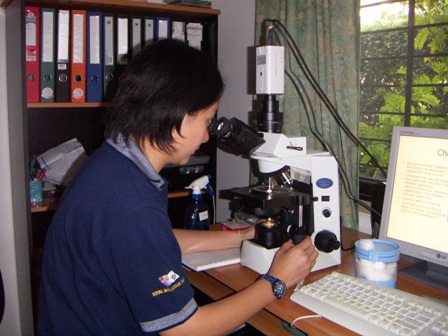
Cyclogenie means the transformation and migration of all pathogen and not pathogen germs by all phases (valences) of the border of the visibility, and among them the virus range, over the higher valence phases of the text book-in accordance with-eaten Kokken and the staebchen up to the kulminanten phases of the mushrooms and their Myzelien.
The bacteria core (Mych) plays an important role, the moreover the pH value, i.e. the acid Base household of the organism of humans (to the comparison: as is the case for the aquarium). Only if the environment is not correct, the pathogen development can take place. Either asexual by division or on sexual way by Sprouting after preceding nuclear fusion. The principle of the Polymorphic was confirmed 40 years after Enderlein by the Nobel leather castle.
more information:
http://www.dreddyclinic.com/faq_live_blood_microscopy_1.htm
Wednesday, May 23, 2007
The Fairy Tale of E-coli Causing Sickness and Death
This was an email sent to me today concerning E-coli from spinach causing sickness or even death. It came as a result, I am quite sure, of the AOL news coverage and the hour-long CNN documentary which has been running all weekend about the spinach scare in 2006, farming practices, the problems of the FDA, the wrongly theorized cause, the supposed remedies, and lawsuits and so on.
It also highlighted the death of an elderly woman and the near-death of a little girl. I am always a bit suspicious and fearful of news media, like politicians, who spend too much time telling me what to be afraid of and who to blame." This is especially true when most of the accompanying ads seem to be from the pharmaceutical industry.
I am sharing with you my thoughts and response to questions. The host and interviewer of the piece was Dr. Sanjay Gupta, CNN's medical correspondent.
Here is the email letter:
"Dear Dr. Young "I was just wondering if the "germ" finds a friendly environment (over acidic), can it multiply and create more waste and therefore there is a possibility of exposure that leaves an acidic body in jeopardy.
"Obviously E-coli has been used for ages in classrooms (because it doesn't take much to provide it with the necessary ingredients for quick replication for observation) without hurting anyone, but if for some reason, some crazy kid decided to lick his slide and the internal terrain was compromised already, would the e-coli (or any other bacteria) then be able to replicate internally and produce enough waste to tip the balance (though I would have thought it would take ages)? Or is that really out of the question? Clearly the focus is bas-ackwards (as they say) in western etiology.
"When a group of kids who have been mistakenly identified as being "struck" by E-coli from a bad meat source, is it simply that the "'bad" (is there any good? : ) meat has become so acidic that it is like drinking industrial solvents? Would chemical tests of the suspect sources reveal the problem? Biological interpretations appear to be just wrong.
"Thank you so much for taking the time to answer these!"
Sally
Dear Sally: Thank you for your email questions. I have stated in my writings that germs (the "germing" process) cannot cause disease but "germs" themselves do produce digestive (enzymes) or metabolic waste products called exotoxins and mycotoxins or simply acids that contribute to disease states.
I have further stated that there is only one cause of sickness, dis-ease and death and that is the over acidification of the tissues (latent tissue acidosis) and then blood (compensated acidosis and then decompensated acidosis) due to an inverted way of living, eating and thinking.
Your question of whether or not bacteria can cause disease is an important question that has been debated for over 100 years. As you know, the French scientist, Antione BeChamp, an adversary of Louis Pasteur, said, "the germ is nothing; the terrain is everything."
Maintaining the healthy alkaline environment or terrain of the human body is critical for good health and for the prevention of any disease. The human body is alkaline by design and acidic by function. That is, the body is designed to run on primarily alkaline fuel because all bodily functions create acids which must be largely neutralized to protect the body itself from the acidic creation of disease and dis-ease.
The body maintains this alkaline pH design at 7.365 by eliminating gastrointestinal and metabolic acids through urination, perspiration, defecation and respiration. When we eat anything, including highly alkaline spinach, there will be residues of acids that can be easily buffered from the sodium bicarbonate produced and released in the stomach. So what comes first the bacteria or the acid? What we have here is the chicken or the egg scenario. I would suggest to you that everything is the prey of life and nothing is the prey of death. What can be nourished can be consumed and everything is simply trying to live.
Since our bodies run on energy in the form of electrons, the by-products of energy consumption is always acid. When acids from the process of metabolism are not properly eliminated, they can spoil our cells that make up our tissues that then gives rise to biological transformations known as bacteria.
So the answer to the question, "what comes first the bacteria or the acid?" the answer is clearly the ACID. Acid is the bi-product of energy being used or consumed. Bacteria is then a by-product of energy being consumed like the smoke from a fired gun, of spoiling or degenerating matter not the cause of the spoiling or degenerating matter. ACID is the only cause for spoiling of degenerating matter or tissue! In today's headline on AOL News it said, "Two More Deaths Possibly Linked to Tainted Spinach." A key word in this headline is "possibly" which infers that scientific investigators just don't know! And I believe that they know that they don't know. But they are going to try and calm your fears--and so they are going to come up with some sort of explanation that they can sell to the public.
But I am convinced that tainted or fermenting spinach which would contain very little amounts of oxalic acid and not enough to make one sick and it would ordinarily be neutralized by the sodium bicarbonate secreted in the mouth, stomach and intestines. Why? Because if spinach is that tainted or fermenting it would have a terrible smell, a terrible taste, and unlikely that anyone in their right mind would eat it. States of ultimate sickness, disease and then death comes as a process of poor lifestyle and dietary choice that then lead to a state of over acidity. The oxalic acid from a few leaves of Spinach could not possibly shut down the kidneys.
Now consider this: Most people get their spinach from sealed plastic bags designed to keep the spinach fresh for awhile. My bet would be that of the 250 or so spinach leaves in that one bag, NO SINGLE LEAF came from even the same plant. By the time the leaves are separated from the plant, washed and rewashed, tumbled and tossed, run over the multiple conveyer belts, those leaves came from all over the farm field, and sometimes from different truck loads and possibly even different fields--all in the same bag at your grocery store.
Have you ever seen the size of those commercial spinach fields? They look like a square mile or bigger. And there is field after field after field. Perhaps we are sophisticated enough to track a bag from the consumer, back to the store, back to the packager, and back to the commercial farmer, and maybe even back to one or two farm fields. But the chance that the FDA or any governmental agencies is sophisticated enough to isolate e-coli down to a few plants or area of a field is beyond my comprehension and certainly my confidence in the U.S. government.
In that enormous field, whatever they found, it is my guess that they would have found approximately the same thing anywhere in the field. And they could go next farm over and find the same results. Thousands of bacteria are everywhere as a product of evolution and a stage of life transforming.
You say the spinach field was too close to a field of cattle? Have you ever driven through California or most other states and looked at the farms? There are thousands of cattle fields and hog farms in proximity to fields of trees, plants and vegetables. There's e-coli everywhere. You have had plenty of e-coli come and go in your body. Fifteen million e-coli bacteria can sit on the head of a pin. I also believe that a hundred thousand people ate spinach leaves from the same field, and if there was some E-coli present, thousands and thousands of people ate those leaves and did not get sick.
What I do know and what I do believe is that many people could conceivable had perhaps some miniscule amount of bacteria, as we all do, from whatever source, and yet, the blood cells, tissues, and rivers/fluids of these peoples' bodies were acidic to begin with.
This internal-external distinction is important because it helps us in the treatment of the dis-ease as we change our focus from the bacteria to the state of over-acidity pH versus the actual alkaline pH of the fluids of the body. And if someone is taken to the hospital with whatever symptoms, they are then treated with a myriad of acidic components, including antibiotics, adding fuel to a fire already started. Rather than using acidic drugs to kill some harmless bacteria, the focus should change to reestablishing the alkaline internal pH environment with alkaline buffers such as sodium bicarbonate.
But hospitals do not do that because they are operating from the same wrong-headed theory as are many governments of the world, U.S. health agencies, medical schools, research laboratories, and lastly the 1,000 pound pharmaceutical gorillas that--along with your tax dollars--fund the whole she-bang.
To suggest that those individuals died from E-coli found in the kidney is like blaming the smoke from a fired gun as the cause of death. Logically we know that smoke from a fired gun cannot kill. We can even argue that it is not the bullet that can kill. It is the person that is pulling the trigger that causes the gun to be fired that causes the release of the bullet and then the residue of smoke. E-coli is the smoke. The bullet is the acid. And the triggering factor is the individual's lifestyle and dietary choices.
Not for a moment do I believe that anyone, unless staving to death, would eat spoiled fermenting smelly and awful tasting spinach. I do not believe that people are that silly, and I am not about to believe the ridiculous claims that spinach was the possible cause of death as suggested by western germ theory scientists. To justify their claims, these medical savants are now saying that E-coli is the possible villain in this fairy tale by suggesting that it is coming from migrant workers who are urinating and defecating in the fields around the spinach, or the nearby cattle and their excrement, or the pig farm, or the water run off that soaked an area of the field.
I can hardly contain myself from laughing out loud when organic farmers are using chicken excrement to fertilize the fields of spinach and other vegetables and fruits, and it certainly is not all "treated" fertilizer. Here at Rancho del Sol, we have used chicken excrement in and around our organic grapefruit and avocado trees for its oxygen and nitrogen components. This is what all organic farmers use. So what would be worse, human excrement or chicken excrement used to fertilize? The point is, we must focus on the cause not the effect and the cause will always be where you find the poison, or the acid, not the "germ" or the "germing process". As for Legionnaire's disease this also is not caused by bacteria. It is caused from over indulging in acidic foods and drinks. And plenty ate the same food and didn't get sick. And there are plenty of those who were sick that had been diagnosed with Legionnaire's where no bacteria could be found. The reason? Acid makes us sick not bacteria.
This is also the case with individuals diagnosed with HIV/AIDS. They are sick but there is no virus present! So what is the cause? It can only be from an over acidic environment. So, we need to look at the acid from our lifestyle and dietary choices.
The acid from the beverages we drink such as tea, coffee and alcohol. The toxins from meats that release nitric, uric, sulfuric, and phosphoric acids. Or the toxins from sugar like acetlyaldehyde or lactic acids. These are the true culprits or poisons that make us sick, tired and fat that lead to our eventual death. Finally you asked the following questions: The first was...I was just wondering that when the germ finds a friendly environment (over acidic), can it multiply and create more waste and therefore is there a possibility of exposure that leaves an acidic body in jeopardy. The word "germ" comes from the German language which means to sprout or germinate. Allow me to digress a moment. Germs are not really nouns, even though we think of them as "things" but they are not; "germ" should be a verb--or a noun derived from a verb. I think it should be a gerund if I remember my English correctly. A word that ends in "ing." It's not a thing so much as it's an activity. It should be called "germing." Instead we say germination and germinating.
"Germs" are the germinating function of changing matter and are NOT species specific, that is, they do note mate or reproduce. The reality is that germs are not things but actions or reactions from a changing environment. The germ or germination or germing is the expression of that change in matter and should never be classified. Simply, E-coli is a stage of transforming matter and not a reproduction due to an over acidic environment.
E-coli is the change of matter or tissue in a changed environment that is pH sensitive. It is no different than taking water, a liquid and seeing the change that takes place when we change the temperature to zero degrees Celsius and the water changes to ice, a solid. It is still water but in a different form. And so it is with E-coli. E-coli is a form of matter that is born out of the cell when the pH of the environment becomes acidic.
The second question was...obviously E-coli has been used for ages in class rooms (because it doesn't take much to provide it with the necessary ingredients for quick replication for observation) without hurting anyone, but if for some reason some crazy kid decided to lick his slide and the internal terrain was compromised already, would the e-coli (or any other bacteria) then be able to replicate internally and produce enough waste to tip the balance (though I would have thought it would take ages)? Or is that really out of the question? Clearly the focus is bas-ackwards (as they say) in western etiology? Once again germs cannot cause disease even if the child licks the slide. This experiment was done many years ago when Claude Bernard a French physiologist drank a glass of cholera bacteria with little affect other than some nausea. In fact, to prove my point I am willing to eat E-coli on fresh spinach leaves for CNN if they are willing and ready for the TRUTH! Another question was....when a group of kids who have been mistakenly identified as being "struck" by E-coli from a bad meat source, is it simply that the "bad" meat has become so acidic that it is like drinking industrial solvents? Industrial solvents differ greatly, but yes, depending upon some variables, eating any meat is highly acidic and would be like drinking industrial solvent, assuming their quantities and other factors were similar. Another question was....would chemical tests of the suspect sources reveal the problem?
Yes, if tested you would find an increase of specific acids in the suspected sources. Question....are biological interpretations....just wrong? You are right in your suspicions. Biological interpretation is wrong because scientists are focused on the matter rather than focused on the environment around the matter. It comes back to the fish bowl metaphor. When the fish is sick, do you treat the fish or change the water? Western medical science is focused on the fish, treats the fish and then neglects to clean up the environment not realizing that the fish is only as healthy as the environment it is swimming in.
This is true with the fluids of our body. If we find E-coli in the tissues, this is a transformation of the tissues due to the acidic fluids found in and around that tissue. There is no infection, only an outfection of matter giving birth to bacteria due to fluid acidosis. The key to staying healthy is to eat fresh organic greens whenever possible, to build healthy blood, and to help maintain the alkaline pH design of our body.
That includes eating lots of fresh organic spinach! Stay away from the acidic foods, liquids, supplements, and treatments. And especially stay away from those faulty or "acidic" theories of western scientific thought that are based upon a false belief that "germs" cause disease -- it could kill you. This fairy tale of E-coli causing sickness and death is just over the top, it smells of big money, and I see lots of dubious irradiation cost and solutions just down the road. Kindest Regards, Robert O. Young Ph.D.
Sunday, January 21, 2007
After 25 years of research studying the affects lifestyle and diet on the pH of the blood
 After 25 years of research studying the affects lifestyle and diet on the pH of the blood, I have learned that the human organism is alkaline by design and acidic in all of its functions. If one can maintain the delicate alkaline pH of all the body fluids bathing every cell from within and from without at 7.365 then life will continue without pain, suffering, sickness or disease.
Louis Pasteur's germ theory has become a curse. Antoine BeChamp an adversary to Pasteur and his germ theory for scientific fraud said this about the germ theory, "there is nothing so false that does not contain some element of truth, and so it is with the germ theory."
The germ theory is the controlling medical idea for the world. In Pasteur's day, and ever since, other proposed theories about the cause of disease have fallen on death ear because they have tended to contradict that paradigm. NO matter how simple and logical an idea about the cause of disease, if it does not promote the concept of invasion of germs and their specific cures it does not fit into the medical paradigm.
More importantly, the germ theory has become a curse because it has encouraged individuals to give up responsibility for their own health over to the medical community. If germs cause disease it stands to reason that control belongs to the medical community whose tireless researchers spend trillions of our money to find the right pill or potion to annihilate disease-causing germs.
This quest to cure disease through medication is at the heart of modern allopathic medicine and the multi-trillion dollar pharmaceutical industry. It is a quest that persists despite evidence indicating that airborne germs do not cause the disease for which they are credited.
After more than a century of trying, the Pasteurian germ theory has utterly failed in the quest to a cure for any disease. All major degenerative diseases are on the increase, as are so called infectious diseases which are not infectious at all. Every year, old symptoms are given new names - names like MS for polio, AIDS for poor sanitation, poor nutrition, poor lifestyle choices and drug use, Epstein-Barr virus for connective tissue disorders like fibramyalgia - to make them appear to be the work of a new germ. Unless we turn this nonsense around, the human race could become extinct like the dinosaurs from the treatments of modern medicine to kill a non- threatening or phantom germ.
If we want to find the cure for disease we need only to look at our dietary and lifestyle choices. If you heed the ignored, even rejected discoveries of Pasteur's peers and scientists of the 19th and 20th century, adding those to my own discoveries, you will learn the true cause of disease.
Until the medical community starts looking at causes rather than devoting its time looking for cures, and until we start taking responsibility for our own lifestyle and dietary choices, I believe the human race is in trouble of becoming extinct.
Dr. Benjamin Rush, Physician and signer of the Declaration of Independence, 1776 said this: "Unless we put medical freedom into the Constitution, the time will come when medicine will organize itself into an undercover dictatorship, To restrict the art of healing to one class of men and deny equal privileges to others will constitute the bastille of medical science. All such laws are un-American and despotic."
Where does life begin? In the womb or the grail, the holy grail, in the amniotic fluid, in a 98.6 F, one percent water and salt solution or 1 part salt to 100 parts water. This solution is called the sol. This natural salt solution, called "sol" is from the origin of the word, directly connected to the word "soul". What we call "sol" for our salt solution (a solution of two in one- no more polarity), was believed by the ancient Celtics to represent our soul, as the soul originated, in their belief, from the ocean where we are all born from the same fluids, arising from the same "sol" a solution of salt and water.
Our body in its wholeness is an ingenious creation of nature, It has been given all mechanisms to not only sustain its life but also to create new life. Every healthy person has innate regulatory mechanisms to maintain its alkaline design and self-healing powers, which ensure or reestablish the natural balance of the bodily functions, the homeostasis.
It is not the doctor that heals us, nor the medication, but our own innate alkaline regulatory mechanisms. Our body is able to fully regenerate itself. Therefore, it is advised to use great discernment before labeling any disease as "incurable" or "untreatable." If doctors come to the conclusion that a disease in incurable, they would be more accurate in saying that with their knowledge and experience, they are not able to offer any further help. The word "incurable" conveys fear, or false evidence appearing real, which stifles and weakens our body's innate alkaline mechanism.
Bio-chemically speaking Health is all about alkaline balance. Bio-energetically speaking Health is all about energy. Vibrating energy is the origin of matter and the origin of life. And matter is nothing more than organized energy.
In 1984, the Swiss physicist Dr. Carlos Rubbia, received the Nobel prize for discovering a mathematically calculable natural constant with which he could calculate the ratio of mass particles (matter) in relation to navigating energy particles, The ratio of matter to energy that forms matter is 1 to 9,746 to the power of 108 or about 1 to 1,000,000,000 which means it takes one billion energy units to create one single unit of matter in a materialized tangible form.
Isn't interesting that we for the most part, preoccupy ourselves with only 1 billionth part of reality: that which is in a material form and can be seen and touched. We fail to see the far greater amount of energy particles it took to materialize our reality. This revolutionary scientific discovery shows us clearly that every form of matter is subject to higher energetic interactions and subject to change of form and function.
When we analyze the energy content of any form of matter, we arrive at its smallest part, the atom and its protons, electrons and neutrons. There is ongoing movement without any contact- nothing tangible, just pure vibrating energy. This vibrating energy creates a frequency, which can be measured, a so-called wave length which can be seen using my photon interference photography. Every form of matter is characterized as a specific frequency spectrum.
And each frequency spectrum can be measured using a decibel meter. All organized matter is nothing more than organized energy that gives off a specific frequency and a specific sound which can be measured and heard. When we turn on a light or an electrical device we can see the energy but we cannot perceive the electrical current itself, but we except its existence.
This same materially non-perceivable electricity, this energy, flows through our body fluids especially our blood. Every one of us has enough measurable electrical cu rrent flowing through us to light up a 100 watt light bulb.
Life/light = energy and energy = information or intelligence. Everything that exists not only exists as energy but also as a carrier of information or intelligence, whether it is a human being, a form of food or drink, or a rock. Life is a constant exchange of energy and intelligence and the best place to view this life energy is in the live and dried blood.
Plasma which is 92% water is a good example for showing how matter as energy is transformed when additional energy is added or subtracted. Water has three different distinct bodies or states: solid, liquid and gaseous. Ice is frozen water or like the thickening of the blood.
We can see it and feel its coolness. By adding energy in the form of heat to the ice it transforms back into a liquid. When we add more energy to the water it begins to boil and the molecules start moving faster and faster that they begin to transform into steam and become gaseous. This transformation of organized energy as matter from one form to another is know as biological or energetical transformation or also referred to as pleomorphism.
Energy and intelligence are identical.
Every form of energy has a specific wavelength
Every wavelength has its individual content of intelligence
There are no accidents in the order of Nature
Meanwhile, we know of about 40,000 different diseases and the list is growing that are treated by the 1,200 different allopathic specialty fields with 58,000 different kinds of allopathic preparations or medicines. However, the word diseases in the plural form, is not a accurate.
Have you ever heard of "healths"? We are either healthy or ill. This illness signals a lack of energy and shows up in the form of a symptom. To represent a symptom as an illness is technically and scientifically inaccurate. The symptom is merely the intelligent cry of the energetically defective and suffering body, crying out for help. And normally, the body turns to a weakened organ to give us a hint, through a symptom, that things are not in order.
Our bodies either hum or honk Upset stomachs or high blood pressure or high blood sugars is the body honking. The honks of our bodies are telling us there is a state of pH or energetic imbalance.
Why does pH balance or pH Homeostasis define good health?
pH balance or pH homeostasis in humans commonly refers to the internal balance of the body's electro-magnetic and chemical systems in response to the changing conditions of the external world and the changing conditions of the internal world.
The word homeostasis comes from the Greek words: "homeo" means similar or "alki" or "alkaline" and "stasis" means a tendency toward maintaining stability. There are many homoeostatic mechanisms in our bodies that help maintain this balance and our state of health is directly related to the health of these mechanisms. pH homeostasis is maintained by dynamic processes of feedback and regulation.
pH homeostasis has only one objective: to preserve the beneficial conditions of life in the internal alkali environment. Every day we are bombarded with external influences that threaten that balanced internal alkaline pH environment. Some of these threats include becoming too hot or too cold, eating too much or eating acidic foods or drinks, breat hing polluted air and being exposed to chemicals over a period of time.
Our cells, especially the red blood cells can only survive when our bodies are strong enough to maintain pH homeostasis or to regain it quickly after we have been exposed to toxic environmental threats. Some of the pH homoeostatic mechanisms in the body include temperature regulation, dilation of the eye, blood composition, heart rate, blood pressure, water content, blood sugar level, mineral relationships, and of course the acid/alkaline balance of our body fluids. An essential feature of these mechanisms is that they enable the red blood cells, the tissue which is a product of the red blood cells and the whole of the organism, also a product of blood, to adapt to changes in both internal and external environmental conditions.
If the pH homoeostatic mechanisms are impaired the body loses its ability to regulate these mechanisms. By looking at living blood using a compound microscope we can view the quality of the red blood cell, its environment and how well the body is manag ing these pH homoeostatic mechanisms.
The interdependence and close coordination of the many bodily functions, which work so well when we are in alkaline balance or health, may be upset by a chain reaction when any part of the system breaks down from metabolic acids which have not been properly eliminated through, respiration, perspiration or urination. If this chain reaction is too drastic, the red blood cells and body cells will become acidic and begin to biologically transform into other cellular forms - like bacteria or yeast.
The normal state of health is not a static condition, but a coordination response of many systems and mechanisms. Fluctuations occur within a very narrow pH range. An imbalance of a point or two on the acid/alkaline pH scale is extremely disruptive to health. A few percentiles of variation of oxygen concentration in the blood can impair function.
In the bloodstream, the slightest changes can be observed in the structures of the red and white blood cells, the level of cellular debris, the creation of cholesterol or calcium crystals, etc. If the blood sugar content is continually elevated due to body cell transformation or breakdown, the body chemistry becomes upset. An infinitesimal deficiency of sodium, calcium, potassium or magnesium, the alkaline buffers of the body can cause a problem in the function of many body parts.
We must keep our pH homoeostatic mechanism strong so that we can deal effectively with our world. If we are humming and the process of pH homeostasis is orderly, life continues; if we are honking and the pH homeostasis is continually being disrupted, our health is in jeopardy.
pH Homeostasis is a bit like balancing the books in accounting. It is maintained by balancing inputs with outputs.
How well we adapt in health and sickness is largely a function of the pH homoeostatic mechanism. The body's chemistry response to such subtle changes that a negative thought, an acidic food or drink, or eating too much food can be a problem for maintaining balance.
In 1988 an article of the New England Journal of Medicine stated that, "most major chronic disease probably results from the accumulation of environmental factors over time in genetically susceptible people."
In 1965, Rene Dubos, a medical historian and philosopher, pointed out that the body is imperfect in its attempts to adapt and maintain pH homeostasis. She said, "the mechanisms involved in regulating homeostasis don not always return the body's functions to their original state. They can be misdirected. The body only has the ability to adapt to insults for so long. When it can no longer adapt , degeneration sets in. Health is the state that the body attains when an individual responds adaptively and restores the body to its original integrity."
The term "homeostasis" was coined in the mid-1920's by the American physiologist, Walter B. Cannon. But he was building on a concept of balance that dated back to ancient Western, Eastern, and Middle Eastern civilizations.
The balance equals good health equation was first suggested by Hippocrates (460-375 BC) and the ancient Greeks. Hippocrates considered health to be a state of harmonious balance and disease a state of disharmony. He and his contemporaries believed that harmony and balance existed between organs, between bodily fluids, and between body and soul. When the body is out of harmony and balance, illness occurs.
Hippocrates studied the entire patient in his or her environment, noting the effects of climate, food, and occupation on health. "Our natures are the physicians of our diseases, " he said, describing the healing forces we all have within us as the healing power of Nature. It was the physician's objective to restore harmony with food, exercise, rest, and with medicinal remedies designed to remove the harmful acidic excesses. This conservative approach was designed to let nature do the healing and above all, as Hippocrates said, "to first do no harm."
The Greeks ideas on equilibrium and health evolved further under the philosopher Aristotle (384-322 BC). He felt that a healthy body worked through what he described as a hemostat, a device that returns the body to a state of equilibrium even when it is subjected to stimuli that disturbs this balance. Everything is tied to this state of equilibrium, including the psyche and emotions, and nothing could be regarded as a separate component.
To lead a healthy life, the condition of balance had to be maintained, This could only be achieved if the body had an adequate feedback system, a means by which signals were transmitted to different parts of the body to help move it back into balance when it moved too far off alkaline center.
This psychological viewpoint was shared by another philosopher, Epicurus (341-270 BC). In his writing he referred to psychological stress and suggested that an individual's quality of life could be improved by coping with what we would now describe as emotional stressors.
As early as about 120 AD in India, Eastern philosophers had reached similar ideas about the importance of balance in health. A general medical textbook from that time, the Caraks, described health as a balance of bodily elements know as dhatus, and a happy mental state called prasana.
The Middle Eastern approach incorporated the Hindu teachings with the Greco-Roman medical doctrine. Being base upon both religious and philosophical ideas, Islamic healing involved both body and soul.
Over 1000 years later, during the Middle Ages in Europe, good health was still linked to this notion of balanced physical, emotional, and spiritual state. To help people achieve this state, European hospitals were set up by religious orders and attached to abbeys, monasteries, and convents. Doctors prescribed diet, rest, sleep, exercise, and salt baths.
In 1600 Thomas Sydenham had begun classifying diseases, even though he believed disease was a result of imbalance, consistent with Hippocrates and Galen.
In 1628 Harvey traced the circulation of the blood, arguably perhaps the single greatest achievement in medicine.
In 1753 James Lind showed that Scurvy could be reversed with the limes that contain limonene - an antitoxic or antacid.
Doctors began to lose their way in 1796. In 1796 Benjamin Rush observed that all fevers were associated with flushed skin, he concluded that this was caused by distended capillaries and reasoned that the proximate cause of fever must be abnormal "convulsive action" in these vessels. He took this a step further and conclude that all fevers resulted from disturbances of capillaries and since the capillaries were part of the circulatory system, he concluded that a hypertension of the entire circulatory system was involved.
Rush proposed to reduce this convulsive action by "depletion" or bleeding. A reminder that the medical establishment's acceptance of bleeding exists today in the name of the British Journal "The Lancet" one of the leading medical journals in the world. Today bleeding is called phlebotomy.
Also, In 1796 Edward Jenner took the pus from the runny sores of sick cows and injected it into the blood of his "patients. He thought that since pus is seen routinely in all kinds of wounds, pus was seen as a necessary part of healing.
In 1788 vaccinia was the bacteria that medical science suggested caused cowpox.
In 1830 the development of the first modern day achromatic microscope.
In 1835, Harvard's Jacob Bigelow argued in a major address that in "the unbiased opinion of most medical men of sound judgement and long experience . . . the amount of death and disaster in the world would be less, if all disease were left to itself."
In 1840 Jacob Henle in his essay, "On Miasmata and Contagia" first formulated the modern germ theory. He suggested that disease seem to germinate, grow and spread - like a first point or origin, a seed, a bacterium. The germ theory said that minute living organism invade the body, multiply and cause disease and that a specific germ causes a specific disease.
In 1850 Samule Thomson said, " May the time soon come when men and women will become their own priest, physicians and lawyers - when self-government, equal rights and moral philosophy will take the place of all popular crafts of every description . . False theory and hypothesis constitute nearly the whole art of medicine."
In 1860 Louis Pasteur suggested that living organisms, not a chemical chain reaction caused fermentation, winning converts to the germ theory.
In 1881 an American scientist George Sternberg was the first to isolate the fungus, pneumococcus and the first to observe the white blood cells engulfing bacteria, a key to understanding the immune system.
In 1882 a German, Robert Koch isolated the tubercle bacillus and declared it as the bacterium that caused tuberculosis that further confirmed the germ theory of Pasteur.
In 1884, German scientist Friedrich Loeffler isolated the diphtheria bacillus from throats of patients, grew it on a special medium (labs today call this Loeffler's serum slope to grow the bacteria from suspected cases), and began carful experiments in animals that took several years. His work suggested that the bacteria themselves did not kill; the danger came from a toxin, diptherium, an acidic poison that the bacteria excreted as a waste product from sugar metabolism.
In 1885 Max von Pettenkofer insisted that Koch's bacteria were only one of many factors in the causation of disease. His dispute with Koch became increasingly bitter and passionate. Petterkofer determined to prove himself right, prepared test tubes thick with lethal cholera bacteria. Then he and several of his students drank them down. All survived. Petterkofer claimed victory that germs do not cause disease.
In 1889 Pasteur's proteges, Emile Roux and Alexandre Yersin grew broth thick with diphtheria bacteria and used compressed air to force broth through a filter of unglazed porcelain. The filter was designed by Charles Chamber land, a physicist working with Pasteur; though only a tool, the filter itself would prove to be immensely important. NO bacteria or solids could pass through the porcelain. Only liquid could. They then sterilized this liquid. It still killed. That proved that bacteria, an insoluble could not kill, but a soluble, an acidic toxin did the KILLING.
The cure from diphtheria was not in killing the bacteria but neutralizing the acids or excretions from the bacteria.
In 1900 Frederick Gates and intellect and Baptist Minister and an assistant to John D. Rockefeller, saw an opportunity to exploit the medical field because of its admitted uncertainty and ignorance of the time. He had organized many business ventures for the Rockfellers' and convinced John D Rockefeller to open the Rockefeller Institute for Medical Research. The Rockefeller Institute saw medicine itself as its field from its earliest existence scientists studying disease based upon the germ theory of Pasteur.
In 1901, William Henry Welch was hired by John D. Rockefeller to set up the Rockefeller Institute for Medical Research. William Henry Welch was steeped in the germ theory and established its strong hold on the medical model. You might call Dr. Welch the Father of American Medicine and the perpetrator of the Pasteurian Germ Theory.
After the civil war medicine had discovered drugs - such as quinine, digitalis and opium of which Oliver Wendell Homes the physician Father of the Supreme Court justice said, "I firmly believe that if the whole materia medica, as now used, could be sunk to the bottom fo the sea, it would be all the better for mankind - and all the worse for the fishes."
In 1911, the head of the school training French army doctors in public health said that germs alone were "powerless to create an epidemic." But it was too late, this particular view was now considered simply a minority opinion. The germ theory now had its hold on the governments of the world!
IN 1911, the medical establishments made up a story that Peyton Rous discovered a bacteria that caused cancer and received a Noble Prize for his discovery posthumous in 1966. This gave rise to the term virus named after Peyton Rous's bacteria. Peyton Rous never suggested this in any of his research that his bacteria caused disease let alone cancer. This story gave rise to a new group of bacteria called filterable bacteria that the medical community now refers to as virus - beginning 1996. There is NO scientific evidence that shows that virus's have ever caused ANY disease.
These ideas of balance were some distance from those of earlier societies that ascribed illness to the supernatural powers they believed governed their lives. The Babylonians, the Egyptians, the ancient Americans saw disease as an entity unto itself, a potent demon that struggled to dominate, attacked, penetrated, and possibly even killed its unfortunate host.
Offend the Gods, an ancestor, or an evil witch and be struck down as punishment. Lead a sinful life and you were tempting fate.
Of course, we perceive that these ideas about disease are no longer widely believed, which makes it all more the ironic that Pasteur's germ theory has had and still has a stranglehold on 19th, 20th and now 21st century medicine. As medical writer Alberto Seguin described in an article entitled, "The Concept of Disease," the demonic idea of disease reached its full height with the germ theory. It became possible to bring together rational and scientific thought with irrational tendency to personalize disease. The germ in what ever name it is called, West Nile Virus, Ebola, Hunta, HIV, Anthrax, SARS and now AVIAN, are the scientific demon, the curse, the lie and the fraud that is said to attack and kill!
If we will consider disease as a symptom of disease not the cause, then the germ is nothing more than an expression of imbalance and a biological transformation of what use to be organized to that which is changing into a new form. This was my discovery in 1994. I witnessed biological transformation as seen on pg. 126 of my book "Sick and Tired" the transformation of a rod bacteria back into a red blood cell and then back into a bacterial rod.
I knew for the first time that bacteria was not a demon, not an entity but a transformation, a new formation of a preceding form. Not the cause of disease but the expression of a change in the internal environment which had given rise to change. For several years I felt alone in this discovery until I learned of the works of the giants that proceeded me that had their finger on the magic of life.
Claude Bernard (1813-1878) "The terrain is everything the germ is nothing." And upon the death bed of Louis Pasteur admitting to Claude Bernard that he was right in 1895.
Antoine BeChamp (1816-1908) "Disease is born in us and from us."
Florence Nightingale - a famous nurse (1820 -1910) Mathias Schleiden and Theodor Schwann (1839) Gunther Enderlein ((1872- 1968) Walter B. Cannon (1871-1945) "Only by understanding the wisdom of the body shall we attain the mastery of disease and pain that will enable us to relieve the burden of the people."
Royal Raymond Rife (1888-1971)
Wilhelm Reich (1897 - 1957)
Gaston Naessans (1924-2005)
Philosophically speaking, Pasteur had an ally in Napoleon III, who came to power in 1852. The Emperor believed in a police state and in using complete control to rule. Pasteur's mechanistic idea of disease, finding the right cure for each germ, fit into this philosophy of control.
Giving the responsibility to the any government to cure disease is giving up control. It takes responsibility - and power - away from the individual. In the words of Antoine BeChamp, "there is nothing so false that does not contain some element of truth and so it is with the germ theory."
One of six of us will become diabetic
One of two of us will develop cancer
One of two of us will develop cardiovascular disease One of six couples will suffer from unexplained infertility.
One of seven women in the US will develop breast cancer.
We need to get out to the disease business. If we want to understand health, energy and vitality then we need to study the people who are healthy. Over the last 25 years I have been studying health and how it relates to the blood. Viewing live and dried blood is the pinnacle of understanding health and how to achieve health with alkaline foods, drinks, exercise, breathing, getting adequate rest, etc.
Now, I pray and hope that you will realize that we are all responsible for our own health - you alone. A medical practitioner can only help to relieve symptoms. Ultimately, you are the one who has to take charge. Health is a choice just as disease is a choice. You are responsible for what goes into your mouth and what comes out of your mouth, as well as for what you think, feel and do. Health is all about choices and consequences.
The health and energy of the human organism is the knowledge that are bodies are alkaline by design and acidic by function and the best way to maintain that alkaline design is through an alkaline lifestyle and diet.
Related Courses
· Live Blood Analysis (3 days)
· Live Blood Analysis (6 days)
· Live Blood Analysis (80 hours)
· Live Blood Analysis online course (1year)
· Colon Hydrotherapy Course 45 hours (6 Days)
· Cleansing Combo Pack
· Microscope Equipment
Friday, October 20, 2006
CHAPTER 8: The Blood and the Third Anatomical Element by Antoine Bechamp
THE MICROZYMAS AND THAT WHICH IS STYLED BACTERIOLOGY; THE MICROZYMAS, LIVING BEINGS BELONGING TO AN UNSUSPECTED ORDER OF THEIR OWN; OVULAR AND VITELLIN MICROZYMAS; MICROZYMAS AND MOLECULAR GRANULATIONS; GEOLOGICAL MICROZYMAS; MICROZYMAS OF THE EARTH AND OF THE WATERS; MICROZYMAS AND BACTERIA; BIOLOGICAL CHARACTERS OF THE MICROZYMAS; MICROZYMAS AND THEIR PERENNITY; THE ORGANIZED END OF ALL ORGANIZATION; OVULAR AND VITELLIN MICROZYMAS; MICROZYMAS AND PATHOLOGY; MICROZYMAS AND COORDINATION; PHAGOCYTOSIS; MICROZYMAS AND ANTHRAX; MICROZYMAS AND DISEASE; MICROZYMAS AND MICROBES; MICROZYMAS AND THE INDIVIDUAL COEFFICIENT; MICROZYMAS, LIFE AND DEATH; MICROZYMAS AND HEALTH; MICROZYMAS AND RECEPTIVITY; MICROZYMAS, BLOOD AND PROTOPLASM; CONCLUSIONS.
To place beyond dispute the autonomy of the microzymas it is necessary to bring into prominence the facts and observations which prove that the existence of the microzymas as living beings has not been suspected by those naturalists who have studied the infusoria, nor yet by the anatomists who have studied the cellules and the tissues.
Demonstration that the microzymas, autonomous anatomical elements in living organisms, are living beings, morphologically determined, belonging to a category of their own, having no analogue.
Let us first get rid of the hypotheses that the microzymas are either the bacterium termo, or the Monas crepusculum, or the Micrococcus, or the spores of bacteria.
It is to be borne in mind that I gave the name of microzyma at first to the geological figured ferment of the chalk of Sens and of another calcareous earth; that I have discovered this ferment in other calcareous rocks, always of a spherical form, very brilliant, having the brownian movement and smaller than all the vibrioniens described by authors.' Ehrenberg described (in the chalk) the remains of fossil microscopic organisms called Polythalamies and Nautilites, but makes no mention either of Monas crepusculum nor of Bacterium punctum. In fact, none of the microzymas can be confounded with those described by Ehrenberg under those names. The microzymas are even smaller than the Bacterium termo, the smallest of the known infusoria, the first term of the animal kingdom, according to Felix Dujardin.
Nevertheless the microzymas had been seen in cloudy infusions of vegetable and animal matters, but they were taken for "the active molecules of Robert Brown"; that is to say, for molecules having the staggering or scintillating movement without change of place, called "brownian movement," and no further attention was paid to them.
In fact, the microzymas are neither the Bacterium punctum, nor the Monas crepusculum, nor even the Bacterium termo, which is much smaller than they. It will be sufficient to establish this fact by referring to the description of these monas, etc., given by F. Dujardin, in his "Historie Naturelle des Zoophytes," Infusoria, pp. 215 and 279.
On the other hand, if these bacteria, these monads, these micrococci, belong to determined species, it is contrary to the data of natural history to regard them as capable of being transformed into other genera and species of vibrioniens, as we see the microzymas produce them by evolution; the suggestion that the microzymas are the spores of schizomycetes is also untenable for the following reasons: A spore is a seminulum, or an egg, if according to the old view, the bacteria are animals, and search has been made for the eggs of bacteria; a grain, if according to the new creed the bacteria are vegetable; egg or grain, a spore cannot multiply itself as the microzyma does, and cannot therefore be the same thing.
Take the microzymas of the ovule in the Graafian vesicle in the fowl, and the microzymas of the vitellus of the mature egg. In the ovule there are ovular microzymas, in the vitellus, vitelline microzymas. At a given moment there are, say, a milligramme of microzymas in the ovule, and there are two or three grammes dried at 100° C. (I have isolated and weighed them) in the vitellus.1
They have then multiplied prodigiously during the development of the vitellus.2
So much then for the anatomical analysis for the egg of the fowl, and the chemical analysis shows that the elementary composition of the ovular microzymas is not the same as that of the vitellin, the former, as will be seen, being less carbonized; evidently their composition changed in the process of multiplication.3
Chemical analysis has further demonstrated that the vitellin microzymas of several species of birds differ from those of the fowl in their composition and especially in the properties of their respective zymases.4 This accords exactly with the microzymian theory, for it is evident that the microzymas are what they should be specifically, in order that, by incubation, the egg should produce the proper bird, its tissues, and all that pertains to its future being. And it has been demonstrated that during the development of the being, parallel with the anatomical development by the multiplication of the microzymas, there is a functional development of these, so that in each anatomical system they become that which they successively are in the embryo, in the foetus, in the adult, etc.
1. See the Memoir on The Albuminoid Mailers, pp. 140 and following.2. For the mode of multiplication of the microzymas see "Les Microzymas," pp. 490 and following.3. The Memoir above mentioned, p. 162.4. See J. Bechamp, "Normal and pathological albumins," pp. 77 and following.
If the hypothesis that the microzymas are the spores of bacteria were true, it would be necessary that there should first have existed in the circumambient atmosphere as many species of these spores as there are species of animal and vegetable ovules; next it would be necessary for these spores to penetrate as far as, and into the ovule, and should there multiply to fill up the vitellus of the egg of the fowl.
I need go no further, for there are still otherwise enormous difficulties, when we take into consideration the microzymas of the developed being, which are so different from the embryonal and foetal microzymas! But it now lies with the opponents of the microzymian theory to demonstrate the existence of these spores and of their penetration as far as, and into, the ovules and their multiplication.
We have thus discarded the hypothesis opposed to that of autonomy. It is also discarded by the following consideration, which deserves being underscored.
Shortly before M. Pasteur's admission in 1886 of the presence of the microzymas in the altered blood of his experiment, he had, for the purpose of denying them, asserted that the microzymas were the molecular granulations "which we all know." This was to his confreres of the Academy.
Yes, histologists and anatomo-pathologists knew them and represented them by a "stippling" in their figures of special tissues.
But their name even betrayed the opinion that they were neither organized nor living; in effect, the qualification of molecular was intended to indicate that it meant only small collections of some sort of matter; thus they were described as white, gray, minerals, fats, albuminoids, etc. They were even described as possessing the brownian movement; nevertheless, before the discovery of the microzymas, no one thought of connecting them either with the bacterium punctum or the monas crepusculum.
They were connected with anatomical organisms as being the remains of tissues, of destroyed cellules, or as amorphous matter; no one dreamed of making them come from outside. No consideration of the anatomical-molecular-granulations had anything to do with the discovery of the microzymas, but, as I have shown above, purely chemical considerations.
No, the molecular granulations are not the microzymas.
And from the time of our first note, Estor and I have stated that the microzymas exist only among the anatomical objects which in histology are called molecular granulations. But we held the microzymas to be autonomous anatomical elements; a more careful anatomical analysis enabled me to demonstrate that there exist naked microzymas and microzymas in the condition which I have termed microzymian molecular granulations.
Thus is disproved another gratuitous and erroneous assertion!
I return to the microzymas. I had described them from the commencement as being chemically and physiologically figured ferments, producers of zymases, which are called soluble ferments, and were placed in the same category as me figured ferments which are insoluble. Biologically, I distinguished them as being such as by evolution could become vibrionien, a fact which we have seen to be verified in every sense.
But in the experiments on spontaneous alterations, or fermentations, wherein microzymas become bacteria, we have seen that these were destroyed and that vibrioniens more and more minute appeared in their place, so that at last there remained only of these bacteria the forms nearest to the microzymas; in the same manner consequently, that by their destruction the cellules set their microzymas free, the bacteria in their complete destruction reproduce microzymas similar to those of the chalk, and we will now see how that is.
In the experiments on the spontaneous alterations of natural animal matters, the substances, which in a chemical sense are termed organic, which result from transformations by fermentation under the influence of the microzymas, before and after their vibrionian evolution, with or without the setting free of gas, are never entirely destroyed; that is to say, they are not reduced to a mineral condition, carbonic acid, water, nitrogen, etc.; for such destruction oxygen is necessary under conditions which reproduce those realized in geological epochs.
When I had discovered the microzymas in the chalk and in other calcareous rock, and became convinced that they were not dependent on atmospheric germs, I asked myself if they were not the living remains of organized being which had disappeared in geologic times.1 This hypothesis was verified in the following manner:
A kitten was killed and buried between two beds of pure carbonate of lime, and left in a cylindrical glass vessel, covered with a small quantity of paper in such wise that the air had free access to it, but its dust was excluded. The experiment lasted seven years. Every part of the body, except some fragments of bone, had disappeared. The carbonate of lime was perfectly white, so complete had been the work of destruction. Under the microscope, nothing was to be seen in the upper layers of the carbonate except microscopic crystals of aragonite of this carbonate; but in the beds adjacent to the place, and underneath, where the kitten had been, and beneath, there were crowds of glittering motile microzymas, such as are to be seen in the chalk of Sens, etc.
And with this kind of artificial calcareous rock, containing the microzymas of an animal of the present day, I was able to repeat the experiments on fermentation which I had made with the chalk of Sens and with other calcareous rocks, both lacustrine and marine.2 Such was the first experimental verification of the hypothesis that the microzymas of the chalk and of calcareous rocks are the organized remains, still living, of the beings which lived in the geological ages of the earths to which those rocks belonged. Read the note of the Comptes Rendus which I have just cited and you will be convinced that this verification has also been its vindication.
1. C. R.. Vol. LXX p. 914 (1870).2. Conference at the Congress of the French Association for the Advancement of Science. Nantes (1875).
I have said that the microzymas of the artificial chalk were the microzymas of an animal of the present epoch, but this needs some modification in terms to be quite accurate. They were the microzymas of the bacteria which the normal microzymas of the animal had first become by evolution. By fresh experiments I have learned that the microzymas of an entire body, or of the liver, of the heart, of the lungs, of the kidneys, under the conditions of my experiment become bacteria in the first phases of the phenomenon, these then disappear, becoming again microzymas, while the rest of the mailer already transformed is, under (heir influence, and with access of air, reduced to the mineral state, carbonic acid, water, nitrogen, etc.1 And I have demonstrated that whereas in the climate of Montpellier seven years were required to accomplish this, a much longer time would be needed in a colder climate, so that in a climate such as that of the Obi valley centuries were required.
It was then a legitimate conclusion that the microzymas of the calcareous rocks, of the clays, of the marls; in short, of all the rocks which contain them, are the organized and living remains of beings which had been living, of animals and plants of the geologic epochs; that these beings were histologically constituted as are the beings of our epoch, that their microzymas, during their destruction, had become bacteia by evolution, and that the microzymas, geological ferments, of these rocks, are those of these bacteria destroyed in their turn and reduced to their microzymas.
1. See "Les Microzymas," etc., pp. 624 and following. See also note: C. R., Vol. LXX, p. 914, "Les Microzymas," etc., p. 952.
It is not surprising then that, having long pursued the anticipated consequences of the hypothesis now verified, I have demonstrated the presence of the microzymas in the earths of the garrigues of the departments of Herault and of Card, in cultivated lands generally, in moor lands, in the alluvials, in the waters, in the dust of the streets, where they are to be found in crowds; often still in the condition of bacteria, proving that, like those of the calcareous rocks, they are energetic ferments. And already, prior to 1867, I had made known their role in the soil in agriculture.
These researches led to a result of very great importance; it was the demonstration that what was and still is called germs of the air are essentially nothing other than the microzymas of beings which have lived, but have disappeared or are being destroyed before our eyes. In fact, by precise experiments, I have proved that the microzymas of the air are ferments of the same order as those of the chalk, of the rocks, and of those of my experiments with artificial chalk; only, varying with the places, the circumambient a r may, along with these microzymas, contain conides of lichens, spores of mushrooms, bacteria and everything that the wind can disperse in it.1
1. See, for details. C. R, Vol. LXXIV. p. 629; Vol. LXIII, p. 451; and "Les microzymas." etc., pp. 122, 135. 940. 952.
There is then no panspermy such as that which Charles Bonnet had invented, nor that which Spallanzani and M. Pasteur (after me) had admitted. In short, there are no pre-existing germs. At each period, as in our days, and in each place there exist in the surrounding air only the microzymas of former beings which had disappeared and are disappearing with the things which the wind scatters in it.
But if we reflect that the species of microzymas are: first, as numerous as the species of eggs, of seeds, of spores of the various species of animals and plants; next, that there are in each animal and vegetable organism, already developed or in process of development, microzymas as specifically numerous as there are anatomical systems and organs, tissues and special cellules in these organisms, it is easy to conceive that the species of atmospheric microzymas are present in enormous numbers. One can also understand the very great number of changes which these microzymas may cause, when some one of these species fall into a fermentescible medium in which it can multiply, and either evolve in it/or build in it a cellule, or a mould.
If then, as I have demonstrated experimentally, there are besides microzymas, and as well in animals as in plants, among the micro-organisms of the circumambient air, spores, conides of fungi, of lichens, even actual cellules of ferments,1 it is easy to understand that if these micro-organisms fall into fermentescible media they will develop in it, each according to its nature, and that various productions, moulds, divers cellules, and at the same time vibrioniens, may appear in it.2
But in all the observations and in all the experiments relative to the spontaneous change of natural vegetable and animal matters, and in the fermentations of sugar or of fecula by aid of the tissues and humors of animals, when the influence of the micro-organisms of the air has been destroyed or suppressed,3 only microzymas and vibrioniens, and vibrios or bacteria, fruits of their evolution, are seen; this proves that the microzymas are autonomous anatomical elements existing in it of themselves.
1. "Sur L'origine des ferments du vin," by A. Bechamp, C. R., Vol. LIX, p. 626 (1864).2. See C. R., Vol. LXXIV. p. 115, and "Les Microzymas," etc.. p. 948.3. Here a complementary explanation is necessary to explain more clearly the mode of action of creosote in the experiments in which it has been employed to annihilate the influence of germs of the air. And first of all, in speaking of germs, it no longer relates to this vague something, which when called upon by Ch. Robin to define, M. Pasteur called "origin of life," but figured ferments, upon which creosote exercises an influence clearly determined. I must therefore recall that I have several times insisted on the fuel that creosote is efficient in annihilating the influence of the germs of a limited volume of the surrounding air, unless the air be renewed. And it is so, because a limited volume of air contains only limited number of micro-organismic ferments. But creosote, while it does not prevent the ferments from acting, hinders their multiplication. In reality the ferments of a limited volume of air, which are capable of acting upon a fermentescible medium, do act upon it, but only in proportion to their quantity, in such wise that the result is so inappreciable that it is as though it were nothing; it is thus that the quantity of sugar, inverted, in the presence of creosote, by the microzymas of a small limited volume of air can be determined neither by reagents, nor by the polariscope. But if a slow current of several hundred litres of the same air is caused to act upon a creosoted solution of sugar the microzymas and other micro-organisms retained by the liquor render this at last cloudy, and. thus accumulated, there are among them some which effect the inversion, without developing moulds, while the microzymas undergo a greater or less vibrionian evolution. Such is the exact idea to be formed of the influence of the creosote, and of the role of the atmospheric ferments. When, owing to their presence, productions such as moulds are produced, it is because die special conditions of existence of these moulds, etc., have been realized. But microzymas in their function of anatomical elements only become vibrioniens from the substance of tissues and humors, ever, in spite of the presence of creosote, provided the volume of air be limited or completely absent.
These statements and considerations may be summed up in the following propositions:
(1). The microzymas of the animal organism proceed from the vitellin microzymas, which are autonomous anatomical elements in the vitellus.
(2). The number of anatomical species of microzymas is enormous.
(3). The essential biological characters of the microzymas are to be creators of cellules by synthesis and of vibrioniens by evolution.
(4). The physiological and chemical characters of microzymas are to produce the zymases and to be themselves ferments having a determined form.
These propositions are also true for plants beginning with the ovule; but from the fact that a microzyma may become a vibrionien by evolution, it necessarily follows that the species of microzymas being innumerable the species of vibrioniens are likewise innumerable.
It is further important to remember that an anatomical element microzyma is animal in an animal, vegetable in a vegetable. Hence arises this question: To what kingdom belongs the bacterium of such or such an animal microzyma? Of such or such a vegetable microzyma? We must remember that any microzyma, before it accomplishes the evolution which produces a bacterium, passes through the evolutionary phases of microzyma slightly changed in form, of microzyma successively associated in twos, in threes, in several grains, etc. But those forms have been described under the names of Monas, of Bacterium termo and punctum, of Coccus, of Diplococcus, of Torulo, of Streptococcus, of Micrococcus, of Mesococcus, of Microbe with a point, of Microbe with a double point, etc. Nor is that all; bacteria in spontaneously destroying themselves to become microzymas similar to those of the rock-chalk or of the artificial chalk of my experiments, have passed through new forms, of which the most constant is that which has also been described as the Bacterium termo.1
1. See, on this subject, Felix Dujardin, "Les Zoophites Infusoire," p. 232.
But what are such specifications worth, based only upon the shape, on the length and thickness, upon the color, the motility or immotility of the object specified? In the order of received ideas it would be too tedious to discuss them; it suffices for me to say that Felix Dujardin, who knew the germ theory and did not allude to it in his explanations, was of opinion that the phenomena observed in these changes were favorable to the doctrine of spontaneous generation; and consequently that outside of the microzymian theory it is all incomprehensible and arbitrary. A priori one cannot tell to what kingdom a bacterium belongs, for one can only distinguish a microzyma, and consequently a bacterium, by the origin and function of the microzyma. An example will make this clear: Take the parotid gland of a man, and that of a horse, the structure and functions of which seem to be the same and of which the microzymas of the cellules are morphologically identical; well, while the parotidian microzymas of man liquify and energetically saccharify the starch of fecula, those of the horse liquify that starch but do not saccharify it And we have established by other differences of the like kind that the microzymas of the different anatomical systems of a same organism may differ one from the other; and by still greater reason those of different organisms may differ.
Plants, like animals, being anatomically constituted living by their respective microzymas, the bacteria which these microzymas can become are evidently limited to the two kingdoms; and so perhaps the question whether a vibrionien is animal, as was thought, or plant, as is now asserted, is an idle one.
But if one chooses in spite of all this to insist that the bacteria are plants and that the microzymas are their spores, a new question would arise, of which of the species of schizomycetes which the same microzyma may become before becoming a perfect bacterium (Bacterium termo, Monas crepusculum, torula, Diplococcus, Streptococcus, Micrococcus, etc.)—is it first the spore, in the organism before evolution, and then in the chalk-rock, or in the artificial chalk, after the total destruction of the organism?
According to accepted notions the reply cannot be otherwise than uncertain! According to the microzymian theory here is the answer.
An anatomical element, microzyma, in a plant or in an animal, whose conditions of existence have just changed, can become a bacterium by evolution, and the intermediate evolutionary phases, like those of the tadpole, which becomes a frog, leaves the special nature of the microzyma still existing; there are not new species. The perfect bacterium depends on the nature of the microzyma, as the perfect batrachian depends on the particular nature of its tadpole.
Every bacterium resolves itself by spontaneous destruction into a microzyma, and the microzymas thus evolved are different from the anatomical microzyma which has become a bacterium, not morphologically, nor functionally so far as regards being a figured ferment, but by a collection of properties, which assure the perennity of the form and of the function in a condition of individual separateness.
But the chief difference consists in this: The anatomical element microzyma in the vitellus is the organized commencement of all animal organization, and in the ovule of the plant it is the commencement of all plant organization. On the other hand, the microzyma resulting from the destruction of a bacterium is the organized end of all organization.
AND HERE IS SOMETHING STUPENDOUS! The geological microzymas, as well as those of the artificial chalk in my experiment, are organized and living, not only because, without change of form, they are individually figured ferments, but also because under certain conditions, such as those of the fibrin in the experiment described in the first chapter, at the same time that they act as ferments they can again become bacteria by evolution. The microzymas not only possess the sort of perennity of which I spoke; they enjoy also the stupendous duration of the geological epochs from the time the microzymian rocks have been formed down to the present time. And this duration means for us, that the microzymas have been constituted physiologically imperishable. And this last statement must convince us that the microzymas are organized living beings, of a class apart, without analogue.
And it is thus, precisely because the microzymas are, essentially and by destination, autonomous anatomical elements in each anatomical system, becoming what they ought to become in each, by substantial and functional development, parallel with the development of such system in the development of the entire organism, that they are organized living beings of a class apart as above stated.
The following is the experimental proof that this new principle of anatomy and physiology is well founded.
The vitellin microzymas of the egg of the fowl do not pre-exist in the ovule; they are the result of a substantial development, and of the proliferation of the ovular microzymas.
To prove this, it will be sufficient to make the elementary analysis of the microzymas of the vitellus of the fowl's egg, and of those of the ovules remaining in the Graafian vesicle, while these ovules are only a few millimetres in diameter. The following are these analyses:
Vitellin Microzymas Ovular MicrozymasCarbon 52.67% 50.63%Hydrogen 7.17% 7.36%Nitrogen 15.71% 15.67%Oxygen, etc.1
1. See"Memoire sur les matieres albuminoid." p. 161, and the correction in the note on p. 489.
The difference of two per cent, of carbon in the percentage composition answers to great differences in the nature of the proximate principles of these microzymas. I will add that the vitellin microzymas contain much more mineral matter than the ovular. It is thus evident that the microzymas of the ovule become vitellin microzymas by substantial development, while they multiply and the vitellus grows. In short, one may say that the ovular microzymas become vitellin microzymas by maturing.
It would take too long to dwell as long as might be desirable on this result and upon the whole of the chemical, physiological and anatomical phenomena which this ripening necessitates in order that the vitellin microzymas should become fitted to play their part, chemical, physiological and histogenic, during the embryonic development, etc. I must refer the student to what I have said elsewhere.1 What is most important to bear in mind is, that no matter how high one goes [in the scale of living beings] the microzymas are found in the ovule, and that these microzymas are not those which are to be found in the vitellus, but will become them.
1. See Les Microzymas," etc, pp. 487 and following.
All the special facts which I have made known, including the last, authorize me in erecting into a general principle the precise experimental idea; that the microzyma, the final term of the anatomical analysis, is in truth the simple anatomical element which satisfies the conception of Bichat and completely destroys that of living matter not morphologically defined.
The cellularists, it is but fair to recall, regarding the cellule as the simplest anatomical element, believed it proceeded necessarily from a former cellule, omnis cellula e cellula, holding it to be the vital unit, living per se, and regarded an entire organism as the sum of these units. But we now know that that was a deduction from incomplete and superficial observations, for the cellule, a transitory anatomical element, has the microzyma for its anatomical element. It is this which alone possesses all the characters of an anatomical element, living per se, and which must be regarded as the unit of life. It is what I have already stated in the following terms:
"The microzyma is at the beginning and at the end of every living organization. It is the fundamental anatomical element whereby the cellules, the tissues, the organs, the whole, of an organism are constituted living."
Let us devote a few words to develop this idea. Let us penetrate a little further into this notion of a fundamental anatomical element, which, as has been said, implies that the microzyma is the living atom of the organization as the physical atom is the element of the molecule of a simple body. This would be true if the microzyma were unchangeable in its simplicity. But in reality it is essentially mutable, as are all living bodies; and it is especially so, in order that it may fulfil its numerous functions. In fact, the microzymas, functionally different in the different anatomical systems of the same species, and different at all ages, beginning with the embryonal stage, have been primitively those of the vitellus, after having been those of the ovule. A microzyma then is not, properly speaking, an atom; but always anatomically simple, it becomes, by nutrition, that which it needs to become, so as to accommodate itself to each new condition of existence which the successive phases of the development of each anatomical system provide for it. It is thus that even in the embryo, in that which will be the ovary, a category of microzymas becomes again ovular microzymas to recommence the same cycle. I add that, taken as a whole and in its details, the THEORY HAS BEEN CONFIRMED, VERIFIED, CORROBORATED by a great number of other facts of general anatomy and of pathological anatomy and of physiology.1
1. See particularly the notes and publications following:A. Bechamp: Facts useful for the history of the origin of the bacteria. Natural development of these little plants in the frozen parts of certain plants. C. R.. Vol. LXVTII. p. 466(1869).A Estor: Note for use in the history of the microzymas contained in animal cellules. C. R.. Vol. LXVIII. p. 519. It relates to the microzymas in bacterian evolution in a cyst which had just been removed.Bechamp and Estor: On the microzymas of pulmonary tubercle in the cretacious state. C. R., Vol. LXVII, p. 960 (1868). It relates to the discovery of microzymas in a condition of evolution within the tubercle, regarded as the remains of the destroyed epithelium of the pulmonary alveoli.Bechamp and Estor: Facts useful for the history of the microzymas and bacteria. Physiological transformation of bacteria into microzymas and of microzymas into bacteria in the digestive tube of the same animal. C. R., Vol. LXXVI, p. 1143 (1873).Bechamp: Facts useful for the history of the histological construction of the glairine of Molitg. C.R., Vol. LXXVI. p. 1485 (1873).Bechamp: The diseases of the silk worm. C. R.. various notes from 1866 to 1374. They relate to the pebrine, a parasitic disease, and to the flacherie, a microzymian disease, not parasitic.J. Grasset: On the histological phenomena of inflammation. Treatise regarding a new theory, based upon the consideration of the molecular granulations (microzymas). Gazette Med. de Paris, year 1873.E. Baltus: Theory of the Microzyma, a theoretic and practical study of pyogenesis (the formation of pus). Theses of the Faculty of Montpellier, year. 1874, No. 41.J. Bechamp: The microzymas and their functions at the different ages of the same being. Theses of the Faculty of Montpellier, 1875, No. 63.A Bechamp: Microzymas and disease; in "Les Microzymas," etc., p. 744. (Chamalet, 60, Passage Choiseul.)A Bechamp: Puerperal septicaemia, pleurisy, the albuminuria and the preface to Microzymas et Microbes. (Chainalct, 60, Passage Choiseul, Paris.)A. Tripier: Electricity and Cholera. Genesis, prophylaxy and treatment. (Georges Carre, pub. 1884). In this memoir there will be found a comparison of the microbian system and the microzymian theory, highly original and at the same time the conception of what the eminent author terms the individual coefficient.
When by the attentive study of these facts one has become convinced that the microzymian theory is their pure and simple expression, it will be at once recognized that the cellule is already an organ in which, by nutrition, the conditions of the preservation of the microzymas with the constancy and regularity of their chemical and physiological functions are unceasingly realized. And it will thus be understood that the microzymian molecular granulations, whether of certain cellules, of the vitellus, or of the blood, also realize after their manner the conditions of this constancy and regularity. When these conditions are no longer realized they may undergo vibrionian evolution.
The most prominent fact in the history of the microzymas, that which has been the most disputed, precisely because of their capacity to undergo vibrionian evolution, is the fact of their anatomical autonomy. Now this faculty, which is only manifested when the normal conditions of existence of the microzymas, functioning as anatomical elements, are no longer fulfilled, is the best proof which could be given of the change which has happened in their condition, causing their irregular and changed functioning.
In fact, in their various anatomical situations, the microzymas remain morphologically similar to themselves. They function in each cellule, in each organ, in each anatomical system, naturally, chemically and physiologically for themselves while preserving their individuality; at the same time that by coordination, according to the happy and thoroughly scientific expression of Dr. Antoine Cros, they function for the benefit of the microzymian molecular granulations of the cellules, of the organs and of the various anatomical systems taken altogether, whose physiological condition of health is preserved by them.
But if from some etiological cause certain changes happen in an organ, changes such as auscultation or percussion can precisely ascertain, as, for instance, an increase in the volume of the spleen, M. Cross tells us that there is a decoordination, a functional perturbation in the entire organism and disease. It is worth mentioning that from the time Dr. Cros became acquainted with the microzymian theory, he did not hesitate to recognize the microzymas as the anatomical agents of the decoordination; how does it happen?
Among the causes which produce disease, a sudden chill in summer is the one most frequently indicated or invoked. The chill is at the same time an influence and a lowering of temperature. I do not insist on the fact that it is only something living which is painfully affected, so as to confine myself to the physical phenomenon.
But the microzymas are very sensitive to variations of temperature; so much so that even the geological microzymas act regularly only at temperatures near 40° to 42 °C. (= 104° to 107° F.); in fact, the microzymas of the chalk of Sens do not act so as to cause fecula to ferment in a temperature below 38° C. (= 100°.4 F.). Further a very slight lowering of the temperature is sufficient for the egg which should produce a bird not to produce one, and to putrefy or to produce the monsters of Dareste when the heat is not uniformly applied. In fact, the influences of the medium (as if it should become neutral or acid), which modify the activity of the microzymas acting alone, are various.
That which happens to the isolated microzymas happens also to those of the egg and for those of the organism. Suppress the air and the egg does not become a fowl, but undergoes another kind of change.
If from any cause whatever the air does not have access or has an insufficient access to the pulmonary alveolae, and their epithelium becomes the pulmonary tubercle, the cellules become reduced to their microzymas, which are then found in vibrionian evolution in the tubercle in the cretatious state. If the decoordination resulting from an irregular functioning of a part of an anatomical system is sufficient to bring on a malaise which is not removed, there will arise a diseased condition because of a sharp change of the conditions of existence of the microzymian anatomical elements, and the change in the medium sufficient to cause the decoordination will manifest itself by the vibrionian and bacterian evolution of the microzymas of such or such part of the system.
It is thus that in the disease called "Sand de rate" (Anthrax), so thoroughly studied by Davaine, the diseased microzymas end by evolving into what that learned physician called bacteridiae, the blood globules undergoing the changes which are so characteristic. The bacteridiae were not the cause of the diseased condition, but were one of its effects; proceeding from the morbid microzymas they were capable of inducing this diseased condition in the animal whose microzymas were in a condition to receive it. Hence it is seen that the alteration of natural animal matters is spontaneous, and justifies the old aphorism so concisely expressed by Pidoux: "Diseases are born of us and in us."
On the other hand, the disregard of this law of nature, the firm establishment whereof is completed by the present work, necessarily led M. Pasteur to deny the truth of the aphorism, and to imagine a pathogenic panspermy, as he had before conceived, a priori, that there was a panspermy of fermentations. That M. Pasteur after having been a sponteparist should reach such a conclusion was natural enough; he was neither physiologist nor physician, but only a chemist without any knowledge of comparative science.
What is astonishing is, that he should have succeeded in procuring the triumph of a preconceived system among physicians and in academies, and to procure the rejection of the microzymian theory [without examination. Trans.]. For instance, an enlightened physician thus summed up the fundamental proposition of M. Pasteur: "The microbes always come from without; they constitute species which remount from generation to generation up to the origin of the world."1
An eminent surgeon, M. Verneuil, ended by admitting as a demonstrated theorem that there is no spontaneous tetanus, that there is no spontaneous small pox, syphilis, glanders, hydrophobia, tuberculosis, charbon or malignant pustule; declaring that the pathogenic problem consisted solely in discovering how and when the microbe, also called virus, come from without, penetrates into the organism; declaring that the question is thus stated between old medicine and the microbina medicine "with extreme simplicity and without the least ambiguity.2a
1. Gazette medical, Paris, 6th Series. Vol. V, p. 218. This is precisely what M. Chamberland said of micro-organisms in general: "Recherches sur I'origine el le developpement des organismes microscopiques." Theses de la Faculte des Sciences. Parais, 1879. See also "Microzymas et Microbes," p. 25, 2d Ed.
2. C. R_,Vol. CV, p. 552.
[a. There is an implication to be found in the statement of Surgeon Verneuil, though probably not meant by him, to which assent must be given when understood. It is TRUE that there is no such THING as tetanus, small pox. syphilis, etc., as is implied by the general use of nosological terms. Disease is not a thing, an entity: it is a condition, and the error of regarding the condition of disease as an entity has confirmed, where it has not originated, much of the prevailing erroneous treatment of the sick. Nosological terms have a use; it is that of bringing to the mind of the physician a group of pathological symptoms, which may or may not be present in the case of the patient under consideration; from them, when present, the diseased condition of the patient can be recognized and treated.
Unfortunately, through not understanding this truth, attempts are frequently made to treat, not the patient, but the name, which has been given to a collection of morbid symptoms. A broken limb is a thing; the inflammation which results from it is a condition, and if gangrene ensues the gangrene is not a thing, but a condition to be taken into consideration with all the other symptoms in the treatment of the patient. The surgeon, Verneuil, had probably a glimmering perception of this truth, but he misapplied it, for his theory and practice, as a physician, and the theory and practice of nearly all modern medicine assume that the condition to be treated is a thing having a name and this name is treated instead of the patient.—Trans.]
But these assertions (of Surgeon Verneuil) are reduced to nothing, when we call to mind that the pretended germs of the air are only the microzymas of organisms which have disappeared, which had become bacteria by evolution; that even at the Academy of Medicine I said—and no one ventured to contradict me—that no one had ever been able to reproduce a disease on the nosological roll by taking the pretended pathogenic microbe in normal air, but only in the diseased animal. And I add, that just as with time the fibrin-ous microzymas lose the property of decomposing oxygenated water so, as proved long ago by Davaine, after a short time the blood of an animal which had died of anthrax [sang de rate] no longer communicated that diseased condition; and the same is true in all cases.
THUS NORMAL AIR NOT ONLY DOES NOT, BUT CANNOT, CONTAIN THE PRETENDED PATHOGENIC MICROBES, AND THE VERY PRINCIPLE OF MICROBIAN MEDICINE CONSTITUTES A FUNDAMENTAL ERROR.
But no attention was paid to this. Abandoning the famous dogma of the closure of the body to germs from without, it was admitted "that the human organism carries constantly a large number of microbes of many different species" which only await the moment when "the organism being disturbed in its physiological functioning will be given over to the activity of its own microbes; whose presence it had theretofore borne without being affected." M. Jaccond wrote the above [nonsense] with reference to two cases of acute pneumonia following a chill.1
1. "Journal des societes scientifiques," 4 May, 1887, p. 156.
In M. Pasteur's set, M. Jaccond's opinion was accepted; and although their master had declared that the cellules were not living, his disciples imagined that the leukocytes (under the name of phagocytes) were living like amoeba and able to perform movements called amaeboid. And it was imagined that these phagocytes formed themselves into troops to pursue and devour the microbes. There was thus a phagocytosis,a- which was trumpeted forth as providential. The precise knowledge of the blood reduces to its just value this latest form of the struggle against the microzymian theory. Of all the suppositions and fancies of M. Pasteur, there remains only, even for his disciples, that which consists in admitting a sole cause, the germs or microbes of the air, to explain the phenomena of fermentations and disease.
Nevertheless all physicians did not think as did Verneuil or as did M. Jaccond. Before 1866, while the triumph of the microbian medicine was in full swing, Dr. A. Tripier did not admit that there was a microbe come from without to be considered. His attention had been drawn to the new opinions by considering how frequently in the classical books of medicine a sudden chill led to everything. Here is the masterly way in which he explained it:
[These words must be erased from the language of science. Trans.]
"It is not at the time when the consideration of the individual coefficient tends to take a larger and larger place in nosological speculations that we must return to a simple etiology which has been rightly questioned. I am far from pretending that the savants to whom we are indebted for such interesting researches in the direction of specific causes design to bring everything within it, but those who do not exhibit that much prudence must be reminded that to constitute a morbid state the concurrence of many conditions are indispensable, that however specific it may be, a single cause is no cause at all."
It was thus that M. Tripier placed in parallel lines etiology according to the ancient medicine and the microbian medicine. I will state later the profound meaning of the expression, drawn from algebra,a or "individual coefficient". Let us say, at first, that it has been supposed that maladies resulting from specific causes are poisonings by living matters capable of reproducing themselves in the organism. The mechanism of these poisonings, says M. Tripier, "has been explained in many ways without being permitted to reject one on account of another."
"According to M. Pasteur," said he, "the multiplication of microbes would be the consequence of the introduction of germs introduced from without. For M. Bechamp the microbe a1 might proceed from a special mode of evolution of living molecular granulations which he named microzymas, granulations which exist in all protoplasm, the vicious evolution whereof might be regarded as causes independent of the introduction of leaven of foreign origin."
The radical difference between the principle of the microbian medicine and that of the microzymian theory of disease is thus clearly expressed. The microzymas are not then the cause of disease, but by their defective or morbid functional evolution under the various influences whereof I have spoken, their evolution may become vibrionian. It was only through the ambiguity that M. Pasteur succeeded in creating, that M. Tripier was able to say that I had admitted that the microbe proceeded from the microzyma, and that later M. Jaccond thought that the microzymas are the special microbes of the human organism.1
[a. The term "individual coefficient" was first introduced to indicate the amount and direction of errors which each individual astronomer was prone to commit.—Trans.]
[a. The term microbe, introduced for the sole purpose of drowning the grand discoveries of Bechamp, is, as presently shown, an etymological solecism.—Trans.]
1. This is how the ambiguity was created. The surgeon, Sedillot, thoughtlessly invented the word microbe as a name for the vibrioniens, which eventually Davaine regarded as the living agents of disease. M, Pasteur, heedless of the inacurracy, even from an etymological point of view of this word applied to a microscopic being of immense longevity, adopted it to designate the micro-organized ferments; thus beer yeast was a microbe, as also the bacteridia of Davaine.
He went further, and in a book published under his auspices he permitted the following definition to appear: "Under the name of microscopic beings or microbes are meant all living beings too small to be seen by the naked eye, all those which can only be seen with the aid of instruments which can enlarge them a great number of times, such as the small worm called trichina, which produces trichinosis, and an acarus, which produces the itch..." The work from which the above is quoted appeared in 1833 with a preface by M. Pasteur. Here we perceive how all diseases are regarded as parasitic on the same ground as the itch, and how the microzymas have become to be miscalled microbes!
To appreciate the antinomy between the microbian system and the microzymian theory, and to give to this work its practical utility by showing that the theory explains what the system is powerless to make clear, it will be sufficient to recall the two fundamental facts upon which rest the fabric of the demonstration that the blood is a flowing tissue, and, like all tissues, is spontaneously alterable.
The first is that a mixture of proximate principles, under the specified conditions, is naturally unalterable; but on contact with a limited or unlimited quantity of common air the same mixture always changes, owing to the various ferments which develop in it from the germs carried in this air. This mixture then does not alter spontaneously.
The second, that a natural animal matter, tissue, or humor, withdrawn from a living animal in perfect health, and under the same conditions, inevitably alters, even when absolutely protected from the air and its germs. Natural animal matter then is spontaneously alterable.
It is also desirable to recall: First, that the differences in the nature of the two orders of substances is such, that in the alteration of the former the micro-organisms consist of several categories of different species; while in the alteration of the latter only one category is to be found, viz., the microzymas, and afterwards, most frequently, the vibrioniens, products of their evolution; second, that, corroborating the facts, creosote in adequate quantity hinders the alteration of the former in contact with a limited volume of air, preventing the appearance of ferments; while the same quantity does not hinder the alteration of the latter, nor, in suitable cases, the vibrionian evolution of the microzymas.
Of these two facts M. Pasteur has only regarded the first and has denied the second, and it is because he and savants who have trusted to his word have looked upon the animal body only as organs constituted of a mixture of immediate principles—protoplasm—where nothing exists capable of becoming a vibrionien, that they have thought that the microbe coming from without is the sole cause of the alteration of this mixture and of disease. Now if the organism were what they think, and the sole cause of disease were what they say, a mixture of immediate principles necessarily altering an exposure to the air, every one would, of equal necessity, become diseased; but even in times of epidemics the majority are not attacked! An explanation of this fact has been sought in the microbe itself and in other considerations of the like order; but they are all worthless, for if the air contains that which changes the mixture, it does not contain that which causes disease.
The old medicine explained the immunity of the living by the receptivity, the predisposition, which those who are not attacked do not possess. M. Tripier, more precise, invokes the individual coefficient. But a mixture of proximate principles which, when exposed to the air, is always ready to be altered enjoys no immunity!
In exact language one can only speak of receptivity of the individual coefficient, of that which is regarded as a living body. But what is a living body? What is life?
Life, say some, is a special force, manifesting itself in ponderable matter. J. R. Mayer denies this. However it may be, they, the former, speak of a physical theory of life. We have seen that, according to Pasteur, life is that which elaborates the proximate principles, the natural substances of which the organism is composed.
Bichat said: "Life is the totality of the functions which resist death." But what is life? What is death? And what is the individual coefficient in the microzymian theory? For there is no longer any question of protoplasm!
Bichat said that life was a property of tissue because he regarded elementary tissues as the living elements of organized beings, which, in his view, possessed in themselves a permanent principle of reaction which enabled them to resist the causes of destruction which surround them.
The microzymian theory verifies the conception of Bichat even on this point; in fact:
The microzyma is the fundamental anatomical element, autonomically living, proliferating, while remaining morphologically similar to itself. It is in reality an apparatus whose functions manifest themselves, in a medium which realizes the conditions of its existence, by chemical reactions which cause it to produce the special zymases depending upon its special nature and the various proximate principles varying according to the place and the medium where it functions in the organism. Isolated from the organism and consequently in new conditions, as in the case of fibrin, there are some which act like lactic ferment with regard to fecula, etc.
In short, the microzymas resist so well the ordinary causes of destruction that, in the calcareous and other rocks, geological microzymas are to be found, now living, which functioned as anatomical elements of the animals of the epoch of those rocks. Here then we have the organized being, living per se, physiologically imperishable, unsuspected until I described it.a It is in it alone, functioning as an anatomical element, wherein resides the permanent principle of reaction which enables the organisms, whereof it composes the cellules, the tissues, the organs, to preserve themselves by nutrition and resist the athmotelluric (Tripier) conditions which
[a. Literally "of which I spoke," but the real meaning is as given above in my translation.—Trans.]
unceasingly tend to destroy them. And as there is no anatomical element simpler than the microzyma, and none other like it, resistant to total destruction, if we call life the totality of the anatomical properties which render the microzymas constructors of cellules by synthesis, and capable of becoming bacteria or vibrios by evolution; and the aggregate of the physiological and chemical energies which enable them to produce the zymases and to nourish themselves by transforming for their own use the materials of the medium in the anatomical systems wherein they function, eliminating at the same time that which they disassimilate after having used it, it must surely be admitted that LIFE is, in them allied, it is true, to matter, but to the matter in the structured organization, morphologically defined, and not simply to ponderable matter. So much for the general statement.
We now know that the microzymas are functionally different in the various anatomical systems of the same animal, and that they may be functionally different also in the same organs of the same structure in man and animals. It thence results that it is not always permissible in experimenting to draw conclusions from one animal to another and least of all to man. So that if we could admit with Bichat that life is a property of tissue, this property is not the same in all the tissues of the same structure and in their microzymas.
I will endeavour to explain my opinion upon the cause which leads to one kind of zymas being produced by one microzyma and another kind by another microzyma.
If there is the life of a microzyma, the life of a cellule and that of the organs of an anatomical system, there is also the life of the organized WHOLE. This necessarily results from the coordinated entirety of the particular lives of the organs and I hence of the individual lives of the microzymas which function in it. It is this view of the functions which Bichat called I he entirety of the functions which resist death.
But if the microzyma is physiologically imperishable, what is the death of the living whole? It is the opposite of that which constitutes its life, viz.: the absolute decoordination of the functions of the microzymas.
It is thus that in a part abstracted from a living animal, muscle or blood, etc., nothing is dead; but the microzymas, the only things antonomically living, being in decoordination, are no longer in their normal condition of existence; they now function only for themselves, determining the changes which attend the disorganizations of the tissues and the destruction of the cellules."
Now what is the meaning of the happy expression, "individual coefficient," introduced into medical language by M. Tripier? As in algebra a quantity is said to be a function of another upon which it depends, so in the microzymian theory it may be said that an organism, a cellule, are quantities which are functions of the microzymas which compose it and upon which it depends. Thus the expression of coefficient applied to the number which multiplies these quantities can be readily understood.
The individual coefficient is the factor which increases or diminishes in the microzymas the sum of the energy which enables them to resist the various causes which, by disturbing their functioning, determine morbidity in them, and thence disease and death.
The factor, whatever it may be, being the same, the variable, that is to say, the microzyma, differing, the result will necessarily vary. Now it is a proven fact, the microzymas are functionally different in the species, in the races and even in the individual, according to sex and age, in the different anatomical systems; the individual coefficient then is relative to the functional differences of the microzymas of the individual.
The state of perfect health results from the constancy and regularity of the coordinated functioning of all the organs the microzymas whereof are anatomically and physiologically healthy; for even, in the state of coordination, it is necessary to take into account heredity, diatheses, atavism, which may in some way have affected the particular microzymas of the individual.
The individual coefficient then is a complex constant dependent upon the particular coefficients of such or such functional systems of the individual.
To return to the blood, here is a typical example which justifies the above considerations.
I said that in anthrax (sang de rate) the bacteridia, regarded as specific cause, were the result of the vicious evolution of the microzymas of the blood, become morbid as the consequence of a decoordination, M. Jaccond would say, of some disturbance in the physiological functioning of the organism.
But it is evident that if the interior medium were inert or passive, this decoordination, in such a mixture of proximate principles, would be an effect without a cause, nothing leading it to become disturbed in its supposed functioning; for such a mixture has been shown to be unalterable of itself; while on the contrary it would immediately, infallibly, be placed in a condition of alteration determined by the agent, microbe, or specific ferment come from without. In short, on the hypothesis of a pure interior medium, a mixture of proximate principles, for a soil of culture, as it is called, for the microbe whose multiplication is poisonous, all the sheep would be equally susceptible, especially in times of epidemic, to contract anthrax (sang de rate) under identical circumstances, by contagion, and in all cases by inoculation.
Well, this does not happen. The adult sheep of the race called the African sheep is refractory to anthrax; it does not contract the disease by contagion, and generally not even by inoculation. The individual coefficient is not the same under identical circumstances, for the French sheep and for that of Africa. And as proof that the coefficient differs according to age, it is enough to state that the African lamb is not refractory, while the adult sheep of the same race is. Let us then say that the microzymas in the blood of the African adult sheep are among those which, even when ill treated, do not undergo that vicious alteration which would make them become carbuncular; with the lambs of the same race it is otherwise.
If the internal medium were the mixture imagined by microbian medicine, the foregoing facts would be incapable of explanation. For the medium would be inert and passive; since it has been proved that such a mixture is always disposed to allow the multiplication of the microzyma or of another like specific ferment able to alter it for its (the ferment's) own nourishment, and which medium without the ferment would be unalterable under other ordinary athmotelluric influences, cold, etc. It is the individual coefficient in relation to the functional differences of the microzymas of the subjects which alone explains the immunity of some, the susceptibility of others, since it has been demonstrated that in the interior medium there is nothing autonomically living, acting and physiologically impressionable except the microzymas.
In the language of the old medicine, immunity, susceptibility, is the capacity of the living organism to resist an impression, not to undergo, or to undergo the influence of external or internal agents. The microzymian theory adopts this thoroughly physiological language since it is only the microzymas of the living organism which can receive impressions and suffer or not suffer their influence; that is to say, resist or not resist the perturbing causes of their functioning according as the individual coefficient is abnormal or normal.
But what proof have we of this resistance, and of the mechanism of the harmlessness of the microzymas from without? The following is one I have given of it.
The isolated microzyma of beer yeast performs the function of a lactic ferment, producing little alcohol; in its function of anatomic element in the globule of beeryeast it never produces lactic acid. The young yeast, vigorous, acting strongly on cane sugar, even in contact with the air and with the addition of the chalk whose microzymas always effect lactic fermentation, still does not produce lactic acid; it resists, and microzymas of the chalk when added also fail to produce it.
But if the beer yeast be old, in some respect altered,a and even protected from the air, it will produce lactic acid, and the more, if calcareous rock or even pure carbonate of lime has been added. There we have the immunity of the beeryeast organism and its acquired susceptibility; the immunity which enabled it to resist the influence of the microzymas of the air and of the chalk, annihilating their influence; the susceptibility which enabled these microzymas to produce lactic acid without hindering those of the chalk in performing their work. Here we have the picture of the immunity and of the susceptibility of the microzymas of the cellules and of the tissues of the internal medium of an animal organism."a1
[a. The French text is aleree, which, I believe, to be a press error fur alteree.—Trans.)
[a1. We are here presented with a forcible illustration of the reckless ignorance of those physicians who practice the inoculation of organic poisons, such as the products of diseased conditions known as vaccines, anti-toxines, etc., upon man and other animals, whether as preventives or as remedies. Even the changes mentioned in the text, as some of the results of the learnedly devised experiments of Prof. Behamp, are unknown to these gentlemen; and, absolutely ignorant of what effect such inoculations may have upon the life forces, i.e., the microzymas of their victims, they arrogantly insist that their ignorance is learning, and induce a degeneration among those races who, recognizing their ignorance, place their faith in men as ignorant as themselves!—Trans.]
In microbian medicine the language of the old medicine is without meaning, since the former admits that one sole cause produces the disease and the alteration by fermentation of organic matter in general, making no distinction between the internal medium and a mixture of proximate principles.
The insuperable contradiction which exists between the microbian doctrines and the microzymian theory of the living organization brings into strong relief the justice of the aphorism of M. Tripier. A single cause for the disease and for the alteration or fermentation of proximate principles, however specific it may be, is no cause at all (est une cause nulle).
Yes, "the sole cause" is no cause, for I have demonstrated beyond dispute that there do not exist (I do not say germs, the word now is unsuitable) pre-existing microzymas, pathogenic or not; but there do exist microzymas, the living remains of bacteria derived by evolution from the anatomical microzymas of organisms which have disappeared or are disappearing beneath our eyes.
I limit here these considerations, referring the reader to my earlier publications for developments, which the present work completes and corroborates.1
1. For general pathology, see the three last conferences of "Les Microzymas,"etc. For special pathology, the communications, "Sur la septicaemic puerperale," "Sur la Pleuresie" and "Sur les albuminuries," in "Microzymas et Microbes." And for the physiological theory of fermentation, as well as for the true theory of nutrition, various chapters of the same works. (Chamalet, publisher, 60, Passage Choiseul, Paris.)
And now I hope it will be confessed that the error, common to all contemporary experimenters who have sought to discover the cause of the phenomenon of the spontaneous coagulation of the blood, also that of other equally spontaneous alterations, or who, like M. Pasteur, maintain the natural inalterability alike of the blood, as of all natural organic matters, is that they have regarded protoplasm as a mixture of pure proximate principles, and have held as dogma that this mixture was living and organized, although not morphologically constituted. At last I hope that it will be recognized that the discovery of the microzymas verifies the time-honored conception of Bichat, according to which, that only is living in any organism whatever, which is structured, morphologically determinate.
It is the agreement of the microzymian theory of the living organism with the brilliant conception of Bichat which gives to the theory of the blood as a flowing tissue and to the physiological and anatomical theory of its coagulation and other spontaneous alterations their highest degree of certainty.
Under the form of conclusions is here given a succinct summary of the totality of the fundamental facts, the discovery whereof has led to that of the true anatomical and chemical constitution of the blood and to the explanation of its spontaneous alterations.
(1) Ordinary air, near the earth, contains living microscopical objects called germs, and these germs are essentially microzymas.
(2) Proximate principles, and any mixture of such principles are unalterable in the presence of water, of a limited volume of air at ordinary temperature when a little creosote has been first added; and such proximate principles under such conditions do not permit any organized being to appear.
(3) Natural organic matters, vegetable or animal, tissues and humors, under like experimental conditions, always change of themselves, by a phenomenon of fermentation, and at the same time the microzymas, give birth to vibrioniens by evolution.
(4) The fibrin of the blood is not a proximate principle; it is a false membrane containing microzymas, whereof the intermicrozymian gangue is a specialized albuminoid substance.
(5) It is owing to its microzymas that fibrin decomposes oxygenated water, that it liquifies starch of amidon and that it can be dissolved, undergoing chemical change, in very dilute hydrochloric acid.
(6) The microzymas of fibrin in liquified starch undergo vibrionian evolution notwithstanding the presence of creosote.
(7) Fibrin liquifies spontaneously in carbolized water without the microzymas undergoing vibrionian evolution.
(8) The fibrinous microzymas are special; they can produce lactic and butyric fermentation in liquified starch.
(9) Natural albuminoid matters are mixtures, reducible by direct analysis into exactly defined proximate principles.
(10) The albuminoid matters reduced to proximate principles are very complex molecules composed of less complex ones, amides and their derivatives of the fatty and aromatic series. There exist of such less complex molecules, constituting an albuminoid molecule, quaternaries like urea, quinaries like taurine, which is sulphuretted; like hematosine, which is ferruginous; casein, in addition to the sulphuretted molecule, contains one which is phosphuretted; it has then six elements.
(11) There are several fibrins constituted as are those of the blood.
(12) There are a great number of different specific albumens which coagulation does not differentiate.
(13) The zymas are special albuminoid matters, likewise definable as proximate principles; they are always a functional product of the microzymas.
(14) The yellow liquid of the blood, besides its albumen, contains a haemozymas.
(15) The haemoglobin of the red corpuscle, reduced to a
definite proximate principle, decomposes oxygenated water by its noncomplex feruginous molecule, haematosine, and becomes colorless.
(16) The red corpuscle of the blood is a true cellule, having a cell-wall and its proper content. This content is constituted especially of haemoglobin and micro-zymian-molecular-granulations, the microzymas whereof decompose oxygenated water as do those of the fibrin.
(17) The blood contains a third anatomical element, the haematic-microzymian-molecular-granularions. It is the albumenoid atmosphere of these granulations which form, by allotropic transformation, the intermicrozymian gangue of the false membrane called fibrin.
(18) The flowing tissue is a content, whereof the vessels, arteries, veins and their appendages form the container.
(19) The three orders of anatomical elements of the flowing tissue only find their conditions of existence complete in their containers during life.
(20) After issuing from the vessels these conditions of existence being no longer fulfilled, the alteration of the flowing tissue commences.
(21) The microzymas of the different parts of the circulatory system possess alike the property of decomposing oxygenated water without being absolutely characteristic of them, for the microzymas of almonds and of other parts of plants and of beer yeast also possess this property. But there are animal tissues whose microzymas do not disengagethe oxygen of oxygenated water.
(22) The microzymas, anatomical elements, are living beings of a special order without analogue.
(23) The spontaneous changes of natural animal matters, whether the microzymas have or have not undergone vibrionian evolution, thanks to free access of air, lead always under certain conditions to the complete destruction by oxydation of the product of those changes; that is to say, reduce them to the mineral condition, carbonic acid, water, nitrogen. But the microzymas under whose influence the oxydation is effected are not attacked; in such wise that all which is purely proximate principle in a tissue, in a cellule and in the bacterium, having undergone total destruction, the microzymas remain, and bear testimony to the existence of the vanished organization.
(24) The geological microzymas of certain calcareous rocks and of chalk, those of the dust of the streets and of the air also bear testimony to the microzymas which functioned as anatomical elements in the tissues of organisms of geological epochs even as they function in those of the present time.
(25) That which in the air have been called germs are essentially the microzymas of the entire destruction of a living organism.
(26) Normal air contains neither pre-existing germs nor the things which have been improperly termed microbes, supposed to ascend from age to age to parents resembling them.
(27) The air contains normally no pathogenic microzymas. The carbon bacteridium of Davaine is the product of the evolution of diseased microzymas, either of haematic-microzymian-molecular-granulations, or those of the blood globules.
(28) There is no living matter which is not morphologically defined; that which has been called protoplasm in the cellule always contains microzymas as anatomical elements.
Here, for persons whom it may interest, follows a list of memoirs and articles wherein may be found the historical succession of the ideas which have enabled the resume contained in the postface to be written:
On the influence which pure water or water charged with various salts exercise at a low temperature (a froid) upon cane sugar (moulds and spontaneous generations). Annales de chimie et de physique. 3e serie, Vol. XLVIII (1855 and 1856). C. R., Vol. XL, p. 436. and Vol. XLVI, p. 44, and Annales de chimie et de Physique, 3e serie. Vol. LIV, p. 28 (1858).
Memoir upon generations called spontaneous and upon ferments. Annales de la Societe Linne de Maine et Loire, Vol. VI (1863), and see C. R.. Vol. LVII. p. 958.
Note upon alcoholic fermentation. C. R,, de 1'Academic des Sciences, Vol. LVIII, page 601 (1864), and Montpellier Medical, Vol. XII.
Upon alcoholic fermentation. Reply to M. Berthelot C. R., Vol. LVIII, p. 1116 (1864).
On some new soluble ferments (Anthozymas). C. R.. Vol. LIX. p. 496 (1864).
On the origin of the ferments of wine. C. R,, Vol. LIX p. 626 (1864).
On the escape of heat as a product of alcoholic fermentation. C. R., Vol. LX, p. 241 (1865).
Memoir upon nefrozymase. Montp. Med.. Vols. XIV and XV.
On the cause which matures wines. C. R.. Vol. LXI. p. 408 (1865), and Vol. LXIX. p. 892 (1869).
On physiological exhaustion and on the vitality of beer-yeast. C. R., Vol. LXI, p. 689 (1865).
On the harmlessness of the vapors of creosote in the breeding of the silkworm. C. R. Vol LXII p 1341 (1866).
On the parasitic disease of the silk worm. C. R., Vol. LXIII. pp. 311, 341, 391, 425, 552, 693, 1 147 ( 1866), Vol. LXIV, pp. 231, 873,980, 1042, 1043. 1185 (1867); Vol. LXV, p. 42; Vol. LXVI, p. 1 160 (1868)-Vol I .XVII. pp. 102. 443 (1868); Vol. LXLX, p. 159 (1869).
(On the role of the calcareous earths in butyric and lactic fermentations, and of the living organisms which they contain (microzymas). C. R., Vol. LXIII, p. 451 (1866).
Microzymas in the waters of Vergeze. C.R.,Vol.LXIII, p.559, and Bull.Soc.Ch.,Vol.VI,p.9,and Vol. VII, p. 159 (1866).
On the role of the microscopic organisms of the mouth in digestion, and especially in the formation of the salivary diastase: in common with Prof. Estor and Saintpierre. Mont. Med., Vol. XIX
On the molecular granulations of fermentations and of the tissues of animals (microzymas). C. R., Vol I, XVI. pp. 366. 1382(1868).
On the nature and function of the microzymas of the liver; jointly with Prof. Estor. C. R,. Vol. UCVI, i I, 'I (IHftS).
On the origin and development of the bacteria; jointly with Prof. Estor. C. R.. Vol. LXVI, p. 859 (IHftH)
On the reduction of nitrates and sulphates in cenain fermentations. C. R., Vol. LXVI, p. 547 IIIU.H)
On the spontaneous alcoholic and acetic fermentation of eggs. C. R.. Vol. LXVII. p. 523 (1868).
On the microzymas of pulmonary tubercle in the cretacious state; jointly with Prof. Estor. C. R., Vol. LXVII. p 9600 (1868)
Facts to serve for the history of the origin of bacteria; natural development of these little plants in the frozen parts of several plants. C. R., Vol. LXVIII. p. 466; Mont Med., Vol. XXII, p. 320 (1869).
Conclusions relating to the nature of the mother of vinegar and the microzymas in general. C. R., Vol I XVIII, p, 877; Gazette Medicale de Paris, 8 May, 1869.
On the alcoholic fermentation by the microzymas of the liver. C. R., Vol. LXVIII, p. 1567 (1869).
Researches relating to the microzymas of the blood and the nature of fibrin; jointly with Prof. Estor. C.R Vol. LXIXp 713 (1869).
Note for use in the history of the microzymas contained in animal cellules; by Prof. Estor. C. R., Vol. LXVII, p 529
On the nature and origin of the blood globules; jointly with Prof. Estor. C. R, Vol. LXX, p. 265 (1870)
On the geological microzymas of divers sources. C. R., Vol LXX p. 914 (1870).
On the carbonic and alcoholic fermentations of sodic acetate and of ammonium oxalate. C. R., Vol. LXX. p 69 (1870).
See also:
On the circulation of carbon in nature and the instruments of this circulation; exposition of a chemical theory of the life of the organized cellule; by A. Bechamp, Paris, Asselin; Montpellier, Seguin.
Of the microzymas of the higher organisms; by Messrs. A. Bechamp and A. Estor. Mont. M ed., Vol. XXIV, p. 32.
Exposition of the physiological theory of fermentation, according to the researches of Prof. Bechamp, by M. Estor. Messager du Midi (1865).
[The student is to understand that the above list comprises but a small fraction of the scientific work of the late Professor A. Bechamp; a fuller list, though still imperfect, occupies eight of the large folio pages of the Moniteur Scientifique (Paris) for December, 1908, and these labors were spread over fifty-three years, from 1853 to 1905 inclusive. Genius, has been defined as, in one aspect at least, the "faculity for taking infinite pains," and this faculty was possessed by M. Bechamp in an almost infinite degree.
The world has yet to learn how much it owes to this remarkable genius. The acknowledgment will be resisted by all those interests which fatten upon the ignorance and trusting confidence of the people. But thanks to his researches and discoveries it cannot be long before the medical profession will recognise the dangerous errors into which it has been led by those who succeeded in establishing a "conspiracy of silence" around Bechamp and his discoveries.—Trans.]
Related Courses
· Live Blood Analysis (3 days)
· Live Blood Analysis (6 days)
· Live Blood Analysis (80 hours)
· Live Blood Analysis online course (1year)
· Colon Hydrotherapy Course 45 hours (6 Days)
· Cleansing Combo Pack
· Microscope Equipment
Subscribe to:
Posts (Atom)
Advanced Body Cleansing Kit $147.75  Advanced Body Cleansing Kit with Livatrex™, Oxy-Powder®, Latero-Flora™ and two bottles of ParaTrex®. |